

Two Dimensional Infrared Spectroscopy …
43
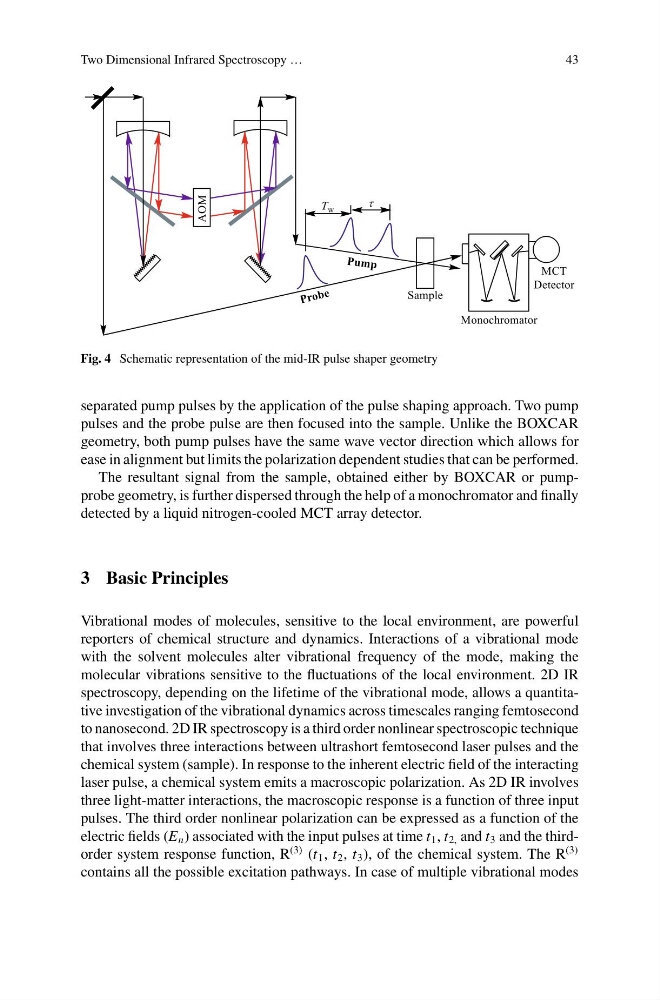
Fig. 4 Schematic representation of the mid-IR pulse shaper geometry
separated pump pulses by the application of the pulse shaping approach. Two pump
pulses and the probe pulse are then focused into the sample. Unlike the BOXCAR
geometry, both pump pulses have the same wave vector direction which allows for
ease in alignment but limits the polarization dependent studies that can be performed.
The resultant signal from the sample, obtained either by BOXCAR or pumpprobe geometry, is further dispersed through the help of a monochromator and finally
detected by a liquid nitrogen-cooled MCT array detector.
3 Basic Principles
Vibrational modes of molecules, sensitive to the local environment, are powerful
reporters of chemical structure and dynamics. Interactions of a vibrational mode
with the solvent molecules alter vibrational frequency of the mode, making the
molecular vibrations sensitive to the fluctuations of the local environment. 2D IR
spectroscopy, depending on the lifetime of the vibrational mode, allows a quantitative investigation of the vibrational dynamics across timescales ranging femtosecond
to nanosecond. 2D IR spectroscopy is a third order nonlinear spectroscopic technique
that involves three interactions between ultrashort femtosecond laser pulses and the
chemical system (sample). In response to the inherent electric field of the interacting
laser pulse, a chemical system emits a macroscopic polarization. As 2D IR involves
three light-matter interactions, the macroscopic response is a function of three input
pulses. The third order nonlinear polarization can be expressed as a function of the
electric fields (E n ) associated with the input pulses at time t 1 , t 2, and t 3 and the thirdorder system response function, R
(3) (t 1 , t 2 , t 3 ), of the chemical system. The R
(3)
contains all the possible excitation pathways. In case of multiple vibrational modes
43
Fig. 4 Schematic representation of the mid-IR pulse shaper geometry
separated pump pulses by the application of the pulse shaping approach. Two pump
pulses and the probe pulse are then focused into the sample. Unlike the BOXCAR
geometry, both pump pulses have the same wave vector direction which allows for
ease in alignment but limits the polarization dependent studies that can be performed.
The resultant signal from the sample, obtained either by BOXCAR or pumpprobe geometry, is further dispersed through the help of a monochromator and finally
detected by a liquid nitrogen-cooled MCT array detector.
3 Basic Principles
Vibrational modes of molecules, sensitive to the local environment, are powerful
reporters of chemical structure and dynamics. Interactions of a vibrational mode
with the solvent molecules alter vibrational frequency of the mode, making the
molecular vibrations sensitive to the fluctuations of the local environment. 2D IR
spectroscopy, depending on the lifetime of the vibrational mode, allows a quantitative investigation of the vibrational dynamics across timescales ranging femtosecond
to nanosecond. 2D IR spectroscopy is a third order nonlinear spectroscopic technique
that involves three interactions between ultrashort femtosecond laser pulses and the
chemical system (sample). In response to the inherent electric field of the interacting
laser pulse, a chemical system emits a macroscopic polarization. As 2D IR involves
three light-matter interactions, the macroscopic response is a function of three input
pulses. The third order nonlinear polarization can be expressed as a function of the
electric fields (E n ) associated with the input pulses at time t 1 , t 2, and t 3 and the thirdorder system response function, R
(3) (t 1 , t 2 , t 3 ), of the chemical system. The R
(3)
contains all the possible excitation pathways. In case of multiple vibrational modes