

Fluorescence Spectrometry
459
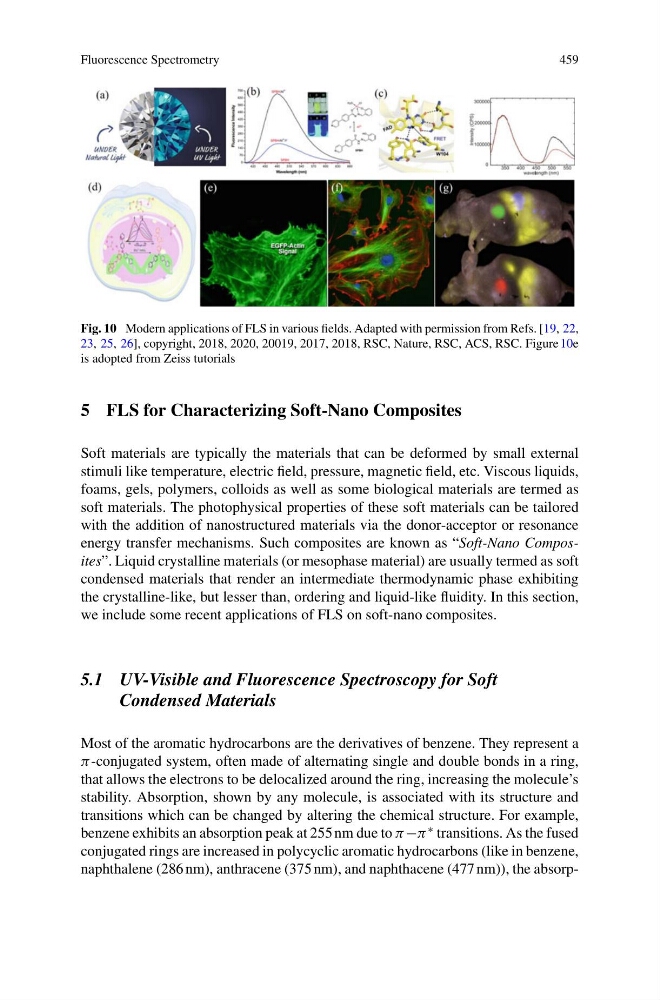
Fig. 10 Modern applications of FLS in various fields. Adapted with permission from Refs. [19, 22,
23, 25, 26], copyright, 2018, 2020, 20019, 2017, 2018, RSC, Nature, RSC, ACS, RSC. Figure 10e
is adopted from Zeiss tutorials
5 FLS for Characterizing Soft-Nano Composites
Soft materials are typically the materials that can be deformed by small external
stimuli like temperature, electric field, pressure, magnetic field, etc. Viscous liquids,
foams, gels, polymers, colloids as well as some biological materials are termed as
soft materials. The photophysical properties of these soft materials can be tailored
with the addition of nanostructured materials via the donor-acceptor or resonance
energy transfer mechanisms. Such composites are known as “Soft-Nano Composites”. Liquid crystalline materials (or mesophase material) are usually termed as soft
condensed materials that render an intermediate thermodynamic phase exhibiting
the crystalline-like, but lesser than, ordering and liquid-like fluidity. In this section,
we include some recent applications of FLS on soft-nano composites.
5.1 UV-Visible and Fluorescence Spectroscopy for Soft
Condensed Materials
Most of the aromatic hydrocarbons are the derivatives of benzene. They represent a
π -conjugated system, often made of alternating single and double bonds in a ring,
that allows the electrons to be delocalized around the ring, increasing the molecule’s
stability. Absorption, shown by any molecule, is associated with its structure and
transitions which can be changed by altering the chemical structure. For example,
benzene exhibits an absorption peak at 255 nm due to π −π
∗ transitions. As the fused
conjugated rings are increased in polycyclic aromatic hydrocarbons (like in benzene,
naphthalene (286 nm), anthracene (375 nm), and naphthacene (477 nm)), the absorp-
459
Fig. 10 Modern applications of FLS in various fields. Adapted with permission from Refs. [19, 22,
23, 25, 26], copyright, 2018, 2020, 20019, 2017, 2018, RSC, Nature, RSC, ACS, RSC. Figure 10e
is adopted from Zeiss tutorials
5 FLS for Characterizing Soft-Nano Composites
Soft materials are typically the materials that can be deformed by small external
stimuli like temperature, electric field, pressure, magnetic field, etc. Viscous liquids,
foams, gels, polymers, colloids as well as some biological materials are termed as
soft materials. The photophysical properties of these soft materials can be tailored
with the addition of nanostructured materials via the donor-acceptor or resonance
energy transfer mechanisms. Such composites are known as “Soft-Nano Composites”. Liquid crystalline materials (or mesophase material) are usually termed as soft
condensed materials that render an intermediate thermodynamic phase exhibiting
the crystalline-like, but lesser than, ordering and liquid-like fluidity. In this section,
we include some recent applications of FLS on soft-nano composites.
5.1 UV-Visible and Fluorescence Spectroscopy for Soft
Condensed Materials
Most of the aromatic hydrocarbons are the derivatives of benzene. They represent a
π -conjugated system, often made of alternating single and double bonds in a ring,
that allows the electrons to be delocalized around the ring, increasing the molecule’s
stability. Absorption, shown by any molecule, is associated with its structure and
transitions which can be changed by altering the chemical structure. For example,
benzene exhibits an absorption peak at 255 nm due to π −π
∗ transitions. As the fused
conjugated rings are increased in polycyclic aromatic hydrocarbons (like in benzene,
naphthalene (286 nm), anthracene (375 nm), and naphthacene (477 nm)), the absorp-