

434
D. P. Singh et al.
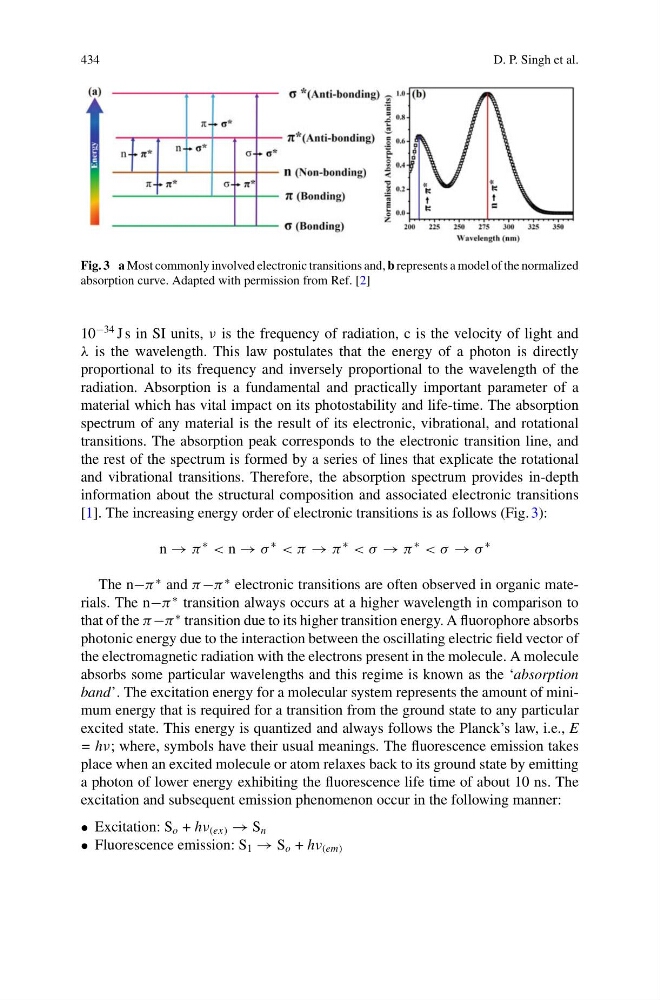
Fig. 3 a Most commonly involved electronic transitions and, b represents a model of the normalized
absorption curve. Adapted with permission from Ref. [2]
10
−34 J s in SI units, ν is the frequency of radiation, c is the velocity of light and
λ is the wavelength. This law postulates that the energy of a photon is directly
proportional to its frequency and inversely proportional to the wavelength of the
radiation. Absorption is a fundamental and practically important parameter of a
material which has vital impact on its photostability and life-time. The absorption
spectrum of any material is the result of its electronic, vibrational, and rotational
transitions. The absorption peak corresponds to the electronic transition line, and
the rest of the spectrum is formed by a series of lines that explicate the rotational
and vibrational transitions. Therefore, the absorption spectrum provides in-depth
information about the structural composition and associated electronic transitions
[1]. The increasing energy order of electronic transitions is as follows (Fig. 3):
n → π
∗
< n → σ
∗
< π → π
∗
< σ → π
∗
< σ → σ
∗
The n−π
∗ and π −π
∗ electronic transitions are often observed in organic materials. The n−π
∗ transition always occurs at a higher wavelength in comparison to
that of the π −π
∗ transition due to its higher transition energy. A fluorophore absorbs
photonic energy due to the interaction between the oscillating electric field vector of
the electromagnetic radiation with the electrons present in the molecule. A molecule
absorbs some particular wavelengths and this regime is known as the ‘absorption
band’. The excitation energy for a molecular system represents the amount of minimum energy that is required for a transition from the ground state to any particular
excited state. This energy is quantized and always follows the Planck’s law, i.e., E
= hν; where, symbols have their usual meanings. The fluorescence emission takes
place when an excited molecule or atom relaxes back to its ground state by emitting
a photon of lower energy exhibiting the fluorescence life time of about 10 ns. The
excitation and subsequent emission phenomenon occur in the following manner:
• Excitation: S o + hν (ex) → S n
• Fluorescence emission: S 1 → S o + hν (em)
D. P. Singh et al.
Fig. 3 a Most commonly involved electronic transitions and, b represents a model of the normalized
absorption curve. Adapted with permission from Ref. [2]
10
−34 J s in SI units, ν is the frequency of radiation, c is the velocity of light and
λ is the wavelength. This law postulates that the energy of a photon is directly
proportional to its frequency and inversely proportional to the wavelength of the
radiation. Absorption is a fundamental and practically important parameter of a
material which has vital impact on its photostability and life-time. The absorption
spectrum of any material is the result of its electronic, vibrational, and rotational
transitions. The absorption peak corresponds to the electronic transition line, and
the rest of the spectrum is formed by a series of lines that explicate the rotational
and vibrational transitions. Therefore, the absorption spectrum provides in-depth
information about the structural composition and associated electronic transitions
[1]. The increasing energy order of electronic transitions is as follows (Fig. 3):
n → π
∗
< n → σ
∗
< π → π
∗
< σ → π
∗
< σ → σ
∗
The n−π
∗ and π −π
∗ electronic transitions are often observed in organic materials. The n−π
∗ transition always occurs at a higher wavelength in comparison to
that of the π −π
∗ transition due to its higher transition energy. A fluorophore absorbs
photonic energy due to the interaction between the oscillating electric field vector of
the electromagnetic radiation with the electrons present in the molecule. A molecule
absorbs some particular wavelengths and this regime is known as the ‘absorption
band’. The excitation energy for a molecular system represents the amount of minimum energy that is required for a transition from the ground state to any particular
excited state. This energy is quantized and always follows the Planck’s law, i.e., E
= hν; where, symbols have their usual meanings. The fluorescence emission takes
place when an excited molecule or atom relaxes back to its ground state by emitting
a photon of lower energy exhibiting the fluorescence life time of about 10 ns. The
excitation and subsequent emission phenomenon occur in the following manner:
• Excitation: S o + hν (ex) → S n
• Fluorescence emission: S 1 → S o + hν (em)