

Application of X-Ray Photoelectron Spectroscopy in Materials …
423
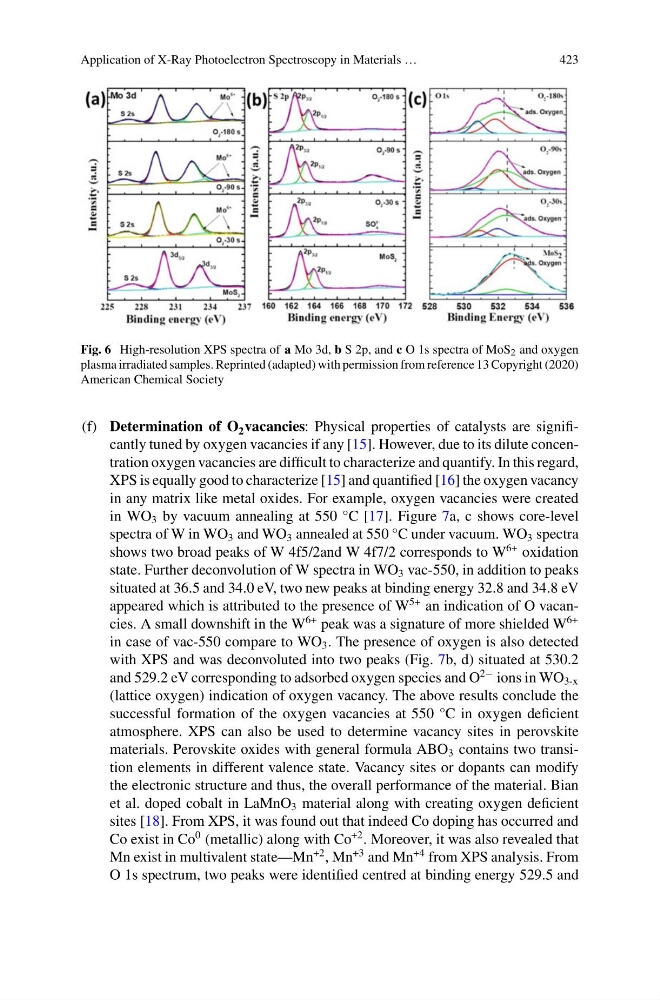
Fig. 6 High-resolution XPS spectra of a Mo 3d, b S 2p, and c O 1s spectra of MoS 2 and oxygen
plasma irradiated samples. Reprinted (adapted) with permission from reference 13 Copyright (2020)
American Chemical Society
(f) Determination of O 2 vacancies: Physical properties of catalysts are significantly tuned by oxygen vacancies if any [15]. However, due to its dilute concentration oxygen vacancies are difficult to characterize and quantify. In this regard,
XPS is equally good to characterize [15] and quantified [16] the oxygen vacancy
in any matrix like metal oxides. For example, oxygen vacancies were created
in WO 3 by vacuum annealing at 550 °C [17]. Figure 7a, c shows core-level
spectra of W in WO 3 and WO 3 annealed at 550 °C under vacuum. WO 3 spectra
shows two broad peaks of W 4f5/2and W 4f7/2 corresponds to W
6+ oxidation
state. Further deconvolution of W spectra in WO 3 vac-550, in addition to peaks
situated at 36.5 and 34.0 eV, two new peaks at binding energy 32.8 and 34.8 eV
appeared which is attributed to the presence of W
5+ an indication of O vacancies. A small downshift in the W
6+ peak was a signature of more shielded W
6+
in case of vac-550 compare to WO 3 . The presence of oxygen is also detected
with XPS and was deconvoluted into two peaks (Fig. 7b, d) situated at 530.2
and 529.2 eV corresponding to adsorbed oxygen species and O
2− ions in WO 3-x
(lattice oxygen) indication of oxygen vacancy. The above results conclude the
successful formation of the oxygen vacancies at 550 °C in oxygen deficient
atmosphere. XPS can also be used to determine vacancy sites in perovskite
materials. Perovskite oxides with general formula ABO 3 contains two transition elements in different valence state. Vacancy sites or dopants can modify
the electronic structure and thus, the overall performance of the material. Bian
et al. doped cobalt in LaMnO 3 material along with creating oxygen deficient
sites [18]. From XPS, it was found out that indeed Co doping has occurred and
Co exist in Co
0 (metallic) along with Co
+2 . Moreover, it was also revealed that
Mn exist in multivalent state—Mn
+2 , Mn
+3 and Mn
+4 from XPS analysis. From
O 1s spectrum, two peaks were identified centred at binding energy 529.5 and
423
Fig. 6 High-resolution XPS spectra of a Mo 3d, b S 2p, and c O 1s spectra of MoS 2 and oxygen
plasma irradiated samples. Reprinted (adapted) with permission from reference 13 Copyright (2020)
American Chemical Society
(f) Determination of O 2 vacancies: Physical properties of catalysts are significantly tuned by oxygen vacancies if any [15]. However, due to its dilute concentration oxygen vacancies are difficult to characterize and quantify. In this regard,
XPS is equally good to characterize [15] and quantified [16] the oxygen vacancy
in any matrix like metal oxides. For example, oxygen vacancies were created
in WO 3 by vacuum annealing at 550 °C [17]. Figure 7a, c shows core-level
spectra of W in WO 3 and WO 3 annealed at 550 °C under vacuum. WO 3 spectra
shows two broad peaks of W 4f5/2and W 4f7/2 corresponds to W
6+ oxidation
state. Further deconvolution of W spectra in WO 3 vac-550, in addition to peaks
situated at 36.5 and 34.0 eV, two new peaks at binding energy 32.8 and 34.8 eV
appeared which is attributed to the presence of W
5+ an indication of O vacancies. A small downshift in the W
6+ peak was a signature of more shielded W
6+
in case of vac-550 compare to WO 3 . The presence of oxygen is also detected
with XPS and was deconvoluted into two peaks (Fig. 7b, d) situated at 530.2
and 529.2 eV corresponding to adsorbed oxygen species and O
2− ions in WO 3-x
(lattice oxygen) indication of oxygen vacancy. The above results conclude the
successful formation of the oxygen vacancies at 550 °C in oxygen deficient
atmosphere. XPS can also be used to determine vacancy sites in perovskite
materials. Perovskite oxides with general formula ABO 3 contains two transition elements in different valence state. Vacancy sites or dopants can modify
the electronic structure and thus, the overall performance of the material. Bian
et al. doped cobalt in LaMnO 3 material along with creating oxygen deficient
sites [18]. From XPS, it was found out that indeed Co doping has occurred and
Co exist in Co
0 (metallic) along with Co
+2 . Moreover, it was also revealed that
Mn exist in multivalent state—Mn
+2 , Mn
+3 and Mn
+4 from XPS analysis. From
O 1s spectrum, two peaks were identified centred at binding energy 529.5 and