

396
P. Singh et al.
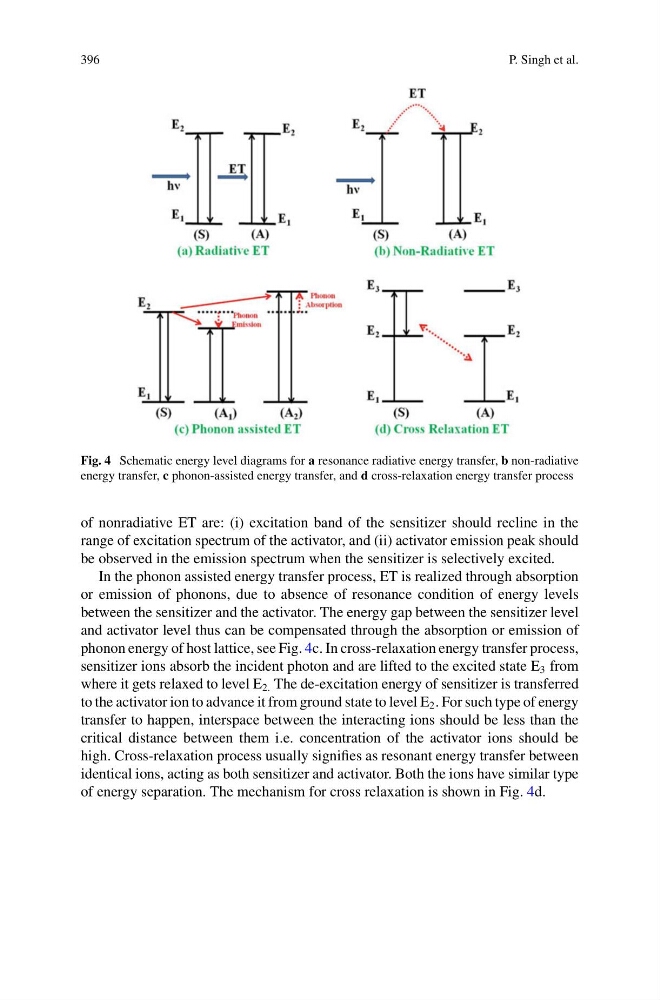
Fig. 4 Schematic energy level diagrams for a resonance radiative energy transfer, b non-radiative
energy transfer, c phonon-assisted energy transfer, and d cross-relaxation energy transfer process
of nonradiative ET are: (i) excitation band of the sensitizer should recline in the
range of excitation spectrum of the activator, and (ii) activator emission peak should
be observed in the emission spectrum when the sensitizer is selectively excited.
In the phonon assisted energy transfer process, ET is realized through absorption
or emission of phonons, due to absence of resonance condition of energy levels
between the sensitizer and the activator. The energy gap between the sensitizer level
and activator level thus can be compensated through the absorption or emission of
phonon energy of host lattice, see Fig. 4c. In cross-relaxation energy transfer process,
sensitizer ions absorb the incident photon and are lifted to the excited state E 3 from
where it gets relaxed to level E 2. The de-excitation energy of sensitizer is transferred
to the activator ion to advance it from ground state to level E 2 . For such type of energy
transfer to happen, interspace between the interacting ions should be less than the
critical distance between them i.e. concentration of the activator ions should be
high. Cross-relaxation process usually signifies as resonant energy transfer between
identical ions, acting as both sensitizer and activator. Both the ions have similar type
of energy separation. The mechanism for cross relaxation is shown in Fig. 4d.
P. Singh et al.
Fig. 4 Schematic energy level diagrams for a resonance radiative energy transfer, b non-radiative
energy transfer, c phonon-assisted energy transfer, and d cross-relaxation energy transfer process
of nonradiative ET are: (i) excitation band of the sensitizer should recline in the
range of excitation spectrum of the activator, and (ii) activator emission peak should
be observed in the emission spectrum when the sensitizer is selectively excited.
In the phonon assisted energy transfer process, ET is realized through absorption
or emission of phonons, due to absence of resonance condition of energy levels
between the sensitizer and the activator. The energy gap between the sensitizer level
and activator level thus can be compensated through the absorption or emission of
phonon energy of host lattice, see Fig. 4c. In cross-relaxation energy transfer process,
sensitizer ions absorb the incident photon and are lifted to the excited state E 3 from
where it gets relaxed to level E 2. The de-excitation energy of sensitizer is transferred
to the activator ion to advance it from ground state to level E 2 . For such type of energy
transfer to happen, interspace between the interacting ions should be less than the
critical distance between them i.e. concentration of the activator ions should be
high. Cross-relaxation process usually signifies as resonant energy transfer between
identical ions, acting as both sensitizer and activator. Both the ions have similar type
of energy separation. The mechanism for cross relaxation is shown in Fig. 4d.