

392
P. Singh et al.
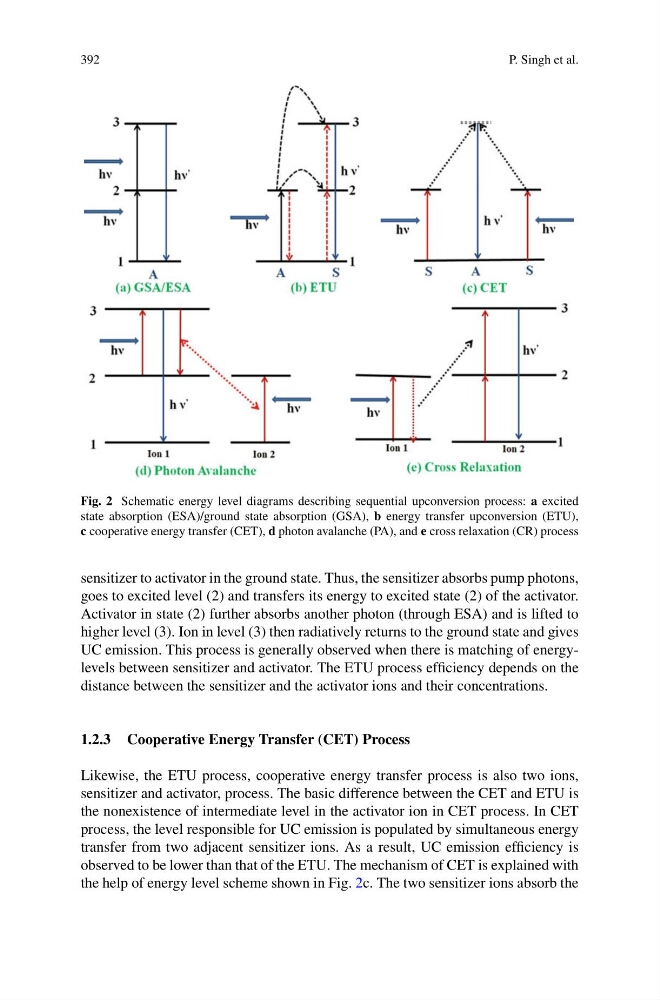
Fig. 2 Schematic energy level diagrams describing sequential upconversion process: a excited
state absorption (ESA)/ground state absorption (GSA), b energy transfer upconversion (ETU),
c cooperative energy transfer (CET), d photon avalanche (PA), and e cross relaxation (CR) process
sensitizer to activator in the ground state. Thus, the sensitizer absorbs pump photons,
goes to excited level (2) and transfers its energy to excited state (2) of the activator.
Activator in state (2) further absorbs another photon (through ESA) and is lifted to
higher level (3). Ion in level (3) then radiatively returns to the ground state and gives
UC emission. This process is generally observed when there is matching of energylevels between sensitizer and activator. The ETU process efficiency depends on the
distance between the sensitizer and the activator ions and their concentrations.
1.2.3 Cooperative Energy Transfer (CET) Process
Likewise, the ETU process, cooperative energy transfer process is also two ions,
sensitizer and activator, process. The basic difference between the CET and ETU is
the nonexistence of intermediate level in the activator ion in CET process. In CET
process, the level responsible for UC emission is populated by simultaneous energy
transfer from two adjacent sensitizer ions. As a result, UC emission efficiency is
observed to be lower than that of the ETU. The mechanism of CET is explained with
the help of energy level scheme shown in Fig. 2c. The two sensitizer ions absorb the
P. Singh et al.
Fig. 2 Schematic energy level diagrams describing sequential upconversion process: a excited
state absorption (ESA)/ground state absorption (GSA), b energy transfer upconversion (ETU),
c cooperative energy transfer (CET), d photon avalanche (PA), and e cross relaxation (CR) process
sensitizer to activator in the ground state. Thus, the sensitizer absorbs pump photons,
goes to excited level (2) and transfers its energy to excited state (2) of the activator.
Activator in state (2) further absorbs another photon (through ESA) and is lifted to
higher level (3). Ion in level (3) then radiatively returns to the ground state and gives
UC emission. This process is generally observed when there is matching of energylevels between sensitizer and activator. The ETU process efficiency depends on the
distance between the sensitizer and the activator ions and their concentrations.
1.2.3 Cooperative Energy Transfer (CET) Process
Likewise, the ETU process, cooperative energy transfer process is also two ions,
sensitizer and activator, process. The basic difference between the CET and ETU is
the nonexistence of intermediate level in the activator ion in CET process. In CET
process, the level responsible for UC emission is populated by simultaneous energy
transfer from two adjacent sensitizer ions. As a result, UC emission efficiency is
observed to be lower than that of the ETU. The mechanism of CET is explained with
the help of energy level scheme shown in Fig. 2c. The two sensitizer ions absorb the