

24
H. Kaur et al.
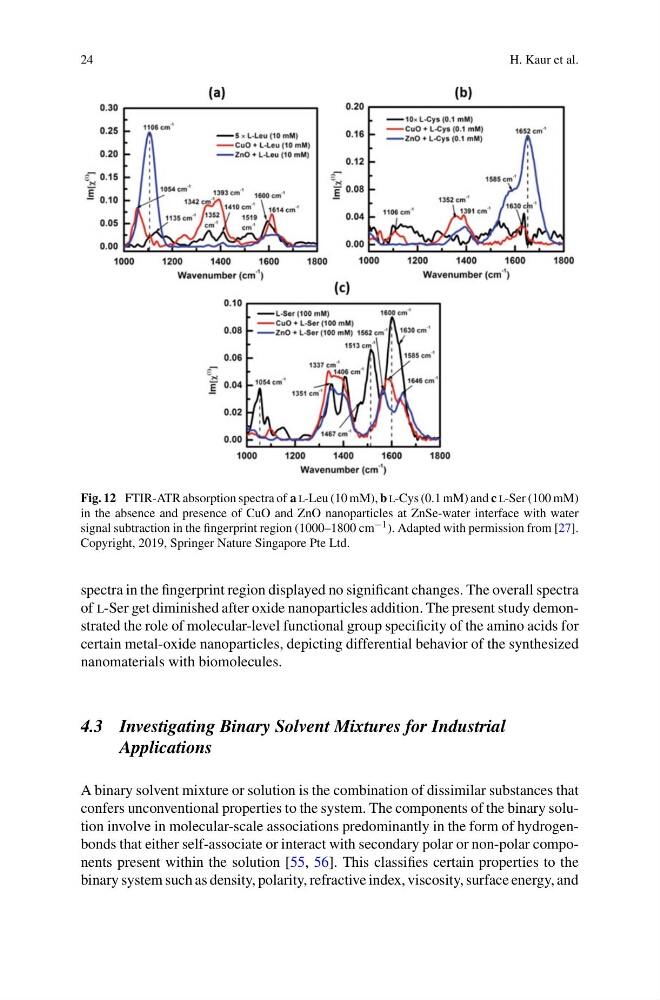
Fig. 12 FTIR-ATR absorption spectra of a l-Leu (10 mM), b l-Cys (0.1 mM) and c l-Ser (100 mM)
in the absence and presence of CuO and ZnO nanoparticles at ZnSe-water interface with water
signal subtraction in the fingerprint region (1000–1800 cm −1 ). Adapted with permission from [27].
Copyright, 2019, Springer Nature Singapore Pte Ltd.
spectra in the fingerprint region displayed no significant changes. The overall spectra
of l-Ser get diminished after oxide nanoparticles addition. The present study demonstrated the role of molecular-level functional group specificity of the amino acids for
certain metal-oxide nanoparticles, depicting differential behavior of the synthesized
nanomaterials with biomolecules.
4.3 Investigating Binary Solvent Mixtures for Industrial
Applications
A binary solvent mixture or solution is the combination of dissimilar substances that
confers unconventional properties to the system. The components of the binary solution involve in molecular-scale associations predominantly in the form of hydrogenbonds that either self-associate or interact with secondary polar or non-polar components present within the solution [55, 56]. This classifies certain properties to the
binary system such as density, polarity, refractive index, viscosity, surface energy, and
H. Kaur et al.
Fig. 12 FTIR-ATR absorption spectra of a l-Leu (10 mM), b l-Cys (0.1 mM) and c l-Ser (100 mM)
in the absence and presence of CuO and ZnO nanoparticles at ZnSe-water interface with water
signal subtraction in the fingerprint region (1000–1800 cm −1 ). Adapted with permission from [27].
Copyright, 2019, Springer Nature Singapore Pte Ltd.
spectra in the fingerprint region displayed no significant changes. The overall spectra
of l-Ser get diminished after oxide nanoparticles addition. The present study demonstrated the role of molecular-level functional group specificity of the amino acids for
certain metal-oxide nanoparticles, depicting differential behavior of the synthesized
nanomaterials with biomolecules.
4.3 Investigating Binary Solvent Mixtures for Industrial
Applications
A binary solvent mixture or solution is the combination of dissimilar substances that
confers unconventional properties to the system. The components of the binary solution involve in molecular-scale associations predominantly in the form of hydrogenbonds that either self-associate or interact with secondary polar or non-polar components present within the solution [55, 56]. This classifies certain properties to the
binary system such as density, polarity, refractive index, viscosity, surface energy, and