

376
M. Pal and M. Pradhan
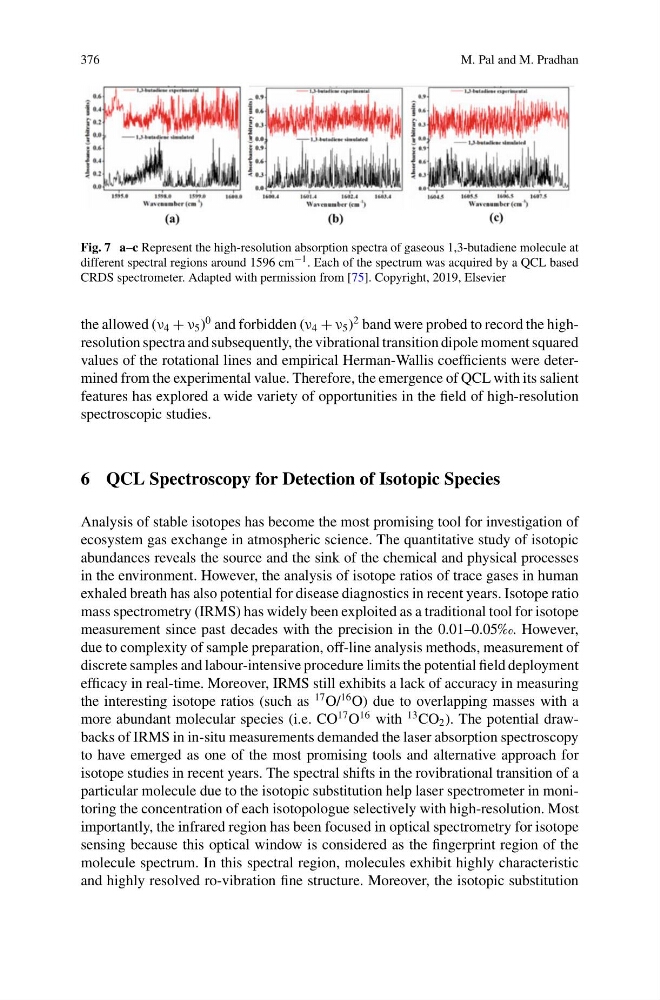
Fig. 7 a–c Represent the high-resolution absorption spectra of gaseous 1,3-butadiene molecule at
different spectral regions around 1596 cm −1 . Each of the spectrum was acquired by a QCL based
CRDS spectrometer. Adapted with permission from [75]. Copyright, 2019, Elsevier
the allowed (ν 4 + ν 5 )
0 and forbidden (ν 4 + ν 5 )
2 band were probed to record the highresolution spectra and subsequently, the vibrational transition dipole moment squared
values of the rotational lines and empirical Herman-Wallis coefficients were determined from the experimental value. Therefore, the emergence of QCL with its salient
features has explored a wide variety of opportunities in the field of high-resolution
spectroscopic studies.
6 QCL Spectroscopy for Detection of Isotopic Species
Analysis of stable isotopes has become the most promising tool for investigation of
ecosystem gas exchange in atmospheric science. The quantitative study of isotopic
abundances reveals the source and the sink of the chemical and physical processes
in the environment. However, the analysis of isotope ratios of trace gases in human
exhaled breath has also potential for disease diagnostics in recent years. Isotope ratio
mass spectrometry (IRMS) has widely been exploited as a traditional tool for isotope
measurement since past decades with the precision in the 0.01–0.05‰. However,
due to complexity of sample preparation, off-line analysis methods, measurement of
discrete samples and labour-intensive procedure limits the potential field deployment
efficacy in real-time. Moreover, IRMS still exhibits a lack of accuracy in measuring
the interesting isotope ratios (such as
17 O/
16 O) due to overlapping masses with a
more abundant molecular species (i.e. CO
17 O
16 with
13 CO 2 ). The potential drawbacks of IRMS in in-situ measurements demanded the laser absorption spectroscopy
to have emerged as one of the most promising tools and alternative approach for
isotope studies in recent years. The spectral shifts in the rovibrational transition of a
particular molecule due to the isotopic substitution help laser spectrometer in monitoring the concentration of each isotopologue selectively with high-resolution. Most
importantly, the infrared region has been focused in optical spectrometry for isotope
sensing because this optical window is considered as the fingerprint region of the
molecule spectrum. In this spectral region, molecules exhibit highly characteristic
and highly resolved ro-vibration fine structure. Moreover, the isotopic substitution
M. Pal and M. Pradhan
Fig. 7 a–c Represent the high-resolution absorption spectra of gaseous 1,3-butadiene molecule at
different spectral regions around 1596 cm −1 . Each of the spectrum was acquired by a QCL based
CRDS spectrometer. Adapted with permission from [75]. Copyright, 2019, Elsevier
the allowed (ν 4 + ν 5 )
0 and forbidden (ν 4 + ν 5 )
2 band were probed to record the highresolution spectra and subsequently, the vibrational transition dipole moment squared
values of the rotational lines and empirical Herman-Wallis coefficients were determined from the experimental value. Therefore, the emergence of QCL with its salient
features has explored a wide variety of opportunities in the field of high-resolution
spectroscopic studies.
6 QCL Spectroscopy for Detection of Isotopic Species
Analysis of stable isotopes has become the most promising tool for investigation of
ecosystem gas exchange in atmospheric science. The quantitative study of isotopic
abundances reveals the source and the sink of the chemical and physical processes
in the environment. However, the analysis of isotope ratios of trace gases in human
exhaled breath has also potential for disease diagnostics in recent years. Isotope ratio
mass spectrometry (IRMS) has widely been exploited as a traditional tool for isotope
measurement since past decades with the precision in the 0.01–0.05‰. However,
due to complexity of sample preparation, off-line analysis methods, measurement of
discrete samples and labour-intensive procedure limits the potential field deployment
efficacy in real-time. Moreover, IRMS still exhibits a lack of accuracy in measuring
the interesting isotope ratios (such as
17 O/
16 O) due to overlapping masses with a
more abundant molecular species (i.e. CO
17 O
16 with
13 CO 2 ). The potential drawbacks of IRMS in in-situ measurements demanded the laser absorption spectroscopy
to have emerged as one of the most promising tools and alternative approach for
isotope studies in recent years. The spectral shifts in the rovibrational transition of a
particular molecule due to the isotopic substitution help laser spectrometer in monitoring the concentration of each isotopologue selectively with high-resolution. Most
importantly, the infrared region has been focused in optical spectrometry for isotope
sensing because this optical window is considered as the fingerprint region of the
molecule spectrum. In this spectral region, molecules exhibit highly characteristic
and highly resolved ro-vibration fine structure. Moreover, the isotopic substitution