

Cavity Ring-Down Spectroscopy
289
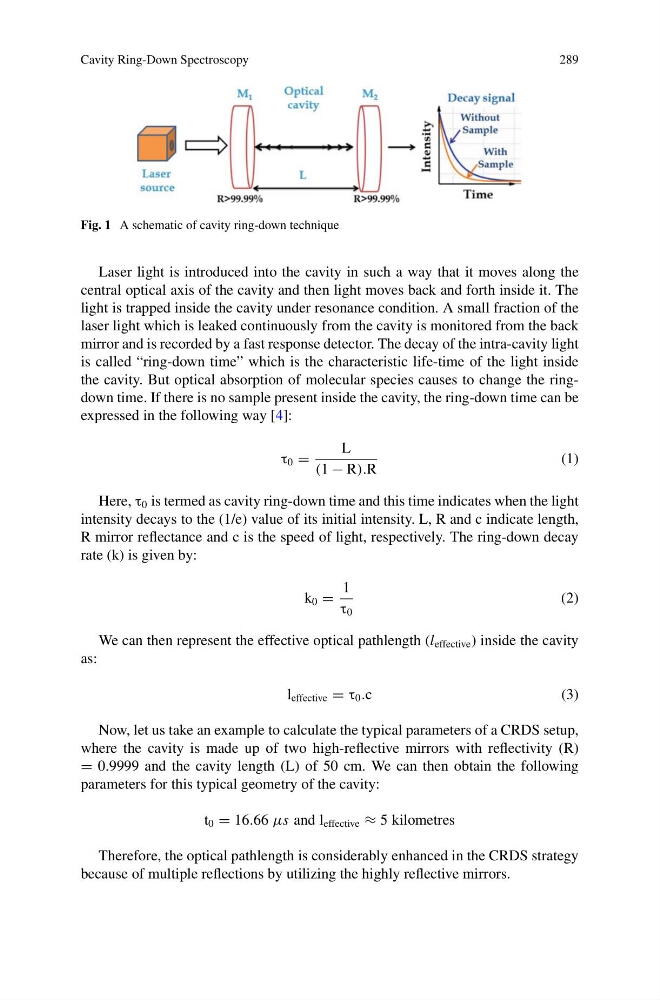
Fig. 1 A schematic of cavity ring-down technique
Laser light is introduced into the cavity in such a way that it moves along the
central optical axis of the cavity and then light moves back and forth inside it. The
light is trapped inside the cavity under resonance condition. A small fraction of the
laser light which is leaked continuously from the cavity is monitored from the back
mirror and is recorded by a fast response detector. The decay of the intra-cavity light
is called “ring-down time” which is the characteristic life-time of the light inside
the cavity. But optical absorption of molecular species causes to change the ringdown time. If there is no sample present inside the cavity, the ring-down time can be
expressed in the following way [4]:
τ 0 =
L
(1 − R).R
(1)
Here, τ 0 is termed as cavity ring-down time and this time indicates when the light
intensity decays to the (1/e) value of its initial intensity. L, R and c indicate length,
R mirror reflectance and c is the speed of light, respectively. The ring-down decay
rate (k) is given by:
k 0 =
1
τ 0
(2)
We can then represent the effective optical pathlength (l effective ) inside the cavity
as:
l effective = τ 0 .c
( 3 )
Now, let us take an example to calculate the typical parameters of a CRDS setup,
where the cavity is made up of two high-reflective mirrors with reflectivity (R)
= 0.9999 and the cavity length (L) of 50 cm. We can then obtain the following
parameters for this typical geometry of the cavity:
t 0 = 16.66 μs and l effective ≈ 5 kilometres
Therefore, the optical pathlength is considerably enhanced in the CRDS strategy
because of multiple reflections by utilizing the highly reflective mirrors.
289
Fig. 1 A schematic of cavity ring-down technique
Laser light is introduced into the cavity in such a way that it moves along the
central optical axis of the cavity and then light moves back and forth inside it. The
light is trapped inside the cavity under resonance condition. A small fraction of the
laser light which is leaked continuously from the cavity is monitored from the back
mirror and is recorded by a fast response detector. The decay of the intra-cavity light
is called “ring-down time” which is the characteristic life-time of the light inside
the cavity. But optical absorption of molecular species causes to change the ringdown time. If there is no sample present inside the cavity, the ring-down time can be
expressed in the following way [4]:
τ 0 =
L
(1 − R).R
(1)
Here, τ 0 is termed as cavity ring-down time and this time indicates when the light
intensity decays to the (1/e) value of its initial intensity. L, R and c indicate length,
R mirror reflectance and c is the speed of light, respectively. The ring-down decay
rate (k) is given by:
k 0 =
1
τ 0
(2)
We can then represent the effective optical pathlength (l effective ) inside the cavity
as:
l effective = τ 0 .c
( 3 )
Now, let us take an example to calculate the typical parameters of a CRDS setup,
where the cavity is made up of two high-reflective mirrors with reflectivity (R)
= 0.9999 and the cavity length (L) of 50 cm. We can then obtain the following
parameters for this typical geometry of the cavity:
t 0 = 16.66 μs and l effective ≈ 5 kilometres
Therefore, the optical pathlength is considerably enhanced in the CRDS strategy
because of multiple reflections by utilizing the highly reflective mirrors.