

132
S. Banerjee et al.
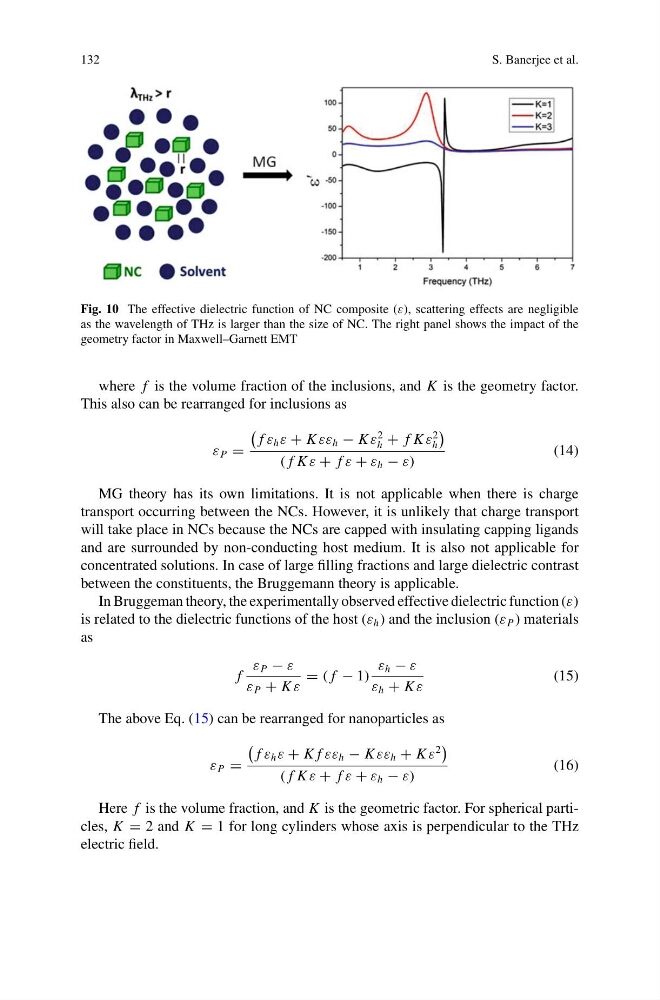
Fig. 10 The effective dielectric function of NC composite (ε), scattering effects are negligible
as the wavelength of THz is larger than the size of NC. The right panel shows the impact of the
geometry factor in Maxwell–Garnett EMT
where f is the volume fraction of the inclusions, and K is the geometry factor.
This also can be rearranged for inclusions as
ε P =
f ε h ε + K εε h − K ε
2
h + f K ε
2
h
( f K ε + f ε + ε h − ε)
(14)
MG theory has its own limitations. It is not applicable when there is charge
transport occurring between the NCs. However, it is unlikely that charge transport
will take place in NCs because the NCs are capped with insulating capping ligands
and are surrounded by non-conducting host medium. It is also not applicable for
concentrated solutions. In case of large filling fractions and large dielectric contrast
between the constituents, the Bruggemann theory is applicable.
In Bruggeman theory, the experimentally observed effective dielectric function (ε)
is related to the dielectric functions of the host (ε h ) and the inclusion (ε P ) materials
as
f
ε P − ε
ε P + K ε
= ( f − 1)
ε h − ε
ε h + K ε
(15)
The above Eq. (15) can be rearranged for nanoparticles as
ε P =
f ε h ε + K f εε h − K εε h + K ε
2
( f K ε + f ε + ε h − ε)
(16)
Here f is the volume fraction, and K is the geometric factor. For spherical particles, K = 2 and K = 1 for long cylinders whose axis is perpendicular to the THz
electric field.
S. Banerjee et al.
Fig. 10 The effective dielectric function of NC composite (ε), scattering effects are negligible
as the wavelength of THz is larger than the size of NC. The right panel shows the impact of the
geometry factor in Maxwell–Garnett EMT
where f is the volume fraction of the inclusions, and K is the geometry factor.
This also can be rearranged for inclusions as
ε P =
f ε h ε + K εε h − K ε
2
h + f K ε
2
h
( f K ε + f ε + ε h − ε)
(14)
MG theory has its own limitations. It is not applicable when there is charge
transport occurring between the NCs. However, it is unlikely that charge transport
will take place in NCs because the NCs are capped with insulating capping ligands
and are surrounded by non-conducting host medium. It is also not applicable for
concentrated solutions. In case of large filling fractions and large dielectric contrast
between the constituents, the Bruggemann theory is applicable.
In Bruggeman theory, the experimentally observed effective dielectric function (ε)
is related to the dielectric functions of the host (ε h ) and the inclusion (ε P ) materials
as
f
ε P − ε
ε P + K ε
= ( f − 1)
ε h − ε
ε h + K ε
(15)
The above Eq. (15) can be rearranged for nanoparticles as
ε P =
f ε h ε + K f εε h − K εε h + K ε
2
( f K ε + f ε + ε h − ε)
(16)
Here f is the volume fraction, and K is the geometric factor. For spherical particles, K = 2 and K = 1 for long cylinders whose axis is perpendicular to the THz
electric field.