

as species with high-frequency risks of colliding with running trains. Conversely,
the great bustard (0.0%), black kite (5.7%), common swift (Apus apus, 5.9%), wood
pigeon (Columba palumbus, 8.7%), and great cormorant (Phalacrocorax carbo,
8.1%) showed low-risk flying behavior. However, the fact that 12 great bustard
carcasses have been observed within the HSR study area indicates that great bustards must fly under or through the catenary at least occasionally (unpublished data,
LIFE+ Impacto 0 2016). The collision risk was elevated on embankments, with the
risk of collisions in one study being 14% greater on embankments over 5 m high
than in nearby flat sections of the HSR. Birds from virtually all of the protected
species present in the area crossed the risk area at least occasionally. Notably,
40.0% of little bustard crossings, 28.6% of lesser kestrel (Falco naumanni)
crossings, and 24.3% of Montagu’s harrier crossings were observed to be below
8.5 m.
Finally, another important factor that determines the height of flight over the
HSR is wind. Because birds tend to fly lower in the presence of strong winds,
percentages of railway crossings through the risk area increase under windy conditions. The presence of fog would be expected to affect birds’ mortality risk in the
vicinity of the HSR as well. However, foggy days were not sampled specifically.
Generally, the potential influence of atmospheric conditions on bird behavior with
respect to the HSR should be clarified to better understand the risk faced by birds
crossing the railway.
In conclusion, although birds show some avoidance of the railway and catenary,
many birds fly within the collision risk area. This risky behavior is also engaged in
by protected species, although it is especially prevalent among species that make
use of specific elements of the railway (e.g., common linnet, European serin,
Eurasian skylark). There are also some species, such as the red-legged partridge and
hoopoe, that tend to fly close to the ground naturally and thus face a high risk of
collision with trains and the catenary.
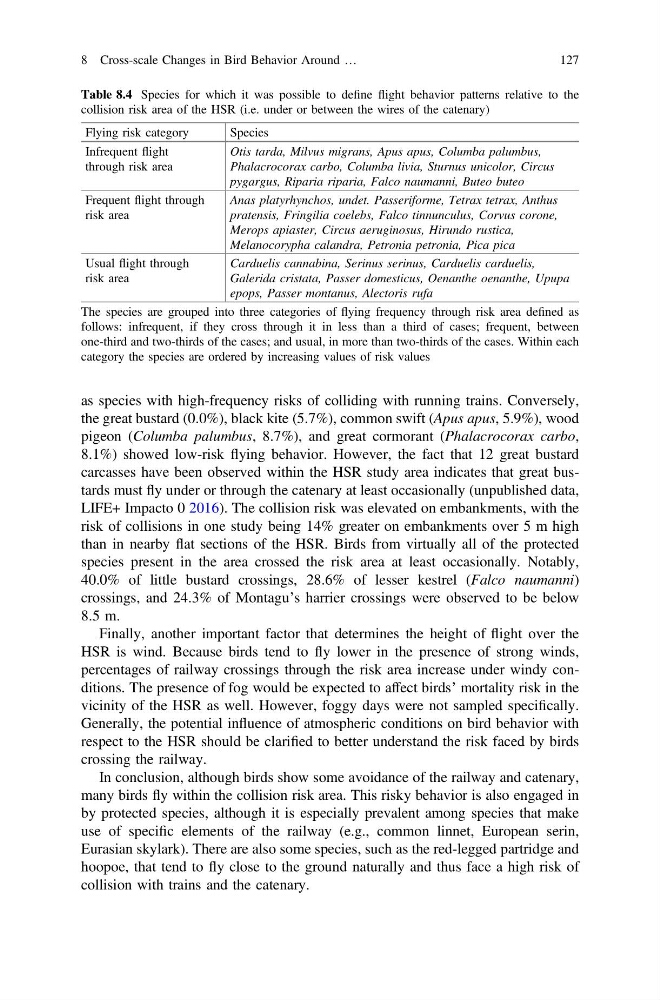
Table 8.4 Species for which it was possible to define flight behavior patterns relative to the
collision risk area of the HSR (i.e. under or between the wires of the catenary)
Flying risk category
Species
Infrequent flight
through risk area
Otis tarda, Milvus migrans, Apus apus, Columba palumbus,
Phalacrocorax carbo, Columba livia, Sturnus unicolor, Circus
pygargus, Riparia riparia, Falco naumanni, Buteo buteo
Frequent flight through
risk area
Anas platyrhynchos, undet. Passeriforme, Tetrax tetrax, Anthus
pratensis, Fringilia coelebs, Falco tinnunculus, Corvus corone,
Merops apiaster, Circus aeruginosus, Hirundo rustica,
Melanocorypha calandra, Petronia petronia, Pica pica
Usual flight through
risk area
Carduelis cannabina, Serinus serinus, Carduelis carduelis,
Galerida cristata, Passer domesticus, Oenanthe oenanthe, Upupa
epops, Passer montanus, Alectoris rufa
The species are grouped into three categories of flying frequency through risk area defined as
follows: infrequent, if they cross through it in less than a third of cases; frequent, between
one-third and two-thirds of the cases; and usual, in more than two-thirds of the cases. Within each
category the species are ordered by increasing values of risk values
8 Cross-scale Changes in Bird Behavior Around …
127
the great bustard (0.0%), black kite (5.7%), common swift (Apus apus, 5.9%), wood
pigeon (Columba palumbus, 8.7%), and great cormorant (Phalacrocorax carbo,
8.1%) showed low-risk flying behavior. However, the fact that 12 great bustard
carcasses have been observed within the HSR study area indicates that great bustards must fly under or through the catenary at least occasionally (unpublished data,
LIFE+ Impacto 0 2016). The collision risk was elevated on embankments, with the
risk of collisions in one study being 14% greater on embankments over 5 m high
than in nearby flat sections of the HSR. Birds from virtually all of the protected
species present in the area crossed the risk area at least occasionally. Notably,
40.0% of little bustard crossings, 28.6% of lesser kestrel (Falco naumanni)
crossings, and 24.3% of Montagu’s harrier crossings were observed to be below
8.5 m.
Finally, another important factor that determines the height of flight over the
HSR is wind. Because birds tend to fly lower in the presence of strong winds,
percentages of railway crossings through the risk area increase under windy conditions. The presence of fog would be expected to affect birds’ mortality risk in the
vicinity of the HSR as well. However, foggy days were not sampled specifically.
Generally, the potential influence of atmospheric conditions on bird behavior with
respect to the HSR should be clarified to better understand the risk faced by birds
crossing the railway.
In conclusion, although birds show some avoidance of the railway and catenary,
many birds fly within the collision risk area. This risky behavior is also engaged in
by protected species, although it is especially prevalent among species that make
use of specific elements of the railway (e.g., common linnet, European serin,
Eurasian skylark). There are also some species, such as the red-legged partridge and
hoopoe, that tend to fly close to the ground naturally and thus face a high risk of
collision with trains and the catenary.
Table 8.4 Species for which it was possible to define flight behavior patterns relative to the
collision risk area of the HSR (i.e. under or between the wires of the catenary)
Flying risk category
Species
Infrequent flight
through risk area
Otis tarda, Milvus migrans, Apus apus, Columba palumbus,
Phalacrocorax carbo, Columba livia, Sturnus unicolor, Circus
pygargus, Riparia riparia, Falco naumanni, Buteo buteo
Frequent flight through
risk area
Anas platyrhynchos, undet. Passeriforme, Tetrax tetrax, Anthus
pratensis, Fringilia coelebs, Falco tinnunculus, Corvus corone,
Merops apiaster, Circus aeruginosus, Hirundo rustica,
Melanocorypha calandra, Petronia petronia, Pica pica
Usual flight through
risk area
Carduelis cannabina, Serinus serinus, Carduelis carduelis,
Galerida cristata, Passer domesticus, Oenanthe oenanthe, Upupa
epops, Passer montanus, Alectoris rufa
The species are grouped into three categories of flying frequency through risk area defined as
follows: infrequent, if they cross through it in less than a third of cases; frequent, between
one-third and two-thirds of the cases; and usual, in more than two-thirds of the cases. Within each
category the species are ordered by increasing values of risk values
8 Cross-scale Changes in Bird Behavior Around …
127