

fences (20 species; 11.3 birds km
−1 h
−1 ), built structures (5 species; 9.9 birds
km
−1 h
−1 ), ballast (9 species; 5.9 birds km
−1 h
−1 ), and, finally, catenary poles (5
species; 3.0 birds km
−1 h
−1 ).
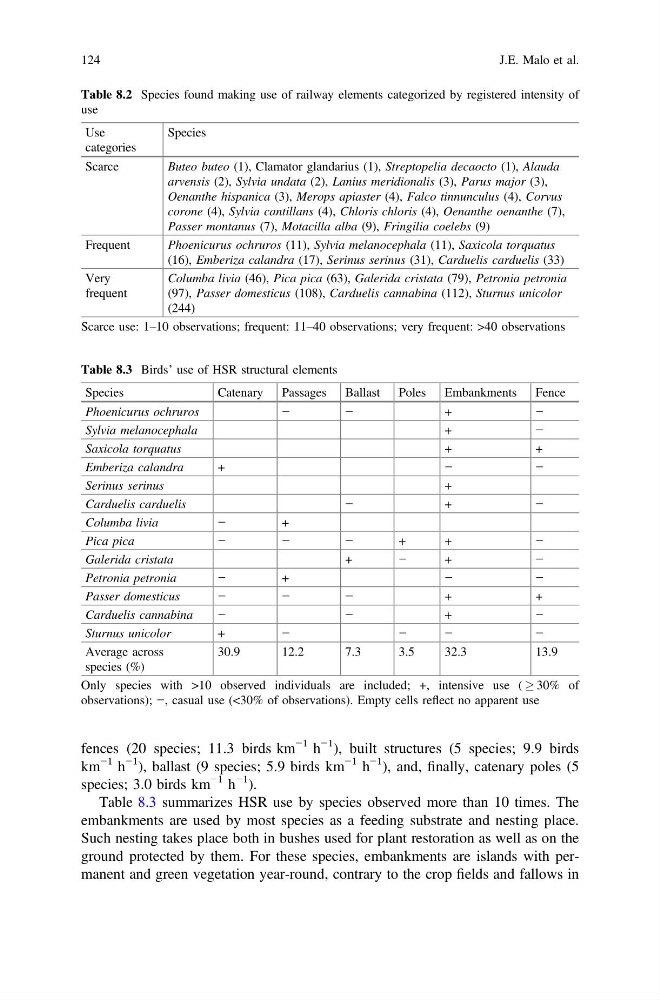
Table 8.3 summarizes HSR use by species observed more than 10 times. The
embankments are used by most species as a feeding substrate and nesting place.
Such nesting takes place both in bushes used for plant restoration as well as on the
ground protected by them. For these species, embankments are islands with permanent and green vegetation year-round, contrary to the crop fields and fallows in
Table 8.3 Birds’ use of HSR structural elements
Species
Catenary Passages Ballast Poles Embankments Fence
Phoenicurus ochruros
−
−
+
−
Sylvia melanocephala
+
−
Saxicola torquatus
+
+
Emberiza calandra
+
−
−
Serinus serinus
+
Carduelis carduelis
−
+
−
Columba livia
−
+
Pica pica
−
−
−
+
+
−
Galerida cristata
+
−
+
−
Petronia petronia
−
+
−
−
Passer domesticus
−
−
−
+
+
Carduelis cannabina
−
−
+
−
Sturnus unicolor
+
−
−
−
−
Average across
species (%)
30.9
12.2
7.3
3.5
32.3
13.9
Only species with >10 observed individuals are included; +, intensive use ( ! 30% of
observations); −, casual use (<30% of observations). Empty cells reflect no apparent use
Table 8.2 Species found making use of railway elements categorized by registered intensity of
use
Use
categories
Species
Scarce
Buteo buteo (1), Clamator glandarius (1), Streptopelia decaocto (1), Alauda
arvensis (2), Sylvia undata (2), Lanius meridionalis (3), Parus major (3),
Oenanthe hispanica (3), Merops apiaster (4), Falco tinnunculus (4), Corvus
corone (4), Sylvia cantillans (4), Chloris chloris (4), Oenanthe oenanthe (7),
Passer montanus (7), Motacilla alba (9), Fringilia coelebs (9)
Frequent
Phoenicurus ochruros (11), Sylvia melanocephala (11), Saxicola torquatus
(16), Emberiza calandra (17), Serinus serinus (31), Carduelis carduelis (33)
Very
frequent
Columba livia (46), Pica pica (63), Galerida cristata (79), Petronia petronia
(97), Passer domesticus (108), Carduelis cannabina (112), Sturnus unicolor
(244)
Scarce use: 1–10 observations; frequent: 11–40 observations; very frequent: >40 observations
124
J.E. Malo et al.
−1 h
−1 ), built structures (5 species; 9.9 birds
km
−1 h
−1 ), ballast (9 species; 5.9 birds km
−1 h
−1 ), and, finally, catenary poles (5
species; 3.0 birds km
−1 h
−1 ).
Table 8.3 summarizes HSR use by species observed more than 10 times. The
embankments are used by most species as a feeding substrate and nesting place.
Such nesting takes place both in bushes used for plant restoration as well as on the
ground protected by them. For these species, embankments are islands with permanent and green vegetation year-round, contrary to the crop fields and fallows in
Table 8.3 Birds’ use of HSR structural elements
Species
Catenary Passages Ballast Poles Embankments Fence
Phoenicurus ochruros
−
−
+
−
Sylvia melanocephala
+
−
Saxicola torquatus
+
+
Emberiza calandra
+
−
−
Serinus serinus
+
Carduelis carduelis
−
+
−
Columba livia
−
+
Pica pica
−
−
−
+
+
−
Galerida cristata
+
−
+
−
Petronia petronia
−
+
−
−
Passer domesticus
−
−
−
+
+
Carduelis cannabina
−
−
+
−
Sturnus unicolor
+
−
−
−
−
Average across
species (%)
30.9
12.2
7.3
3.5
32.3
13.9
Only species with >10 observed individuals are included; +, intensive use ( ! 30% of
observations); −, casual use (<30% of observations). Empty cells reflect no apparent use
Table 8.2 Species found making use of railway elements categorized by registered intensity of
use
Use
categories
Species
Scarce
Buteo buteo (1), Clamator glandarius (1), Streptopelia decaocto (1), Alauda
arvensis (2), Sylvia undata (2), Lanius meridionalis (3), Parus major (3),
Oenanthe hispanica (3), Merops apiaster (4), Falco tinnunculus (4), Corvus
corone (4), Sylvia cantillans (4), Chloris chloris (4), Oenanthe oenanthe (7),
Passer montanus (7), Motacilla alba (9), Fringilia coelebs (9)
Frequent
Phoenicurus ochruros (11), Sylvia melanocephala (11), Saxicola torquatus
(16), Emberiza calandra (17), Serinus serinus (31), Carduelis carduelis (33)
Very
frequent
Columba livia (46), Pica pica (63), Galerida cristata (79), Petronia petronia
(97), Passer domesticus (108), Carduelis cannabina (112), Sturnus unicolor
(244)
Scarce use: 1–10 observations; frequent: 11–40 observations; very frequent: >40 observations
124
J.E. Malo et al.