

or soft surfaces, but it needs to be handled with care because it has the potential to
become a weed (Cameron 2004). This species, in combination with Japanese millet
(Echinochloa esculenta), has also been used successfully in controlling soil erosion
in the semi-arid tropics of Central Queensland. Japanese millet develop rapidly in
poor soils and can minimize the invasion of other unwanted weed species (Fox et al.
2010). However, buffel grass is an invasive weed species that poses serious threats
to biodiversity in many other environments, such as in the Australian regions
mentioned above (Marshall et al. 2012) (see Chap. 4).
The use of gypsum on calcium-deficient soil before seeding can reduce the
erosion rate by 25% (Gyasi-Agyei et al. 2001). This material has advantages, such
as low cost, availability, pH neutrality, and ease of handling (Gyasi-Agyei et al.
2001). Once applied to the soil, the gypsum will increase the porosity and water
infiltration ability. This phenomenon will avoid water runoff, thus preventing soil
erosion (Beckett et al. 1989). The use of this mineral also promotes root penetration
and the emergence of seedlings (Chen and Dick 2011).
Compost/mulch coverage is considered to be one of the best management
practices in both active construction and established areas prone to soil erosion on
roadsides (Bakr et al. 2012), and it can be used in railway verges as well. In
Louisiana, USA, Bakr et al. (2012) found that compost/mulch covers were highly
effective in reducing runoff, total suspended solids (reduction between 70 and
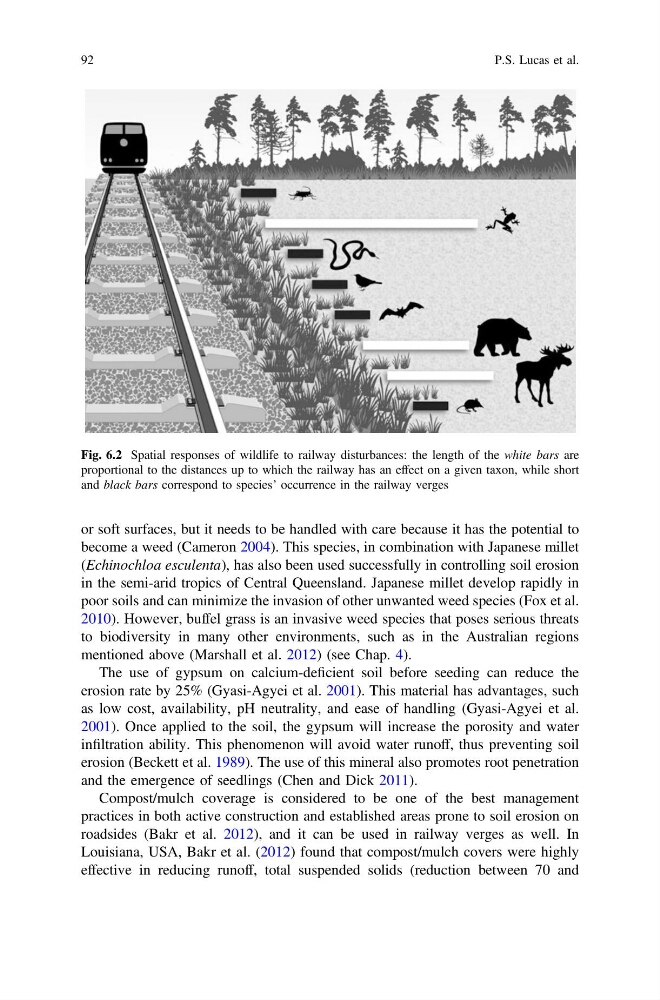
Fig. 6.2 Spatial responses of wildlife to railway disturbances: the length of the white bars are
proportional to the distances up to which the railway has an effect on a given taxon, while short
and black bars correspond to species’ occurrence in the railway verges
92
P.S. Lucas et al.
become a weed (Cameron 2004). This species, in combination with Japanese millet
(Echinochloa esculenta), has also been used successfully in controlling soil erosion
in the semi-arid tropics of Central Queensland. Japanese millet develop rapidly in
poor soils and can minimize the invasion of other unwanted weed species (Fox et al.
2010). However, buffel grass is an invasive weed species that poses serious threats
to biodiversity in many other environments, such as in the Australian regions
mentioned above (Marshall et al. 2012) (see Chap. 4).
The use of gypsum on calcium-deficient soil before seeding can reduce the
erosion rate by 25% (Gyasi-Agyei et al. 2001). This material has advantages, such
as low cost, availability, pH neutrality, and ease of handling (Gyasi-Agyei et al.
2001). Once applied to the soil, the gypsum will increase the porosity and water
infiltration ability. This phenomenon will avoid water runoff, thus preventing soil
erosion (Beckett et al. 1989). The use of this mineral also promotes root penetration
and the emergence of seedlings (Chen and Dick 2011).
Compost/mulch coverage is considered to be one of the best management
practices in both active construction and established areas prone to soil erosion on
roadsides (Bakr et al. 2012), and it can be used in railway verges as well. In
Louisiana, USA, Bakr et al. (2012) found that compost/mulch covers were highly
effective in reducing runoff, total suspended solids (reduction between 70 and
Fig. 6.2 Spatial responses of wildlife to railway disturbances: the length of the white bars are
proportional to the distances up to which the railway has an effect on a given taxon, while short
and black bars correspond to species’ occurrence in the railway verges
92
P.S. Lucas et al.