

among which the observations of eclipse and social reactions were recorded at
Hirosaki in detail under the collaboration of Clan peoples (Saito 1990).
Nakayama Shigeru (中山茂, 1928–2014) studied the history of astronomy at
Harvard University in the 1960s and his thesis constituted a comprehensive history
of Japan up to the early Meiji era. Astronomy in Japan has been advanced through
the impacts from China and Western countries. In the late nineteenth century,
Western supremacy was finally recognized, and modern astronomy started in
Japan (Nakayama 1969). Nakamura Tsuko (中村士) of the TAO collected bibliographical data on Japanese astronomy in the pre-Meiji period (Nakamura and Ito
2006). He also promoted international cooperation on the history of astronomy in
Asian countries, particularly on the rise of astrophysics in Asia (Nakamura and
Orchiston 2017).
References
Aller, L. H. (1941). Physical processes in gaseous nebulae. XIV. Astrophysical Journal, 93,
236–243.
Baker, J. G., & Menzel, D. H. (1938). Physical processes in gaseous nebulae. III. The Balmer
decrement. Astrophysical Journal, 88, 52–64.
Blaauw, A. (1994). History of the IAU, Kluwer Academic Publishers.
Bowen, I. S. (1934). The excitation of the permitted OIII nebular lines. Publications of the
Astronomical Society of of the Pacific, 46, 146–148.
Bowen, I. S. (1935). The spectrum and composition of the gaseous nebulae. Astrophysical Journal,
81, 1–16.
DeVorkin, D. (1997). Oral history interview, Yoshio Fujita, American Institute, Physics Publishing.
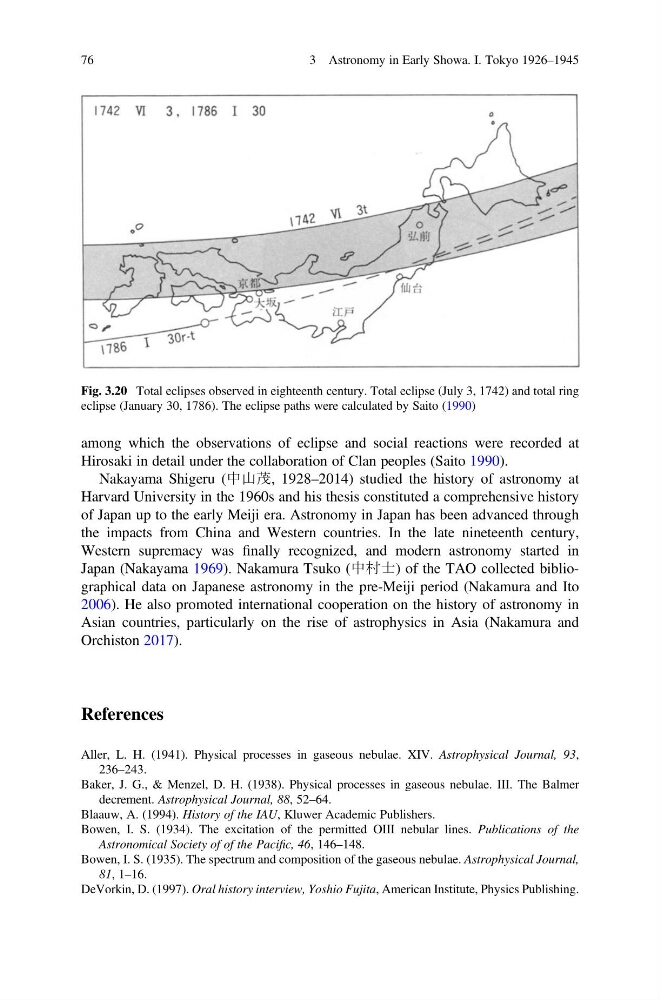
Fig. 3.20 Total eclipses observed in eighteenth century. Total eclipse (July 3, 1742) and total ring
eclipse (January 30, 1786). The eclipse paths were calculated by Saito (1990)
76
3 Astronomy in Early Showa. I. Tokyo 1926–1945
Hirosaki in detail under the collaboration of Clan peoples (Saito 1990).
Nakayama Shigeru (中山茂, 1928–2014) studied the history of astronomy at
Harvard University in the 1960s and his thesis constituted a comprehensive history
of Japan up to the early Meiji era. Astronomy in Japan has been advanced through
the impacts from China and Western countries. In the late nineteenth century,
Western supremacy was finally recognized, and modern astronomy started in
Japan (Nakayama 1969). Nakamura Tsuko (中村士) of the TAO collected bibliographical data on Japanese astronomy in the pre-Meiji period (Nakamura and Ito
2006). He also promoted international cooperation on the history of astronomy in
Asian countries, particularly on the rise of astrophysics in Asia (Nakamura and
Orchiston 2017).
References
Aller, L. H. (1941). Physical processes in gaseous nebulae. XIV. Astrophysical Journal, 93,
236–243.
Baker, J. G., & Menzel, D. H. (1938). Physical processes in gaseous nebulae. III. The Balmer
decrement. Astrophysical Journal, 88, 52–64.
Blaauw, A. (1994). History of the IAU, Kluwer Academic Publishers.
Bowen, I. S. (1934). The excitation of the permitted OIII nebular lines. Publications of the
Astronomical Society of of the Pacific, 46, 146–148.
Bowen, I. S. (1935). The spectrum and composition of the gaseous nebulae. Astrophysical Journal,
81, 1–16.
DeVorkin, D. (1997). Oral history interview, Yoshio Fujita, American Institute, Physics Publishing.
Fig. 3.20 Total eclipses observed in eighteenth century. Total eclipse (July 3, 1742) and total ring
eclipse (January 30, 1786). The eclipse paths were calculated by Saito (1990)
76
3 Astronomy in Early Showa. I. Tokyo 1926–1945