

The simulations of a colliding process of galaxies have been promoted in some
cases with the computer GRAPE. An example of simulations for colliding galaxies is
illustrated in Fig. 7.47. The upper panel denotes the initial state of two spherical
galaxies, both composed of 8000 particles. The middle panel shows the two galaxies
approaching through the rejection of particles between galaxies, and the lower panel
denotes the final merged galaxy, which resembles to an elliptical galaxy in its
elliptical form and distribution of stars in the halo. It is suggested that some elliptical
galaxies have their origin in this type of galaxy collision (Ebisuzaki et al. 1990;
Sugimoto et al. 1991).
7.10.3.4 Disk Galaxies
The structure and stability of disk stellar systems had been usually studied by
making use of the N-body simulations. A different approach based on collisionless
Boltzmann simulation (originally called Vlasov equation) was promoted by Kato
Shoji’s group, including Inagaki Shogo, Watanabe Yoshio, Nishida Mitsugu and
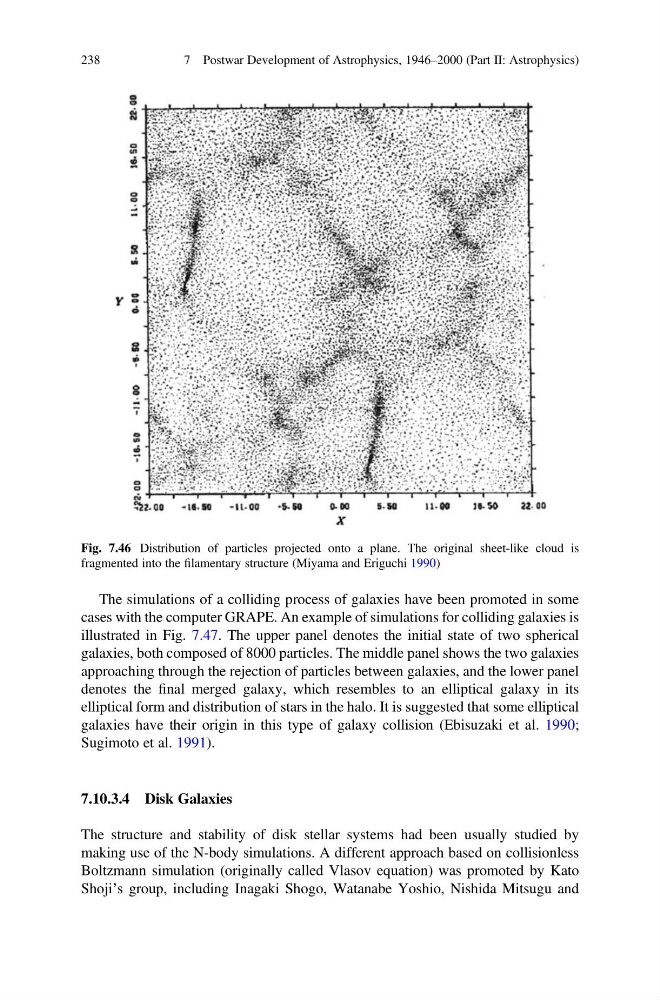
Fig. 7.46 Distribution of particles projected onto a plane. The original sheet-like cloud is
fragmented into the filamentary structure (Miyama and Eriguchi 1990)
238
7 Postwar Development of Astrophysics, 1946–2000 (Part II: Astrophysics)
cases with the computer GRAPE. An example of simulations for colliding galaxies is
illustrated in Fig. 7.47. The upper panel denotes the initial state of two spherical
galaxies, both composed of 8000 particles. The middle panel shows the two galaxies
approaching through the rejection of particles between galaxies, and the lower panel
denotes the final merged galaxy, which resembles to an elliptical galaxy in its
elliptical form and distribution of stars in the halo. It is suggested that some elliptical
galaxies have their origin in this type of galaxy collision (Ebisuzaki et al. 1990;
Sugimoto et al. 1991).
7.10.3.4 Disk Galaxies
The structure and stability of disk stellar systems had been usually studied by
making use of the N-body simulations. A different approach based on collisionless
Boltzmann simulation (originally called Vlasov equation) was promoted by Kato
Shoji’s group, including Inagaki Shogo, Watanabe Yoshio, Nishida Mitsugu and
Fig. 7.46 Distribution of particles projected onto a plane. The original sheet-like cloud is
fragmented into the filamentary structure (Miyama and Eriguchi 1990)
238
7 Postwar Development of Astrophysics, 1946–2000 (Part II: Astrophysics)