

4.6 Multi-Objective Optimization
59
(Problem Formulation)
Min
subject to
(Design of Experiments)
Selection of design points using LHS
(Numerical Analysis)
Calculation of objective function for each
design point
Training data
(Model set)
Set of candidate models
Error Analysis
(MOGA)
gamultiobj function
(Pareto-Optimal Front)
(Final Surrogate Model)
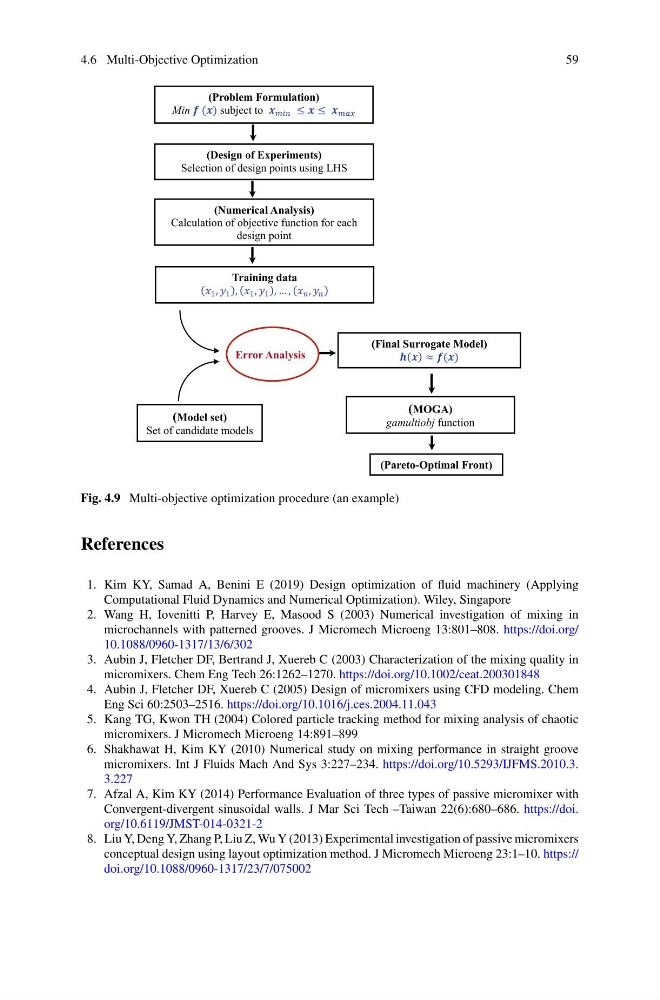
Fig. 4.9 Multi-objective optimization procedure (an example)
References
1. Kim KY, Samad A, Benini E (2019) Design optimization of fluid machinery (Applying
Computational Fluid Dynamics and Numerical Optimization). Wiley, Singapore
2. Wang H, Iovenitti P, Harvey E, Masood S (2003) Numerical investigation of mixing in
microchannels with patterned grooves. J Micromech Microeng 13:801–808. https://doi.org/
10.1088/0960-1317/13/6/302
3. Aubin J, Fletcher DF, Bertrand J, Xuereb C (2003) Characterization of the mixing quality in
micromixers. Chem Eng Tech 26:1262–1270. https://doi.org/10.1002/ceat.200301848
4. Aubin J, Fletcher DF, Xuereb C (2005) Design of micromixers using CFD modeling. Chem
Eng Sci 60:2503–2516. https://doi.org/10.1016/j.ces.2004.11.043
5. Kang TG, Kwon TH (2004) Colored particle tracking method for mixing analysis of chaotic
micromixers. J Micromech Microeng 14:891–899
6. Shakhawat H, Kim KY (2010) Numerical study on mixing performance in straight groove
micromixers. Int J Fluids Mach And Sys 3:227–234. https://doi.org/10.5293/IJFMS.2010.3.
3.227
7. Afzal A, Kim KY (2014) Performance Evaluation of three types of passive micromixer with
Convergent-divergent sinusoidal walls. J Mar Sci Tech –Taiwan 22(6):680–686. https://doi.
org/10.6119/JMST-014-0321-2
8. Liu Y, Deng Y, Zhang P, Liu Z, Wu Y (2013) Experimental investigation of passive micromixers
conceptual design using layout optimization method. J Micromech Microeng 23:1–10. https://
doi.org/10.1088/0960-1317/23/7/075002
59
(Problem Formulation)
Min
subject to
(Design of Experiments)
Selection of design points using LHS
(Numerical Analysis)
Calculation of objective function for each
design point
Training data
(Model set)
Set of candidate models
Error Analysis
(MOGA)
gamultiobj function
(Pareto-Optimal Front)
(Final Surrogate Model)
Fig. 4.9 Multi-objective optimization procedure (an example)
References
1. Kim KY, Samad A, Benini E (2019) Design optimization of fluid machinery (Applying
Computational Fluid Dynamics and Numerical Optimization). Wiley, Singapore
2. Wang H, Iovenitti P, Harvey E, Masood S (2003) Numerical investigation of mixing in
microchannels with patterned grooves. J Micromech Microeng 13:801–808. https://doi.org/
10.1088/0960-1317/13/6/302
3. Aubin J, Fletcher DF, Bertrand J, Xuereb C (2003) Characterization of the mixing quality in
micromixers. Chem Eng Tech 26:1262–1270. https://doi.org/10.1002/ceat.200301848
4. Aubin J, Fletcher DF, Xuereb C (2005) Design of micromixers using CFD modeling. Chem
Eng Sci 60:2503–2516. https://doi.org/10.1016/j.ces.2004.11.043
5. Kang TG, Kwon TH (2004) Colored particle tracking method for mixing analysis of chaotic
micromixers. J Micromech Microeng 14:891–899
6. Shakhawat H, Kim KY (2010) Numerical study on mixing performance in straight groove
micromixers. Int J Fluids Mach And Sys 3:227–234. https://doi.org/10.5293/IJFMS.2010.3.
3.227
7. Afzal A, Kim KY (2014) Performance Evaluation of three types of passive micromixer with
Convergent-divergent sinusoidal walls. J Mar Sci Tech –Taiwan 22(6):680–686. https://doi.
org/10.6119/JMST-014-0321-2
8. Liu Y, Deng Y, Zhang P, Liu Z, Wu Y (2013) Experimental investigation of passive micromixers
conceptual design using layout optimization method. J Micromech Microeng 23:1–10. https://
doi.org/10.1088/0960-1317/23/7/075002