

rapidly dividing cells (anticancer), affect the action of neurotransmitter chemicals in
the brain (antipsychotic), kill or inhibit microorganisms (antimicrobial)—and the
growing body of literature providing pertinent evidence of potential unanticipated
eco-toxicological effects of APIs (reviewed in [3, 15–17]), it is concerning that none
of the existing pharma-LCAs considered impacts related to the presence of pharmaceutical residues in the environment.
The discrepancy between practice, recommendation and (perceived) relevance of
the categories ‘human toxicity’ and ‘eco-toxicity’ for pharma-LCAs is largely the
result of a number of methodological constraints on toxicity modelling within
LCIA, the most prominent of which are:
(1) Lack of characterization factors (CFs) for pharmaceutical compounds in
existing toxicity models
(2) Several impacts or impact pathways associated with pharmaceuticals and their
toxic mode of action are neglected in current impact assessment methods.
In an attempt to address the first constraint and enhance the assessment of
pharmaceuticals’ toxicity in LCIA, several studies have recently updated or calculated new CFs for APIs in the categories human toxicity, freshwater, marine or
terrestrial eco-toxicity using mostly USEtox, but also EDIP97 and/or USES-LCA
2.0 [18–20]. Despite the mentioned efforts, the total number of covered pharmaceuticals within common toxicity models remains considerably low (at the current
state of the authors’ knowledge below 100 compounds).
The second methodological constraint relates to a wide variety of missing,
(pharma-specific) effects such as:
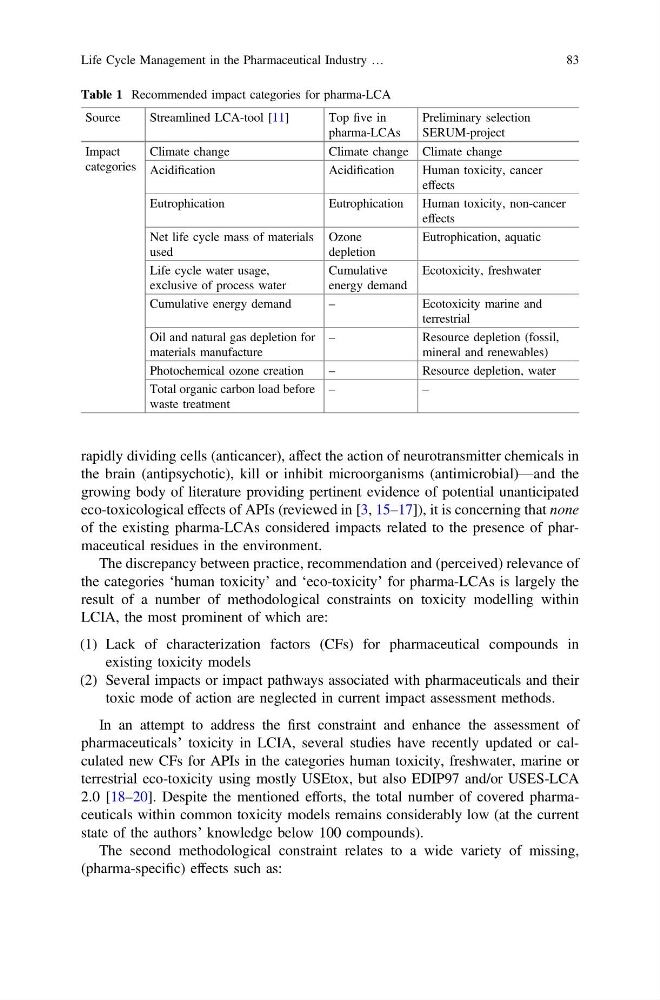
Table 1 Recommended impact categories for pharma-LCA
Source
Streamlined LCA-tool [11]
Top five in
pharma-LCAs
Preliminary selection
SERUM-project
Impact
categories
Climate change
Climate change Climate change
Acidification
Acidification
Human toxicity, cancer
effects
Eutrophication
Eutrophication Human toxicity, non-cancer
effects
Net life cycle mass of materials
used
Ozone
depletion
Eutrophication, aquatic
Life cycle water usage,
exclusive of process water
Cumulative
energy demand
Ecotoxicity, freshwater
Cumulative energy demand
–
Ecotoxicity marine and
terrestrial
Oil and natural gas depletion for
materials manufacture
–
Resource depletion (fossil,
mineral and renewables)
Photochemical ozone creation
–
Resource depletion, water
Total organic carbon load before
waste treatment
–
–
Life Cycle Management in the Pharmaceutical Industry …
83
the brain (antipsychotic), kill or inhibit microorganisms (antimicrobial)—and the
growing body of literature providing pertinent evidence of potential unanticipated
eco-toxicological effects of APIs (reviewed in [3, 15–17]), it is concerning that none
of the existing pharma-LCAs considered impacts related to the presence of pharmaceutical residues in the environment.
The discrepancy between practice, recommendation and (perceived) relevance of
the categories ‘human toxicity’ and ‘eco-toxicity’ for pharma-LCAs is largely the
result of a number of methodological constraints on toxicity modelling within
LCIA, the most prominent of which are:
(1) Lack of characterization factors (CFs) for pharmaceutical compounds in
existing toxicity models
(2) Several impacts or impact pathways associated with pharmaceuticals and their
toxic mode of action are neglected in current impact assessment methods.
In an attempt to address the first constraint and enhance the assessment of
pharmaceuticals’ toxicity in LCIA, several studies have recently updated or calculated new CFs for APIs in the categories human toxicity, freshwater, marine or
terrestrial eco-toxicity using mostly USEtox, but also EDIP97 and/or USES-LCA
2.0 [18–20]. Despite the mentioned efforts, the total number of covered pharmaceuticals within common toxicity models remains considerably low (at the current
state of the authors’ knowledge below 100 compounds).
The second methodological constraint relates to a wide variety of missing,
(pharma-specific) effects such as:
Table 1 Recommended impact categories for pharma-LCA
Source
Streamlined LCA-tool [11]
Top five in
pharma-LCAs
Preliminary selection
SERUM-project
Impact
categories
Climate change
Climate change Climate change
Acidification
Acidification
Human toxicity, cancer
effects
Eutrophication
Eutrophication Human toxicity, non-cancer
effects
Net life cycle mass of materials
used
Ozone
depletion
Eutrophication, aquatic
Life cycle water usage,
exclusive of process water
Cumulative
energy demand
Ecotoxicity, freshwater
Cumulative energy demand
–
Ecotoxicity marine and
terrestrial
Oil and natural gas depletion for
materials manufacture
–
Resource depletion (fossil,
mineral and renewables)
Photochemical ozone creation
–
Resource depletion, water
Total organic carbon load before
waste treatment
–
–
Life Cycle Management in the Pharmaceutical Industry …
83