

4 LCA Benchmarks for Building Elements
and Whole-Building
The LCA-based benchmarks could also be applied to the main building elements
and the whole-buildings in the GPP for buildings and in the CAMs criteria.
LCA benchmark values for the main building elements are already used in the
construction sector [13]. According to the main studies analysed from the literature
review [8–12], this study tried to define a benchmarking methodology to set
environmental LCA-based benchmarks for building elements, explaining the possible methodological processes. The building elements categories to be considered
should refer to construction technologies and practices commonly used, in this
work four categories were considered: structure frame, floors, roof, external walls
and internal walls. The related LCA-benchmarks should be set at least for five
different generic building types, which are based on the classification often used in
the main GBRSs: commercial buildings, educational buildings, healthcare buildings, residential buildings and retail. The elements analysed should be related to a
specific context, recent (after 2010), in order to analyse the construction practices
employed in average in the country of concern. According to the national energy
parameters, prescriptions and construction practices, a range of similar constructing
solutions it is modelled for each building element identified. The data collection for
the building elements could be carried out using national databases, where buildings can be selected based on energy and environmental certifications [9, 10],
R
T
L
L
R
T
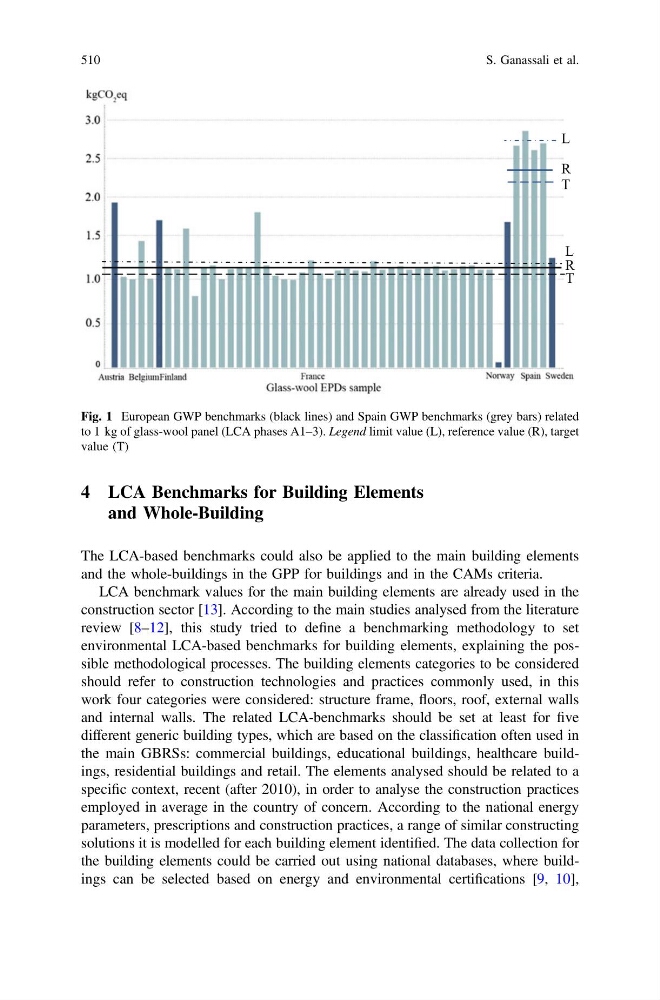
Fig. 1 European GWP benchmarks (black lines) and Spain GWP benchmarks (grey bars) related
to 1 kg of glass-wool panel (LCA phases A1–3). Legend limit value (L), reference value (R), target
value (T)
510
S. Ganassali et al.
and Whole-Building
The LCA-based benchmarks could also be applied to the main building elements
and the whole-buildings in the GPP for buildings and in the CAMs criteria.
LCA benchmark values for the main building elements are already used in the
construction sector [13]. According to the main studies analysed from the literature
review [8–12], this study tried to define a benchmarking methodology to set
environmental LCA-based benchmarks for building elements, explaining the possible methodological processes. The building elements categories to be considered
should refer to construction technologies and practices commonly used, in this
work four categories were considered: structure frame, floors, roof, external walls
and internal walls. The related LCA-benchmarks should be set at least for five
different generic building types, which are based on the classification often used in
the main GBRSs: commercial buildings, educational buildings, healthcare buildings, residential buildings and retail. The elements analysed should be related to a
specific context, recent (after 2010), in order to analyse the construction practices
employed in average in the country of concern. According to the national energy
parameters, prescriptions and construction practices, a range of similar constructing
solutions it is modelled for each building element identified. The data collection for
the building elements could be carried out using national databases, where buildings can be selected based on energy and environmental certifications [9, 10],
R
T
L
L
R
T
Fig. 1 European GWP benchmarks (black lines) and Spain GWP benchmarks (grey bars) related
to 1 kg of glass-wool panel (LCA phases A1–3). Legend limit value (L), reference value (R), target
value (T)
510
S. Ganassali et al.