

2.3.2 Specific Scenarios of Use from Experimental Measures
The focus here is on the influence of end-user behaviour on the energy consumption. Data for specific use scenarios were collected from experimental measures in
external condition, with two similar trailer refrigeration units (in terms of unit
model, obsolescence and hours of running), which are actually used by customers.
In this case, energy consumption was measured depending on four parameters of
use linked to the setting of the TRU (setting point, operating mode) and end-user
behaviour (on/off during door openings, use of curtains for door openings). For the
setting point, the two most common temperatures (0 and −20 °C) were selected
from the European average usage scenario and one temperature (−25 °C) was
arbitrarily selected to show the influence of a setting temperature that is not optimal
but does not affect the cold chain integrity. For each measure, the standard deviation
has been calculated. Finally, eleven scenarios of use were built (Table 3). Other
possible scenarios are either not representative of a real situation or too
resource-expensive considering all the possible combinations of parameters.
2.4 Results of Energy Consumption Modelling
In order to assess the potential differences between average and specific usage
scenarios, the global energy consumption has been calculated based on 1500 h of
use of a TRU (Fig. 2).
Concerning door-openings, we assumed one 5-min period and one 10-min
period during the experimental time of 3 h.
Results show that, depending on the end-user behaviour, energy consumption
can increase or decrease compared to the average European scenario. The environmental footprint is directly correlated with diesel energy consumption.
Energy consumption in specific scenarios ranges from −82 to +9.6% of the
average European scenario when considering 1500 h of use of the TRU (Fig. 2).
Results also show the influence of different parameters, especially the influence
of end-user behaviour. The use of start/stop operating mode for frozen product is a
recommended setting to ensure a good quality of cold chain and less energy
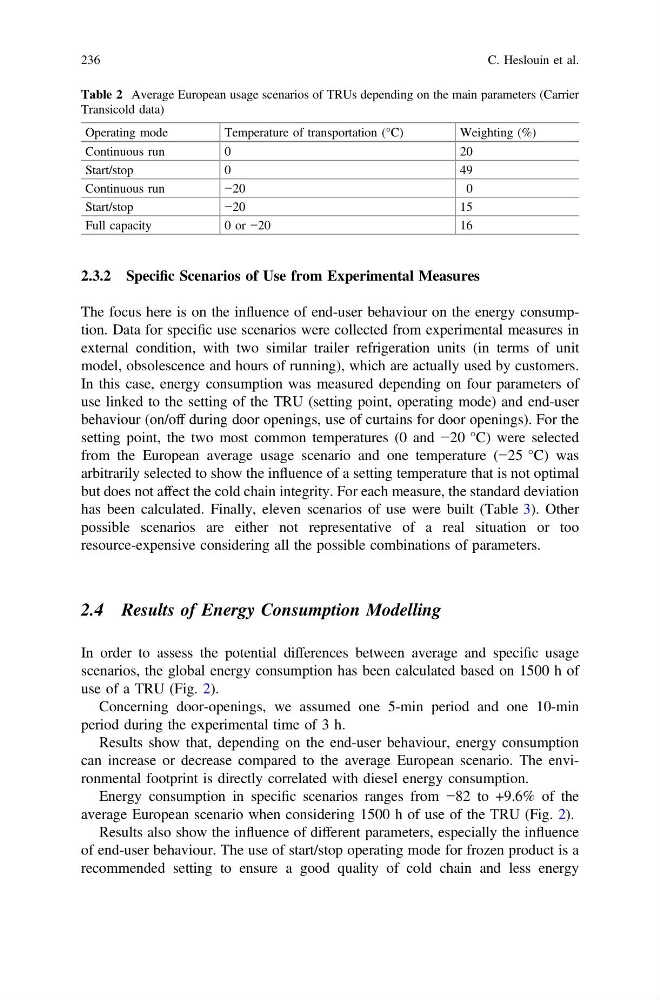
Table 2 Average European usage scenarios of TRUs depending on the main parameters (Carrier
Transicold data)
Operating mode
Temperature of transportation (°C)
Weighting (%)
Continuous run
0
20
Start/stop
0
49
Continuous run
−20
0
Start/stop
−20
15
Full capacity
0 or −20
16
236
C. Heslouin et al.
The focus here is on the influence of end-user behaviour on the energy consumption. Data for specific use scenarios were collected from experimental measures in
external condition, with two similar trailer refrigeration units (in terms of unit
model, obsolescence and hours of running), which are actually used by customers.
In this case, energy consumption was measured depending on four parameters of
use linked to the setting of the TRU (setting point, operating mode) and end-user
behaviour (on/off during door openings, use of curtains for door openings). For the
setting point, the two most common temperatures (0 and −20 °C) were selected
from the European average usage scenario and one temperature (−25 °C) was
arbitrarily selected to show the influence of a setting temperature that is not optimal
but does not affect the cold chain integrity. For each measure, the standard deviation
has been calculated. Finally, eleven scenarios of use were built (Table 3). Other
possible scenarios are either not representative of a real situation or too
resource-expensive considering all the possible combinations of parameters.
2.4 Results of Energy Consumption Modelling
In order to assess the potential differences between average and specific usage
scenarios, the global energy consumption has been calculated based on 1500 h of
use of a TRU (Fig. 2).
Concerning door-openings, we assumed one 5-min period and one 10-min
period during the experimental time of 3 h.
Results show that, depending on the end-user behaviour, energy consumption
can increase or decrease compared to the average European scenario. The environmental footprint is directly correlated with diesel energy consumption.
Energy consumption in specific scenarios ranges from −82 to +9.6% of the
average European scenario when considering 1500 h of use of the TRU (Fig. 2).
Results also show the influence of different parameters, especially the influence
of end-user behaviour. The use of start/stop operating mode for frozen product is a
recommended setting to ensure a good quality of cold chain and less energy
Table 2 Average European usage scenarios of TRUs depending on the main parameters (Carrier
Transicold data)
Operating mode
Temperature of transportation (°C)
Weighting (%)
Continuous run
0
20
Start/stop
0
49
Continuous run
−20
0
Start/stop
−20
15
Full capacity
0 or −20
16
236
C. Heslouin et al.