

projects on lightweight structures in collaboration between research and large-scale
industry production are reflected. This encompasses strengths and weaknesses of
current exchange between the involved domains and the impacts of derived decisions. A generalization and aggregation to key requirements guides future research
in LCE for lightweight structures. Further activities require to focus on the linkage
of technology-based decisions towards a macro-level eco-efficiency enabling a
broader sustainability performance, as e.g. promoted by Huppes & Ishikawa [5].
2 Automotive Lightweight Structures and LCE
2.1 Design of Automotive Lightweight Structures
Lightweight design (LWD) is an engineering approach intending to reduce a product’s weight without downgrading its performance. From a mechanical engineering point of view, the intention is to improve load-bearing capacities without
increasing weight [6]. Lightweight design as a discipline is a combination of product development, material science as well as mechanics. Different lightweight
strategies are distinguished. Material LWD promotes the substitution towards
materials that show an improved technical performance for the specific application.
Form LWD targets the shape and topology of structures according to the required
load case. Manufacturing LWD enables the manufacturing of lightweight structures
through new processes. Constraint LWD subsumes external requirements that
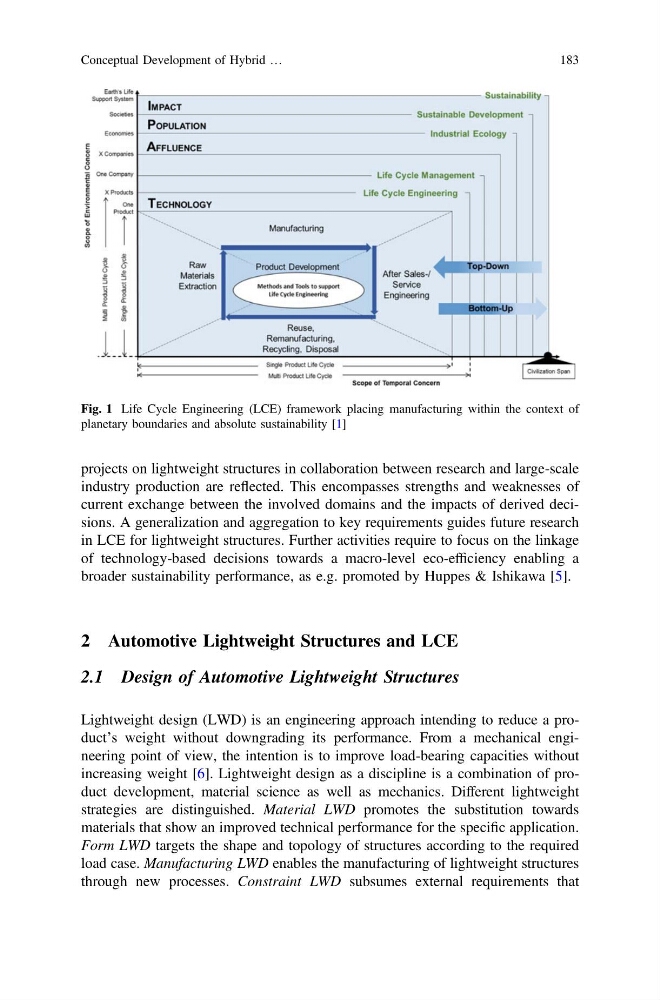
Fig. 1 Life Cycle Engineering (LCE) framework placing manufacturing within the context of
planetary boundaries and absolute sustainability [1]
Conceptual Development of Hybrid …
183
industry production are reflected. This encompasses strengths and weaknesses of
current exchange between the involved domains and the impacts of derived decisions. A generalization and aggregation to key requirements guides future research
in LCE for lightweight structures. Further activities require to focus on the linkage
of technology-based decisions towards a macro-level eco-efficiency enabling a
broader sustainability performance, as e.g. promoted by Huppes & Ishikawa [5].
2 Automotive Lightweight Structures and LCE
2.1 Design of Automotive Lightweight Structures
Lightweight design (LWD) is an engineering approach intending to reduce a product’s weight without downgrading its performance. From a mechanical engineering point of view, the intention is to improve load-bearing capacities without
increasing weight [6]. Lightweight design as a discipline is a combination of product development, material science as well as mechanics. Different lightweight
strategies are distinguished. Material LWD promotes the substitution towards
materials that show an improved technical performance for the specific application.
Form LWD targets the shape and topology of structures according to the required
load case. Manufacturing LWD enables the manufacturing of lightweight structures
through new processes. Constraint LWD subsumes external requirements that
Fig. 1 Life Cycle Engineering (LCE) framework placing manufacturing within the context of
planetary boundaries and absolute sustainability [1]
Conceptual Development of Hybrid …
183