

aim could be achieved through informative and formative campaigns performed at
local level by municipal authorities, NGOs, scholar programmes etc. A real case
study of a positive achievement is the experimental program introduced by Agenzia
Milanese Servizi Ambientali (AMSA) [25] in 2016 related to the collection of
biogenic waste produced at street markets level in Milan. The implementation of ad
hoc organic waste collection system [26], along with an effective informative
campaign have allowed to reach valuable results: in the five months of experimentation in the fifteen street markets passed from 60 metric tonnes (2015) to
260 metric tonnes (2016) in the same period, with an increase of around +320%
(AMSA, personal communication).
In reference to labour market increase linked to bio waste chain (point 2), it was
estimated by the European Compost Network that up to 50,000 [4] new jobs in
Europe could be created if additional 60 million tonnes of municipal bio-waste
would be collected and composted/anaerobically digested across Europe.
4 Conclusions
It has become clear that globally the issue of food waste has significant social,
economic and environmental impacts. The Circular Economy Package, published
by the EU Commission in December 2015, contains specific proposals addressing
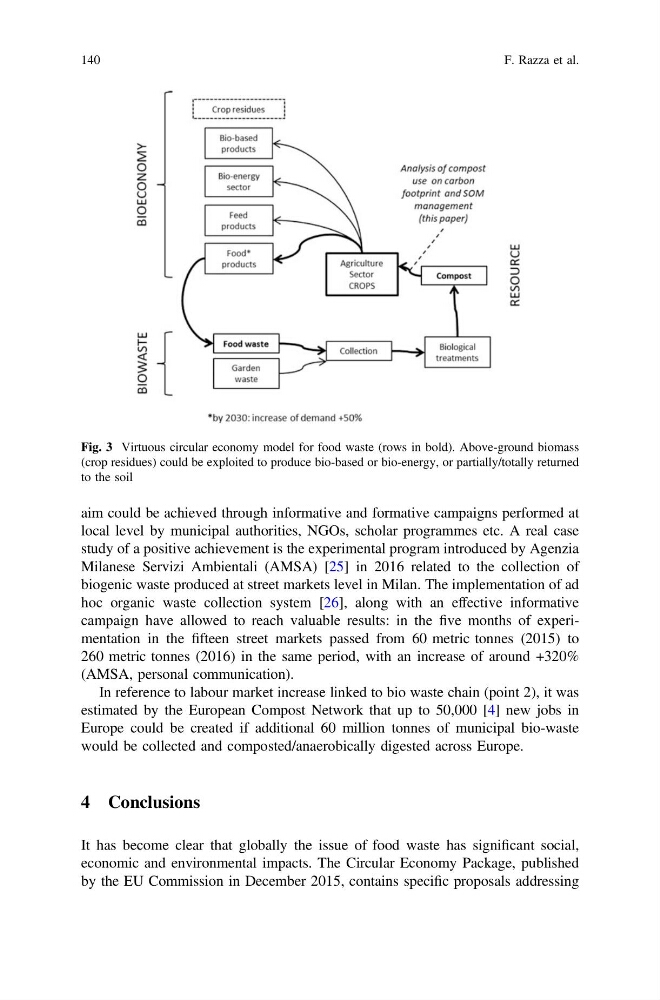
Fig. 3 Virtuous circular economy model for food waste (rows in bold). Above-ground biomass
(crop residues) could be exploited to produce bio-based or bio-energy, or partially/totally returned
to the soil
140
F. Razza et al.
local level by municipal authorities, NGOs, scholar programmes etc. A real case
study of a positive achievement is the experimental program introduced by Agenzia
Milanese Servizi Ambientali (AMSA) [25] in 2016 related to the collection of
biogenic waste produced at street markets level in Milan. The implementation of ad
hoc organic waste collection system [26], along with an effective informative
campaign have allowed to reach valuable results: in the five months of experimentation in the fifteen street markets passed from 60 metric tonnes (2015) to
260 metric tonnes (2016) in the same period, with an increase of around +320%
(AMSA, personal communication).
In reference to labour market increase linked to bio waste chain (point 2), it was
estimated by the European Compost Network that up to 50,000 [4] new jobs in
Europe could be created if additional 60 million tonnes of municipal bio-waste
would be collected and composted/anaerobically digested across Europe.
4 Conclusions
It has become clear that globally the issue of food waste has significant social,
economic and environmental impacts. The Circular Economy Package, published
by the EU Commission in December 2015, contains specific proposals addressing
Fig. 3 Virtuous circular economy model for food waste (rows in bold). Above-ground biomass
(crop residues) could be exploited to produce bio-based or bio-energy, or partially/totally returned
to the soil
140
F. Razza et al.