

The calculation of the life cycle inventory for BMB products is according to the
equation as shown below:
B ¼ B fossil þ a  (cv BN=N  B BN À B N ) þ b  (cv BG=NG  B BG À B NG Þ
where:
B, B fossil , B BN , B BG , B N , B NG : environmental burdens
a: amount of naphtha substituted by bionaphtha
b: amount of natural gas substituted by biogas
cv: “chemical value” factor (dimensionless): cv = LHV fossil feedstock (substituted) /
LHV biofeedstock
LHV: lower heating value
Indices: BN = bionaphtha, N = naphtha, BG = biogas, NG = natural gas
4.1 Chemical Value Factor (cv)
Fossil feedstocks cannot always be replaced equally on a mass basis by bio-based
comparatives, because of its different chemical nature in many cases. Sometimes
bio-based feedstocks are used instead of fossil, where the carbon content is similar,
but the energetic value is lower. Therefore, it is necessary to consider the “chemical
value” of feedstock (the term coined by BASF in the context of the BMB approach,
although it is not necessarily related to chemical parameters but is used to denote
the use of feedstocks as chemicals rather than energy sources). The main feedstocks
in the chemical industry are naphtha and natural gas, which are further processed
either by cracking or oxidation, which takes place at high temperatures. The
calorific value of those feedstocks can be used as an approximation of the chemical
value, assuming lower heating value (LHV). The latter is also the determining
factor for the design of the plant.
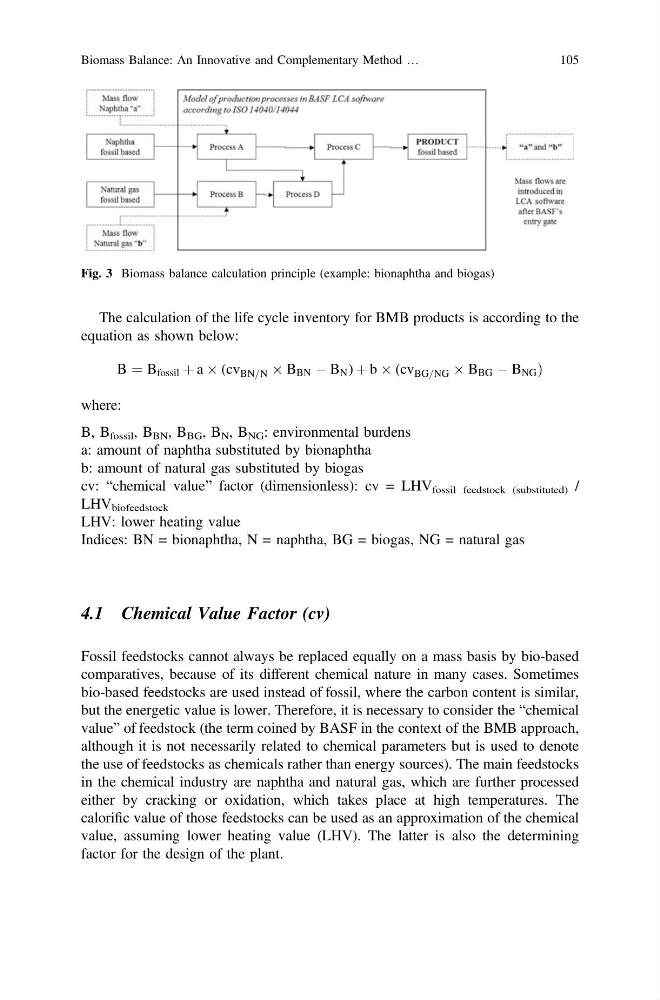
Fig. 3 Biomass balance calculation principle (example: bionaphtha and biogas)
Biomass Balance: An Innovative and Complementary Method …
105
equation as shown below:
B ¼ B fossil þ a  (cv BN=N  B BN À B N ) þ b  (cv BG=NG  B BG À B NG Þ
where:
B, B fossil , B BN , B BG , B N , B NG : environmental burdens
a: amount of naphtha substituted by bionaphtha
b: amount of natural gas substituted by biogas
cv: “chemical value” factor (dimensionless): cv = LHV fossil feedstock (substituted) /
LHV biofeedstock
LHV: lower heating value
Indices: BN = bionaphtha, N = naphtha, BG = biogas, NG = natural gas
4.1 Chemical Value Factor (cv)
Fossil feedstocks cannot always be replaced equally on a mass basis by bio-based
comparatives, because of its different chemical nature in many cases. Sometimes
bio-based feedstocks are used instead of fossil, where the carbon content is similar,
but the energetic value is lower. Therefore, it is necessary to consider the “chemical
value” of feedstock (the term coined by BASF in the context of the BMB approach,
although it is not necessarily related to chemical parameters but is used to denote
the use of feedstocks as chemicals rather than energy sources). The main feedstocks
in the chemical industry are naphtha and natural gas, which are further processed
either by cracking or oxidation, which takes place at high temperatures. The
calorific value of those feedstocks can be used as an approximation of the chemical
value, assuming lower heating value (LHV). The latter is also the determining
factor for the design of the plant.
Fig. 3 Biomass balance calculation principle (example: bionaphtha and biogas)
Biomass Balance: An Innovative and Complementary Method …
105