

323
• Cascading streams and materials development (Up cycling post-consumer materials from other products and industries). Developing up cycling solutions for
low value materials (materials from garment industry used in products).
• Together with its suppliers, HP has developed analytical and functional quality
tests for incoming RCP (recycled content plastic) feed streams to ensure product
quality is not compromised. This is particularly important when considering for
cascaded streams to be up-cycled into HP products.
Certain challenges of using RCP have been overcome in the course of this work:
• Impurities – potential impact on ink quality. The ink inside cartridges is a complex chemical formulation designed to perform under specifi c conditions. HP
doesn’t consider that it sells ink or cartridges, customers want the printed page.
Customers also expect that the output is perfect from the fi rst page to the last.
• Molding and performance – negative impact to production molds and tools can
cost millions of dollars in damage and lost manufacturing time.
• Product component dimensional tolerances (reduced fl exing in large sheet components), manufacturability (ease of manufacturing), yield (reducing material
waste) and supply chain implications.
• The assembly and performance in the customer’s hands.
• The qualifi cation of new resin formulations for manufacturing applications can
be a slow process. HP has worked to reduce time for internal certifi cation.
• Design teams have been involved in decisions around material properties and
color and cosmetics of fi nished products. These technical discussions have
debunked the commonly held belief that recovered/recycled materials are inferior through product and process performance testing and quality analysis. RCP
materials have not resulted in any documented customer quality issue/concern.
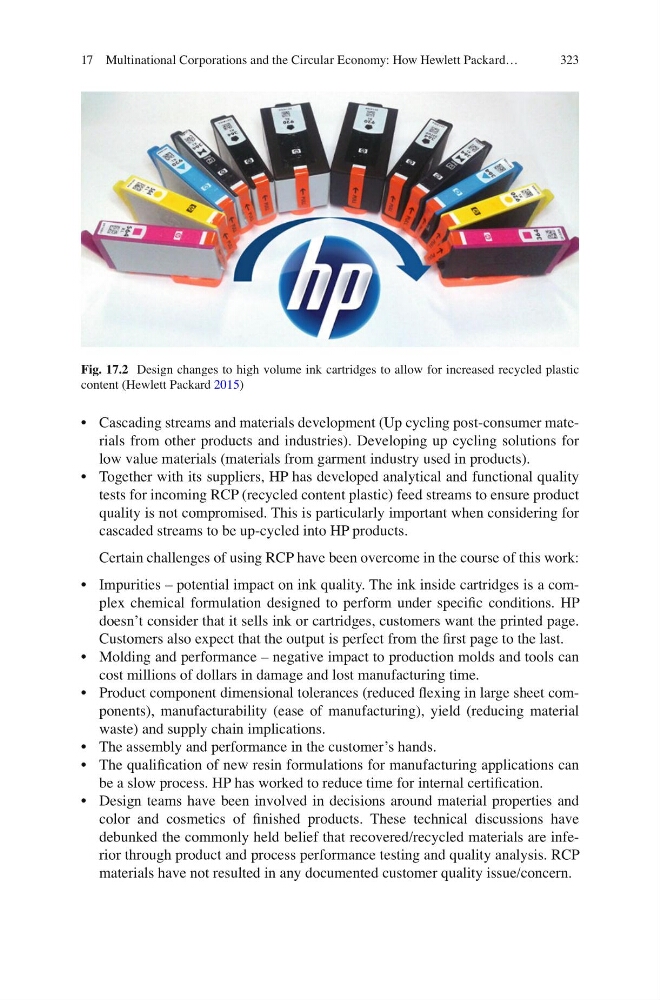
Fig. 17.2 Design changes to high volume ink cartridges to allow for increased recycled plastic
content (Hewlett Packard 2015 )
17 Multinational Corporations and the Circular Economy: How Hewlett Packard…
• Cascading streams and materials development (Up cycling post-consumer materials from other products and industries). Developing up cycling solutions for
low value materials (materials from garment industry used in products).
• Together with its suppliers, HP has developed analytical and functional quality
tests for incoming RCP (recycled content plastic) feed streams to ensure product
quality is not compromised. This is particularly important when considering for
cascaded streams to be up-cycled into HP products.
Certain challenges of using RCP have been overcome in the course of this work:
• Impurities – potential impact on ink quality. The ink inside cartridges is a complex chemical formulation designed to perform under specifi c conditions. HP
doesn’t consider that it sells ink or cartridges, customers want the printed page.
Customers also expect that the output is perfect from the fi rst page to the last.
• Molding and performance – negative impact to production molds and tools can
cost millions of dollars in damage and lost manufacturing time.
• Product component dimensional tolerances (reduced fl exing in large sheet components), manufacturability (ease of manufacturing), yield (reducing material
waste) and supply chain implications.
• The assembly and performance in the customer’s hands.
• The qualifi cation of new resin formulations for manufacturing applications can
be a slow process. HP has worked to reduce time for internal certifi cation.
• Design teams have been involved in decisions around material properties and
color and cosmetics of fi nished products. These technical discussions have
debunked the commonly held belief that recovered/recycled materials are inferior through product and process performance testing and quality analysis. RCP
materials have not resulted in any documented customer quality issue/concern.
Fig. 17.2 Design changes to high volume ink cartridges to allow for increased recycled plastic
content (Hewlett Packard 2015 )
17 Multinational Corporations and the Circular Economy: How Hewlett Packard…