

193
4 The Rebound Effect
The discussions above lead to many suggestions concerning ways that the carbon
footprints of households may be reduced, but this is beyond the scope of this chapter, as explained in Sect. 1 . However, a systemic issue that works against many
measures suggested for reducing emissions (such as installing loft insulation and
travelling less) is the ‘rebound effect’. The rebound effect, in relation to households,
can be explained as follows (Sorrell 2007 ; Maxwell et al. 2011 ): When an action is
carried out that is intended to save energy, it will often result in saving money also.
However, a household always uses its income in some way or other. For example,
when purchasing a car, suppose the purchaser decides to buy one that is more fuel
effi cient than the average car on the market. Knowing his normal mileage, he can
calculate the fuel saved, and hence by how much he will expect to reduce his carbon
footprint. However, as less fuel is now used for his normal journeys, less money is
spent on this fuel. This freed up money might be spent on driving further, which will
result in more carbon emissions. This is called the direct rebound effect. Alternatively,
the money saved might be spent on something entirely different from motor vehicle
fuel, such as taking a vacation. This will also give rise to more emissions, and this
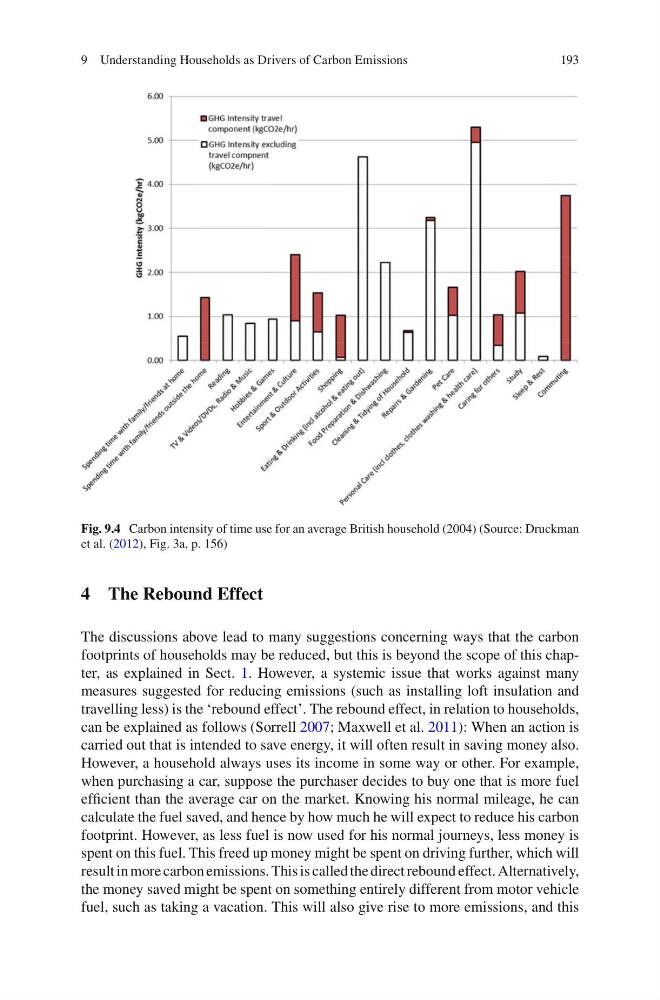
Fig. 9.4 Carbon intensity of time use for an average British household (2004) (Source: Druckman
et al. ( 2012 ), Fig. 3a, p. 156)
9 Understanding Households as Drivers of Carbon Emissions
4 The Rebound Effect
The discussions above lead to many suggestions concerning ways that the carbon
footprints of households may be reduced, but this is beyond the scope of this chapter, as explained in Sect. 1 . However, a systemic issue that works against many
measures suggested for reducing emissions (such as installing loft insulation and
travelling less) is the ‘rebound effect’. The rebound effect, in relation to households,
can be explained as follows (Sorrell 2007 ; Maxwell et al. 2011 ): When an action is
carried out that is intended to save energy, it will often result in saving money also.
However, a household always uses its income in some way or other. For example,
when purchasing a car, suppose the purchaser decides to buy one that is more fuel
effi cient than the average car on the market. Knowing his normal mileage, he can
calculate the fuel saved, and hence by how much he will expect to reduce his carbon
footprint. However, as less fuel is now used for his normal journeys, less money is
spent on this fuel. This freed up money might be spent on driving further, which will
result in more carbon emissions. This is called the direct rebound effect. Alternatively,
the money saved might be spent on something entirely different from motor vehicle
fuel, such as taking a vacation. This will also give rise to more emissions, and this
Fig. 9.4 Carbon intensity of time use for an average British household (2004) (Source: Druckman
et al. ( 2012 ), Fig. 3a, p. 156)
9 Understanding Households as Drivers of Carbon Emissions