

108
deep-seated cultural changes can provide a foundation from which symbioses and
other forms of material exchange begin to actually move economies toward sustainability” (Ehrenfeld and Gertler 1997 ).
Acknowledgments This far-ranging chapter was greatly enhanced by the contributions of numerous colleagues. We would like to thank many thought leaders whose names are mentioned in the
text and also some who helped with research and assembly, especially Shi Lei, Raymond Paquin,
Weslynne Ashton, and Ray Côté. At Yale, we thank Reid Lifset, Tom Yang, and Lillian Childress.
Open Access This chapter is distributed under the terms of the Creative Commons Attribution
Noncommercial License, which permits any noncommercial use, distribution, and reproduction in
any medium, provided the original author(s) and source are credited.
Appendix
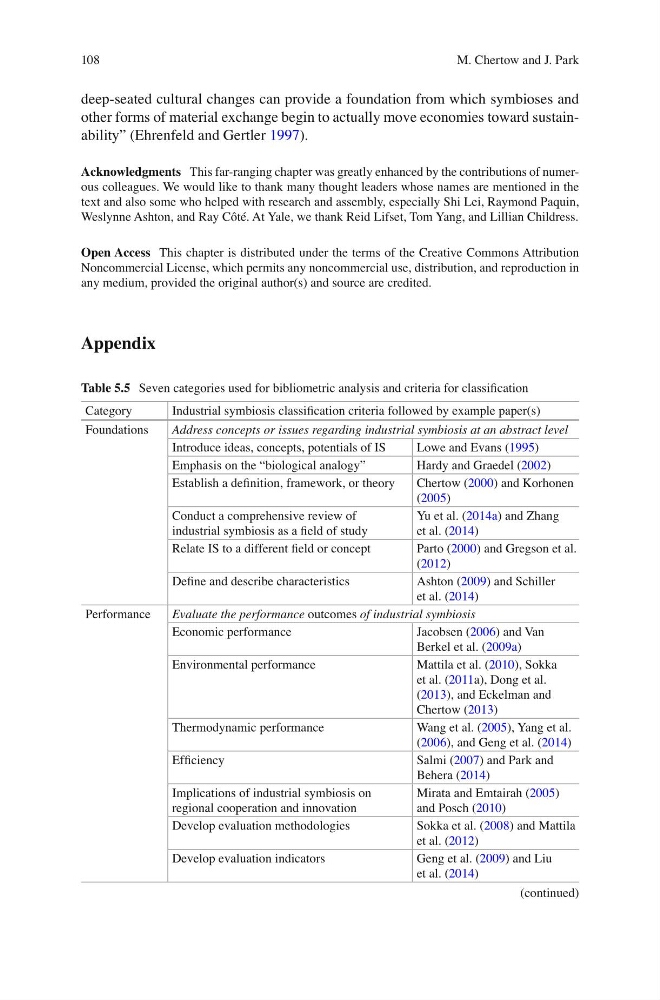
Table 5.5 Seven categories used for bibliometric analysis and criteria for classifi cation
Category
Industrial symbiosis classifi cation criteria followed by example paper(s)
Foundations
Address concepts or issues regarding industrial symbiosis at an abstract level
Introduce ideas, concepts, potentials of IS
Lowe and Evans ( 1995 )
Emphasis on the “biological analogy”
Hardy and Graedel ( 2002 )
Establish a defi nition, framework, or theory
Chertow ( 2000 ) and Korhonen
( 2005 )
Conduct a comprehensive review of
industrial symbiosis as a fi eld of study
Yu et al. ( 2014a ) and Zhang
et al. ( 2014 )
Relate IS to a different fi eld or concept
Parto ( 2000 ) and Gregson et al.
( 2012 )
Defi ne and describe characteristics
Ashton ( 2009 ) and Schiller
et al. ( 2014 )
Performance
Evaluate the performance outcomes of industrial symbiosis
Economic performance
Jacobsen ( 2006 ) and Van
Berkel et al. ( 2009a )
Environmental performance
Mattila et al. ( 2010 ), Sokka
et al. ( 2011 a), Dong et al.
( 2013 ), and Eckelman and
Chertow ( 2013 )
Thermodynamic performance
Wang et al. ( 2005 ), Yang et al.
( 2006 ), and Geng et al. ( 2014 )
Effi ciency
Salmi ( 2007 ) and Park and
Behera ( 2014 )
Implications of industrial symbiosis on
regional cooperation and innovation
Mirata and Emtairah ( 2005 )
and Posch ( 2010 )
Develop evaluation methodologies
Sokka et al. ( 2008 ) and Mattila
et al. ( 2012 )
Develop evaluation indicators
Geng et al. ( 2009 ) and Liu
et al. ( 2014 )
(continued)
M. Chertow and J. Park
deep-seated cultural changes can provide a foundation from which symbioses and
other forms of material exchange begin to actually move economies toward sustainability” (Ehrenfeld and Gertler 1997 ).
Acknowledgments This far-ranging chapter was greatly enhanced by the contributions of numerous colleagues. We would like to thank many thought leaders whose names are mentioned in the
text and also some who helped with research and assembly, especially Shi Lei, Raymond Paquin,
Weslynne Ashton, and Ray Côté. At Yale, we thank Reid Lifset, Tom Yang, and Lillian Childress.
Open Access This chapter is distributed under the terms of the Creative Commons Attribution
Noncommercial License, which permits any noncommercial use, distribution, and reproduction in
any medium, provided the original author(s) and source are credited.
Appendix
Table 5.5 Seven categories used for bibliometric analysis and criteria for classifi cation
Category
Industrial symbiosis classifi cation criteria followed by example paper(s)
Foundations
Address concepts or issues regarding industrial symbiosis at an abstract level
Introduce ideas, concepts, potentials of IS
Lowe and Evans ( 1995 )
Emphasis on the “biological analogy”
Hardy and Graedel ( 2002 )
Establish a defi nition, framework, or theory
Chertow ( 2000 ) and Korhonen
( 2005 )
Conduct a comprehensive review of
industrial symbiosis as a fi eld of study
Yu et al. ( 2014a ) and Zhang
et al. ( 2014 )
Relate IS to a different fi eld or concept
Parto ( 2000 ) and Gregson et al.
( 2012 )
Defi ne and describe characteristics
Ashton ( 2009 ) and Schiller
et al. ( 2014 )
Performance
Evaluate the performance outcomes of industrial symbiosis
Economic performance
Jacobsen ( 2006 ) and Van
Berkel et al. ( 2009a )
Environmental performance
Mattila et al. ( 2010 ), Sokka
et al. ( 2011 a), Dong et al.
( 2013 ), and Eckelman and
Chertow ( 2013 )
Thermodynamic performance
Wang et al. ( 2005 ), Yang et al.
( 2006 ), and Geng et al. ( 2014 )
Effi ciency
Salmi ( 2007 ) and Park and
Behera ( 2014 )
Implications of industrial symbiosis on
regional cooperation and innovation
Mirata and Emtairah ( 2005 )
and Posch ( 2010 )
Develop evaluation methodologies
Sokka et al. ( 2008 ) and Mattila
et al. ( 2012 )
Develop evaluation indicators
Geng et al. ( 2009 ) and Liu
et al. ( 2014 )
(continued)
M. Chertow and J. Park