

218
12 Radar Systems of Maritime Transport
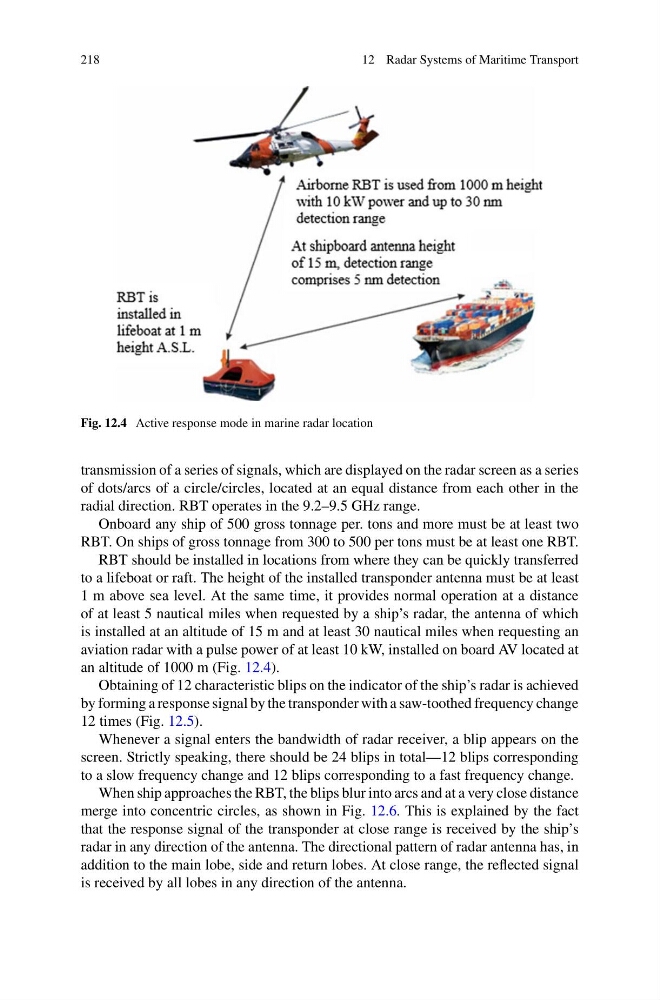
Fig. 12.4 Active response mode in marine radar location
transmission of a series of signals, which are displayed on the radar screen as a series
of dots/arcs of a circle/circles, located at an equal distance from each other in the
radial direction. RBT operates in the 9.2–9.5 GHz range.
Onboard any ship of 500 gross tonnage per. tons and more must be at least two
RBT. On ships of gross tonnage from 300 to 500 per tons must be at least one RBT.
RBT should be installed in locations from where they can be quickly transferred
to a lifeboat or raft. The height of the installed transponder antenna must be at least
1 m above sea level. At the same time, it provides normal operation at a distance
of at least 5 nautical miles when requested by a ship’s radar, the antenna of which
is installed at an altitude of 15 m and at least 30 nautical miles when requesting an
aviation radar with a pulse power of at least 10 kW, installed on board AV located at
an altitude of 1000 m (Fig. 12.4).
Obtaining of 12 characteristic blips on the indicator of the ship’s radar is achieved
by forming a response signal by the transponder with a saw-toothed frequency change
12 times (Fig. 12.5).
Whenever a signal enters the bandwidth of radar receiver, a blip appears on the
screen. Strictly speaking, there should be 24 blips in total—12 blips corresponding
to a slow frequency change and 12 blips corresponding to a fast frequency change.
When ship approaches the RBT, the blips blur into arcs and at a very close distance
merge into concentric circles, as shown in Fig. 12.6. This is explained by the fact
that the response signal of the transponder at close range is received by the ship’s
radar in any direction of the antenna. The directional pattern of radar antenna has, in
addition to the main lobe, side and return lobes. At close range, the reflected signal
is received by all lobes in any direction of the antenna.
12 Radar Systems of Maritime Transport
Fig. 12.4 Active response mode in marine radar location
transmission of a series of signals, which are displayed on the radar screen as a series
of dots/arcs of a circle/circles, located at an equal distance from each other in the
radial direction. RBT operates in the 9.2–9.5 GHz range.
Onboard any ship of 500 gross tonnage per. tons and more must be at least two
RBT. On ships of gross tonnage from 300 to 500 per tons must be at least one RBT.
RBT should be installed in locations from where they can be quickly transferred
to a lifeboat or raft. The height of the installed transponder antenna must be at least
1 m above sea level. At the same time, it provides normal operation at a distance
of at least 5 nautical miles when requested by a ship’s radar, the antenna of which
is installed at an altitude of 15 m and at least 30 nautical miles when requesting an
aviation radar with a pulse power of at least 10 kW, installed on board AV located at
an altitude of 1000 m (Fig. 12.4).
Obtaining of 12 characteristic blips on the indicator of the ship’s radar is achieved
by forming a response signal by the transponder with a saw-toothed frequency change
12 times (Fig. 12.5).
Whenever a signal enters the bandwidth of radar receiver, a blip appears on the
screen. Strictly speaking, there should be 24 blips in total—12 blips corresponding
to a slow frequency change and 12 blips corresponding to a fast frequency change.
When ship approaches the RBT, the blips blur into arcs and at a very close distance
merge into concentric circles, as shown in Fig. 12.6. This is explained by the fact
that the response signal of the transponder at close range is received by the ship’s
radar in any direction of the antenna. The directional pattern of radar antenna has, in
addition to the main lobe, side and return lobes. At close range, the reflected signal
is received by all lobes in any direction of the antenna.