

vi
CONTENTS
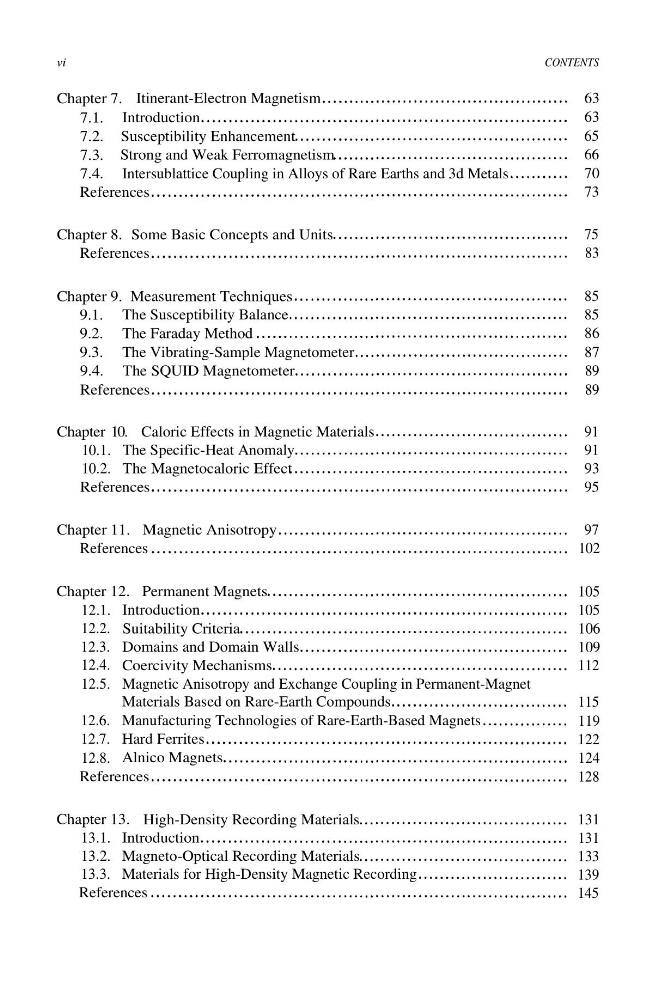
Chapter 7. Itinerant-Electron Magnetism
63
7.1. Introduction
63
7.2. Susceptibility Enhancement
65
7.3. Strong and Weak Ferromagnetism
66
7.4. Intersublattice Coupling in Alloys of Rare Earths and 3d Metals
70
References
73
Chapter 8. Some Basic Concepts and Units
75
References
83
Chapter 9. Measurement Techniques
85
9.1. The Susceptibility Balance
85
9.2. The Faraday Method
86
9.3. The Vibrating-Sample Magnetometer
87
9.4. The SQUID Magnetometer
89
References
89
Chapter 10. Caloric Effects in Magnetic Materials
91
10.1. The Specific-Heat Anomaly
91
10.2. The Magnetocaloric Effect
93
References
95
Chapter 11. Magnetic Anisotropy
97
References
102
Chapter 12. Permanent Magnets
105
12.1. Introduction
105
12.2. Suitability Criteria
106
12.3. Domains and Domain Walls
109
12.4. Coercivity Mechanisms
112
12.5. Magnetic Anisotropy and Exchange Coupling in Permanent-Magnet
Materials Based on Rare-Earth Compounds
115
12.6. Manufacturing Technologies of Rare-Earth-Based Magnets
119
12.7. Hard Ferrites
122
12.8. Alnico Magnets
124
References
128
Chapter 13. High-Density Recording Materials
131
13.1. Introduction
131
13.2. Magneto-Optical Recording Materials
133
13.3. Materials for High-Density Magnetic Recording
139
References
145
CONTENTS
Chapter 7. Itinerant-Electron Magnetism
63
7.1. Introduction
63
7.2. Susceptibility Enhancement
65
7.3. Strong and Weak Ferromagnetism
66
7.4. Intersublattice Coupling in Alloys of Rare Earths and 3d Metals
70
References
73
Chapter 8. Some Basic Concepts and Units
75
References
83
Chapter 9. Measurement Techniques
85
9.1. The Susceptibility Balance
85
9.2. The Faraday Method
86
9.3. The Vibrating-Sample Magnetometer
87
9.4. The SQUID Magnetometer
89
References
89
Chapter 10. Caloric Effects in Magnetic Materials
91
10.1. The Specific-Heat Anomaly
91
10.2. The Magnetocaloric Effect
93
References
95
Chapter 11. Magnetic Anisotropy
97
References
102
Chapter 12. Permanent Magnets
105
12.1. Introduction
105
12.2. Suitability Criteria
106
12.3. Domains and Domain Walls
109
12.4. Coercivity Mechanisms
112
12.5. Magnetic Anisotropy and Exchange Coupling in Permanent-Magnet
Materials Based on Rare-Earth Compounds
115
12.6. Manufacturing Technologies of Rare-Earth-Based Magnets
119
12.7. Hard Ferrites
122
12.8. Alnico Magnets
124
References
128
Chapter 13. High-Density Recording Materials
131
13.1. Introduction
131
13.2. Magneto-Optical Recording Materials
133
13.3. Materials for High-Density Magnetic Recording
139
References
145