

122
S. Dhingra et al.
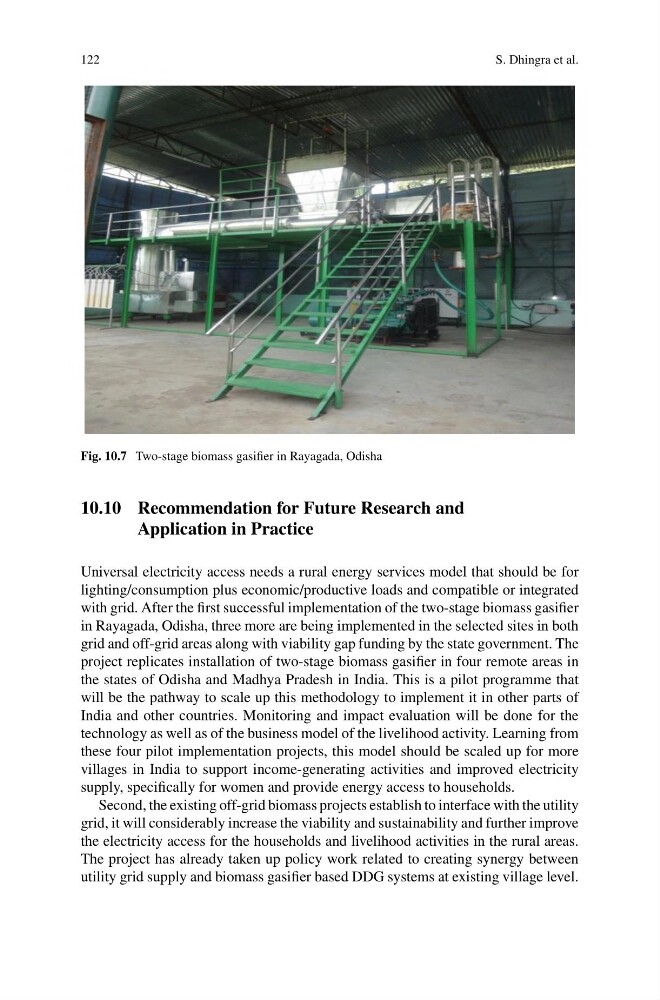
Fig. 10.7 Two-stage biomass gasifier in Rayagada, Odisha
10.10 Recommendation for Future Research and
Application in Practice
Universal electricity access needs a rural energy services model that should be for
lighting/consumption plus economic/productive loads and compatible or integrated
with grid. After the first successful implementation of the two-stage biomass gasifier
in Rayagada, Odisha, three more are being implemented in the selected sites in both
grid and off-grid areas along with viability gap funding by the state government. The
project replicates installation of two-stage biomass gasifier in four remote areas in
the states of Odisha and Madhya Pradesh in India. This is a pilot programme that
will be the pathway to scale up this methodology to implement it in other parts of
India and other countries. Monitoring and impact evaluation will be done for the
technology as well as of the business model of the livelihood activity. Learning from
these four pilot implementation projects, this model should be scaled up for more
villages in India to support income-generating activities and improved electricity
supply, specifically for women and provide energy access to households.
Second, the existing off-grid biomass projects establish to interface with the utility
grid, it will considerably increase the viability and sustainability and further improve
the electricity access for the households and livelihood activities in the rural areas.
The project has already taken up policy work related to creating synergy between
utility grid supply and biomass gasifier based DDG systems at existing village level.
S. Dhingra et al.
Fig. 10.7 Two-stage biomass gasifier in Rayagada, Odisha
10.10 Recommendation for Future Research and
Application in Practice
Universal electricity access needs a rural energy services model that should be for
lighting/consumption plus economic/productive loads and compatible or integrated
with grid. After the first successful implementation of the two-stage biomass gasifier
in Rayagada, Odisha, three more are being implemented in the selected sites in both
grid and off-grid areas along with viability gap funding by the state government. The
project replicates installation of two-stage biomass gasifier in four remote areas in
the states of Odisha and Madhya Pradesh in India. This is a pilot programme that
will be the pathway to scale up this methodology to implement it in other parts of
India and other countries. Monitoring and impact evaluation will be done for the
technology as well as of the business model of the livelihood activity. Learning from
these four pilot implementation projects, this model should be scaled up for more
villages in India to support income-generating activities and improved electricity
supply, specifically for women and provide energy access to households.
Second, the existing off-grid biomass projects establish to interface with the utility
grid, it will considerably increase the viability and sustainability and further improve
the electricity access for the households and livelihood activities in the rural areas.
The project has already taken up policy work related to creating synergy between
utility grid supply and biomass gasifier based DDG systems at existing village level.