

8 Health Hackathons Drive Affordable Medical Technology …
91
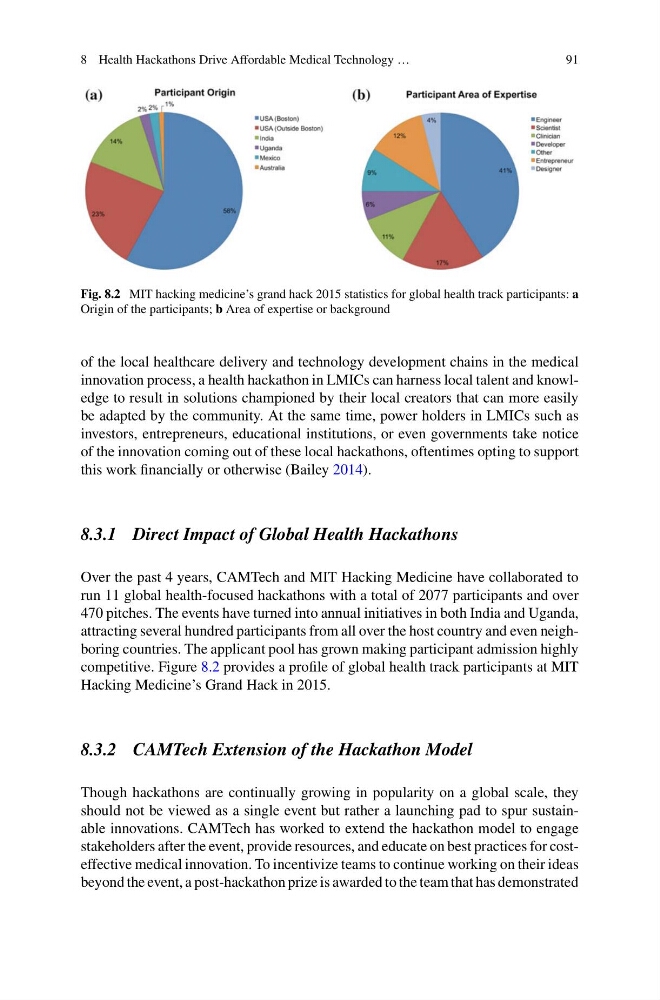
Fig. 8.2 MIT hacking medicine’s grand hack 2015 statistics for global health track participants: a
Origin of the participants; b Area of expertise or background
of the local healthcare delivery and technology development chains in the medical
innovation process, a health hackathon in LMICs can harness local talent and knowledge to result in solutions championed by their local creators that can more easily
be adapted by the community. At the same time, power holders in LMICs such as
investors, entrepreneurs, educational institutions, or even governments take notice
of the innovation coming out of these local hackathons, oftentimes opting to support
this work financially or otherwise (Bailey 2014).
8.3.1 Direct Impact of Global Health Hackathons
Over the past 4 years, CAMTech and MIT Hacking Medicine have collaborated to
run 11 global health-focused hackathons with a total of 2077 participants and over
470 pitches. The events have turned into annual initiatives in both India and Uganda,
attracting several hundred participants from all over the host country and even neighboring countries. The applicant pool has grown making participant admission highly
competitive. Figure 8.2 provides a profile of global health track participants at MIT
Hacking Medicine’s Grand Hack in 2015.
8.3.2 CAMTech Extension of the Hackathon Model
Though hackathons are continually growing in popularity on a global scale, they
should not be viewed as a single event but rather a launching pad to spur sustainable innovations. CAMTech has worked to extend the hackathon model to engage
stakeholders after the event, provide resources, and educate on best practices for costeffective medical innovation. To incentivize teams to continue working on their ideas
beyond the event, a post-hackathon prize is awarded to the team that has demonstrated
91
Fig. 8.2 MIT hacking medicine’s grand hack 2015 statistics for global health track participants: a
Origin of the participants; b Area of expertise or background
of the local healthcare delivery and technology development chains in the medical
innovation process, a health hackathon in LMICs can harness local talent and knowledge to result in solutions championed by their local creators that can more easily
be adapted by the community. At the same time, power holders in LMICs such as
investors, entrepreneurs, educational institutions, or even governments take notice
of the innovation coming out of these local hackathons, oftentimes opting to support
this work financially or otherwise (Bailey 2014).
8.3.1 Direct Impact of Global Health Hackathons
Over the past 4 years, CAMTech and MIT Hacking Medicine have collaborated to
run 11 global health-focused hackathons with a total of 2077 participants and over
470 pitches. The events have turned into annual initiatives in both India and Uganda,
attracting several hundred participants from all over the host country and even neighboring countries. The applicant pool has grown making participant admission highly
competitive. Figure 8.2 provides a profile of global health track participants at MIT
Hacking Medicine’s Grand Hack in 2015.
8.3.2 CAMTech Extension of the Hackathon Model
Though hackathons are continually growing in popularity on a global scale, they
should not be viewed as a single event but rather a launching pad to spur sustainable innovations. CAMTech has worked to extend the hackathon model to engage
stakeholders after the event, provide resources, and educate on best practices for costeffective medical innovation. To incentivize teams to continue working on their ideas
beyond the event, a post-hackathon prize is awarded to the team that has demonstrated