

8 Health Hackathons Drive Affordable Medical Technology …
89
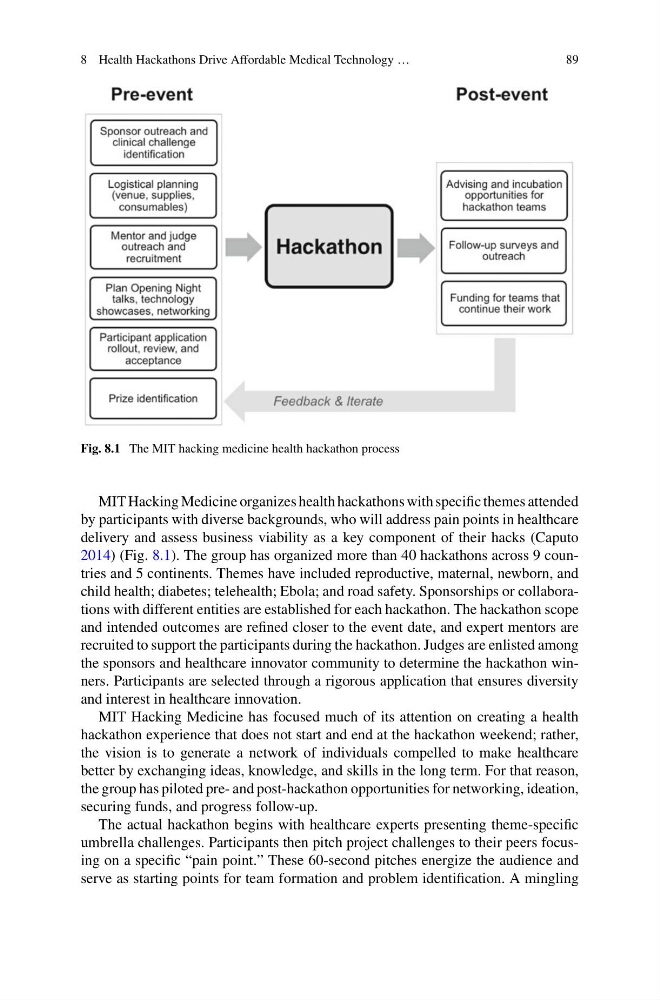
Fig. 8.1 The MIT hacking medicine health hackathon process
MIT Hacking Medicine organizes health hackathons with specific themes attended
by participants with diverse backgrounds, who will address pain points in healthcare
delivery and assess business viability as a key component of their hacks (Caputo
2014) (Fig. 8.1). The group has organized more than 40 hackathons across 9 countries and 5 continents. Themes have included reproductive, maternal, newborn, and
child health; diabetes; telehealth; Ebola; and road safety. Sponsorships or collaborations with different entities are established for each hackathon. The hackathon scope
and intended outcomes are refined closer to the event date, and expert mentors are
recruited to support the participants during the hackathon. Judges are enlisted among
the sponsors and healthcare innovator community to determine the hackathon winners. Participants are selected through a rigorous application that ensures diversity
and interest in healthcare innovation.
MIT Hacking Medicine has focused much of its attention on creating a health
hackathon experience that does not start and end at the hackathon weekend; rather,
the vision is to generate a network of individuals compelled to make healthcare
better by exchanging ideas, knowledge, and skills in the long term. For that reason,
the group has piloted pre- and post-hackathon opportunities for networking, ideation,
securing funds, and progress follow-up.
The actual hackathon begins with healthcare experts presenting theme-specific
umbrella challenges. Participants then pitch project challenges to their peers focusing on a specific “pain point.” These 60-second pitches energize the audience and
serve as starting points for team formation and problem identification. A mingling
89
Fig. 8.1 The MIT hacking medicine health hackathon process
MIT Hacking Medicine organizes health hackathons with specific themes attended
by participants with diverse backgrounds, who will address pain points in healthcare
delivery and assess business viability as a key component of their hacks (Caputo
2014) (Fig. 8.1). The group has organized more than 40 hackathons across 9 countries and 5 continents. Themes have included reproductive, maternal, newborn, and
child health; diabetes; telehealth; Ebola; and road safety. Sponsorships or collaborations with different entities are established for each hackathon. The hackathon scope
and intended outcomes are refined closer to the event date, and expert mentors are
recruited to support the participants during the hackathon. Judges are enlisted among
the sponsors and healthcare innovator community to determine the hackathon winners. Participants are selected through a rigorous application that ensures diversity
and interest in healthcare innovation.
MIT Hacking Medicine has focused much of its attention on creating a health
hackathon experience that does not start and end at the hackathon weekend; rather,
the vision is to generate a network of individuals compelled to make healthcare
better by exchanging ideas, knowledge, and skills in the long term. For that reason,
the group has piloted pre- and post-hackathon opportunities for networking, ideation,
securing funds, and progress follow-up.
The actual hackathon begins with healthcare experts presenting theme-specific
umbrella challenges. Participants then pitch project challenges to their peers focusing on a specific “pain point.” These 60-second pitches energize the audience and
serve as starting points for team formation and problem identification. A mingling