

118
4 Visco-Elasticity
1 ≡ e 1 ≡ v 1
σ
E k1
η k1
K ≡ e K ≡ v K
σ
E kK
η kK
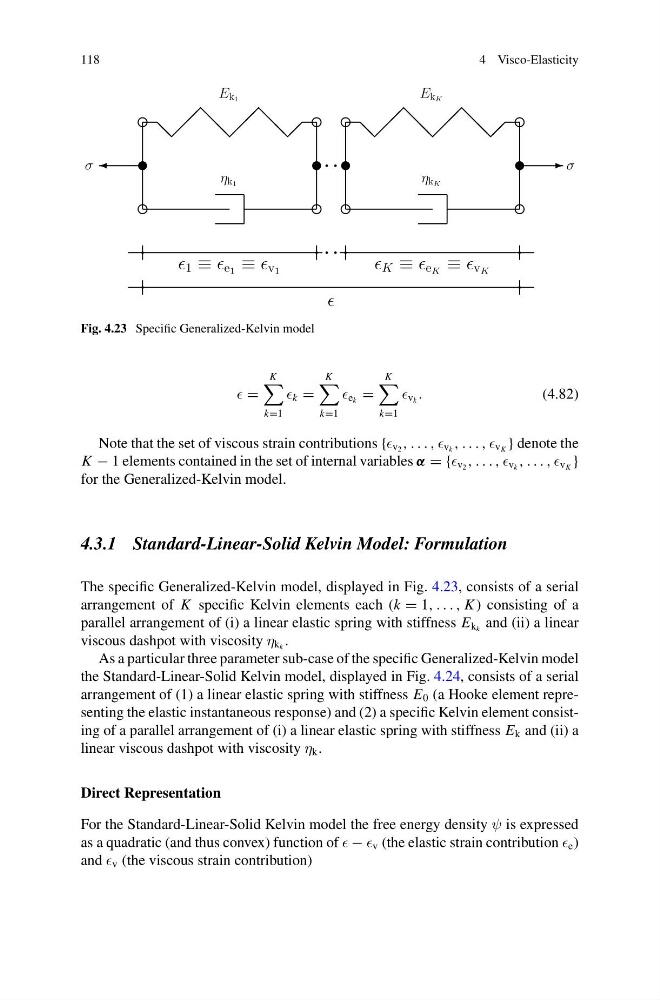
Fig. 4.23 Specific Generalized-Kelvin model
=
K
k=1
k =
K
k=1
e k =
K
k=1
v k .
(4.82)
Note that the set of viscous strain contributions { v 2 , . . . , v k , . . . , v K } denote the
K − 1 elements contained in the set of internal variables α = { v 2 , . . . , v k , . . . , v K }
for the Generalized-Kelvin model.
4.3.1 Standard-Linear-Solid Kelvin Model: Formulation
The specific Generalized-Kelvin model, displayed in Fig. 4.23, consists of a serial
arrangement of K specific Kelvin elements each (k = 1, . . . , K ) consisting of a
parallel arrangement of (i) a linear elastic spring with stiffness E k k and (ii) a linear
viscous dashpot with viscosity η k k .
As a particular three parameter sub-case of the specific Generalized-Kelvin model
the Standard-Linear-Solid Kelvin model, displayed in Fig. 4.24, consists of a serial
arrangement of (1) a linear elastic spring with stiffness E 0 (a Hooke element representing the elastic instantaneous response) and (2) a specific Kelvin element consisting of a parallel arrangement of (i) a linear elastic spring with stiffness E k and (ii) a
linear viscous dashpot with viscosity η k .
Direct Representation
For the Standard-Linear-Solid Kelvin model the free energy density ψ is expressed
as a quadratic (and thus convex) function of − v (the elastic strain contribution e )
and v (the viscous strain contribution)
4 Visco-Elasticity
1 ≡ e 1 ≡ v 1
σ
E k1
η k1
K ≡ e K ≡ v K
σ
E kK
η kK
Fig. 4.23 Specific Generalized-Kelvin model
=
K
k=1
k =
K
k=1
e k =
K
k=1
v k .
(4.82)
Note that the set of viscous strain contributions { v 2 , . . . , v k , . . . , v K } denote the
K − 1 elements contained in the set of internal variables α = { v 2 , . . . , v k , . . . , v K }
for the Generalized-Kelvin model.
4.3.1 Standard-Linear-Solid Kelvin Model: Formulation
The specific Generalized-Kelvin model, displayed in Fig. 4.23, consists of a serial
arrangement of K specific Kelvin elements each (k = 1, . . . , K ) consisting of a
parallel arrangement of (i) a linear elastic spring with stiffness E k k and (ii) a linear
viscous dashpot with viscosity η k k .
As a particular three parameter sub-case of the specific Generalized-Kelvin model
the Standard-Linear-Solid Kelvin model, displayed in Fig. 4.24, consists of a serial
arrangement of (1) a linear elastic spring with stiffness E 0 (a Hooke element representing the elastic instantaneous response) and (2) a specific Kelvin element consisting of a parallel arrangement of (i) a linear elastic spring with stiffness E k and (ii) a
linear viscous dashpot with viscosity η k .
Direct Representation
For the Standard-Linear-Solid Kelvin model the free energy density ψ is expressed
as a quadratic (and thus convex) function of − v (the elastic strain contribution e )
and v (the viscous strain contribution)