

58
and cadmium. Particularly iron is a crucial trace metal that is
strongly affecting the productivity of phytoplankton in vast
areas of the ocean (Martin and Gordon 1988; Morel et al.
1991). To facilitate trace metal uptake, phytoplankton can
make use of ligands, which are organic molecules that are
able to complex metals and help to keep them in solution.
Especially ligands complexing iron, so called siderophores,
are beneficial for phytoplankton (Hassler et al. 2011; Boiteau
et al. 2016).
Due to the strong effect iron has on the productivity of
phytoplankton, its role was assessed in large scale experiments. After the first successful iron fertilization experiments, which tested the importance of iron in situ on a large
scale (e.g., Martin et al. 1994; Coale et al. 1996), the possibility to reduce inorganic carbon with iron fertilization was
defined, yielding in sequestering of carbon dioxide during
blooms (Bakker et al. 2001, 2005; Boyd et al. 2007). While
Buesseler et al. (2004) showed that the “Southern Ocean Iron
Experiment” caused a small increase in carbon flux in the
region, the “Kerguelen Ocean and Plateau compared Study”
could prove an even higher carbon sequestration efficiency
(Blain et al. 2007).
Other, more complex molecules are even more important
for phytoplankton growth. Some species require exogenous
vitamins to grow. Especially vitamin-B depletion can negatively influence phytoplankton productivity (Gobler et al.
2007).
Oceanic dissolved organic carbon (DOC) is one of the
largest marine carbon reservoirs. Kirchman et al. (1991) calculated turnover rates of DOC using its bacterial uptake.
DOC and dissolved organic nitrogen (DON) cycle differently from each other. During phytoplankton blooms, more
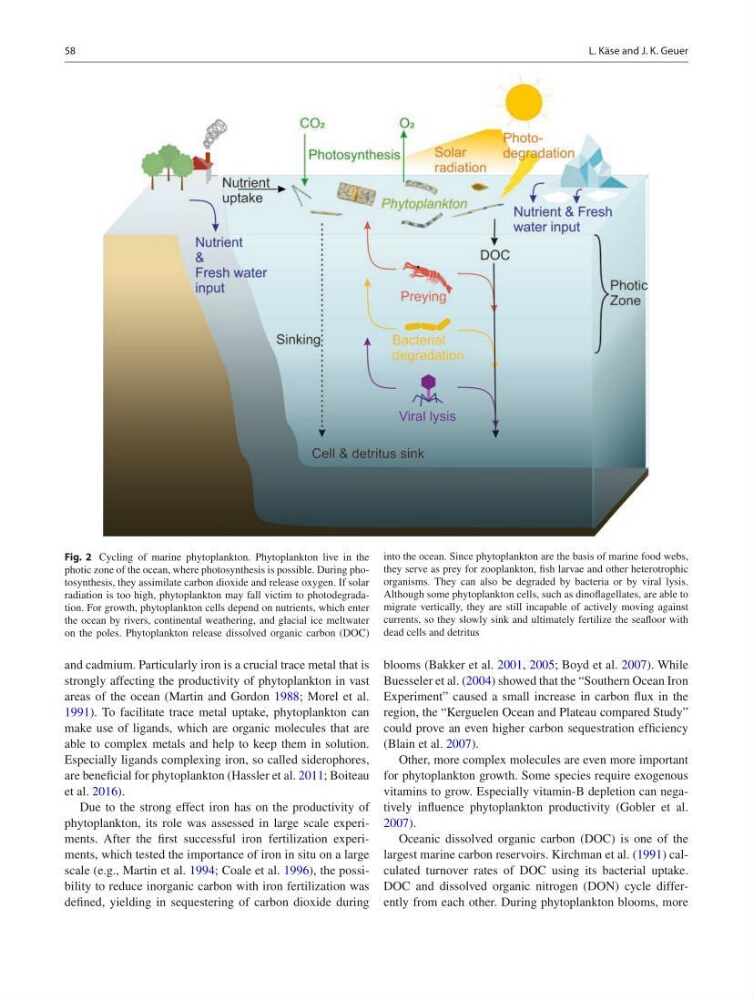
Fig. 2 Cycling of marine phytoplankton. Phytoplankton live in the
photic zone of the ocean, where photosynthesis is possible. During photosynthesis, they assimilate carbon dioxide and release oxygen. If solar
radiation is too high, phytoplankton may fall victim to photodegradation. For growth, phytoplankton cells depend on nutrients, which enter
the ocean by rivers, continental weathering, and glacial ice meltwater
on the poles. Phytoplankton release dissolved organic carbon (DOC)
into the ocean. Since phytoplankton are the basis of marine food webs,
they serve as prey for zooplankton, fish larvae and other heterotrophic
organisms. They can also be degraded by bacteria or by viral lysis.
Although some phytoplankton cells, such as dinoflagellates, are able to
migrate vertically, they are still incapable of actively moving against
currents, so they slowly sink and ultimately fertilize the seafloor with
dead cells and detritus
L. Käse and J. K. Geuer
and cadmium. Particularly iron is a crucial trace metal that is
strongly affecting the productivity of phytoplankton in vast
areas of the ocean (Martin and Gordon 1988; Morel et al.
1991). To facilitate trace metal uptake, phytoplankton can
make use of ligands, which are organic molecules that are
able to complex metals and help to keep them in solution.
Especially ligands complexing iron, so called siderophores,
are beneficial for phytoplankton (Hassler et al. 2011; Boiteau
et al. 2016).
Due to the strong effect iron has on the productivity of
phytoplankton, its role was assessed in large scale experiments. After the first successful iron fertilization experiments, which tested the importance of iron in situ on a large
scale (e.g., Martin et al. 1994; Coale et al. 1996), the possibility to reduce inorganic carbon with iron fertilization was
defined, yielding in sequestering of carbon dioxide during
blooms (Bakker et al. 2001, 2005; Boyd et al. 2007). While
Buesseler et al. (2004) showed that the “Southern Ocean Iron
Experiment” caused a small increase in carbon flux in the
region, the “Kerguelen Ocean and Plateau compared Study”
could prove an even higher carbon sequestration efficiency
(Blain et al. 2007).
Other, more complex molecules are even more important
for phytoplankton growth. Some species require exogenous
vitamins to grow. Especially vitamin-B depletion can negatively influence phytoplankton productivity (Gobler et al.
2007).
Oceanic dissolved organic carbon (DOC) is one of the
largest marine carbon reservoirs. Kirchman et al. (1991) calculated turnover rates of DOC using its bacterial uptake.
DOC and dissolved organic nitrogen (DON) cycle differently from each other. During phytoplankton blooms, more
Fig. 2 Cycling of marine phytoplankton. Phytoplankton live in the
photic zone of the ocean, where photosynthesis is possible. During photosynthesis, they assimilate carbon dioxide and release oxygen. If solar
radiation is too high, phytoplankton may fall victim to photodegradation. For growth, phytoplankton cells depend on nutrients, which enter
the ocean by rivers, continental weathering, and glacial ice meltwater
on the poles. Phytoplankton release dissolved organic carbon (DOC)
into the ocean. Since phytoplankton are the basis of marine food webs,
they serve as prey for zooplankton, fish larvae and other heterotrophic
organisms. They can also be degraded by bacteria or by viral lysis.
Although some phytoplankton cells, such as dinoflagellates, are able to
migrate vertically, they are still incapable of actively moving against
currents, so they slowly sink and ultimately fertilize the seafloor with
dead cells and detritus
L. Käse and J. K. Geuer