

18
face waters in the western ocean basin in a manner comparable to observations. Heat content is distributed more evenly
across the equatorial ocean basin and supplies additional
heat to the eastern surface layer. Even if the model produced
wind variability that could serve as a valid initial perturbation to trigger the Bjerknes feedback,
11
the biased background state of the ocean could not support the feedback.
The cold tongue fails to establish.
An interesting equivalent of this mechanism has been
observed in the real ocean by Marin et al. (2009). The study
compares the Atlantic cold tongue in two years with grossly
different wind variability and finds that in the year with relatively weak spring winds in the western equatorial Atlantic –
this compares well to the climatological, biased state in
many CGCMs -, the zonal heat content gradient in the upper
ocean does not develop. The winds fail to precondition the
tropical Atlantic for the growth of the cold tongue.
Studies with current atmospheric GCMs have found the
westerly wind bias in boreal spring to be an intrinsic feature
of (uncoupled) atmospheric GCMs (Richter et al. 2012,
11 This is by no means a given. As shown below and hinted at above, the
equatorial Atlantic bias also manifests in the atmosphere and may well
prevent the model from establishing the link between eastern ocean
SST and western ocean wind variability that is necessary to close the
Bjerknes feedback loop.
2014b; Harlaß et al. 2017). Coupling an already biased atmospheric GCM to an ocean GCM induces positive feedbacks
that amplify the wind and SST biases in the equatorial
Atlantic. Additionally, Grodsky et al. (2012) showed that an
ocean GCM, too, is intrinsically biased in the tropical
Atlantic, although the magnitude of this bias is much smaller
than the warm bias in a coupled model.
The atmospheric westerly wind bias has been linked to a
seesaw pattern in rainfall biases over South America and
Africa (Chang et al. 2007; Richter et al. 2012, 2014b;
Patricola et al. 2012). The proposed physical mechanism that
links precipitation to the wind is the following: Tropical rainfall is tied to strong convection. Ascending moist and warm
air masses create a local negative pressure anomaly at the
surface that alters the zonal gradient in surface pressure
along the equator. Surface winds, in turn, are dynamically
related to surface pressure gradients.
12
A current hypothesis of what prevents climate models
from developing a cold tongue comparable to observations in
12 Wind compensates pressure gradients. That is why large-scale storm
systems are organized around low core pressures: The storm winds try
to flow into the low pressure at the “heart” of the storm and eliminate
the strong pressure gradient between the storm center and the storm
environment. The Coriolis force provides rotation to storm systems by
deflecting the pressure compensation flow.
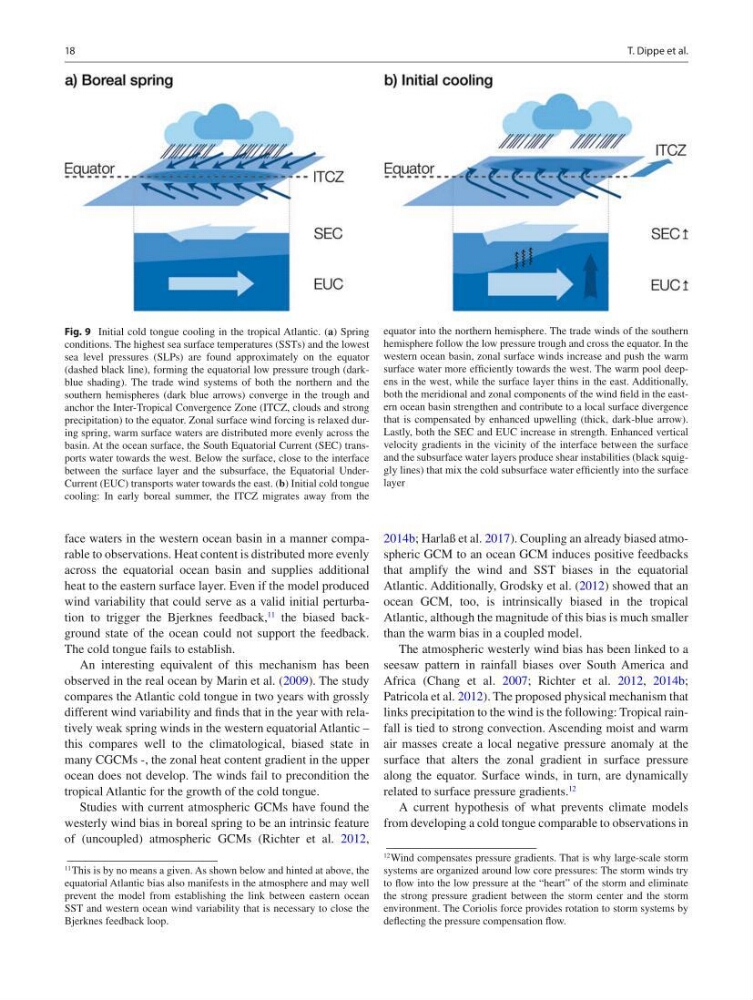
Fig. 9 Initial cold tongue cooling in the tropical Atlantic. (a) Spring
conditions. The highest sea surface temperatures (SSTs) and the lowest
sea level pressures (SLPs) are found approximately on the equator
(dashed black line), forming the equatorial low pressure trough (darkblue shading). The trade wind systems of both the northern and the
southern hemispheres (dark blue arrows) converge in the trough and
anchor the Inter-Tropical Convergence Zone (ITCZ, clouds and strong
precipitation) to the equator. Zonal surface wind forcing is relaxed during spring, warm surface waters are distributed more evenly across the
basin. At the ocean surface, the South Equatorial Current (SEC) transports water towards the west. Below the surface, close to the interface
between the surface layer and the subsurface, the Equatorial UnderCurrent (EUC) transports water towards the east. (b) Initial cold tongue
cooling: In early boreal summer, the ITCZ migrates away from the
equator into the northern hemisphere. The trade winds of the southern
hemisphere follow the low pressure trough and cross the equator. In the
western ocean basin, zonal surface winds increase and push the warm
surface water more efficiently towards the west. The warm pool deepens in the west, while the surface layer thins in the east. Additionally,
both the meridional and zonal components of the wind field in the eastern ocean basin strengthen and contribute to a local surface divergence
that is compensated by enhanced upwelling (thick, dark-blue arrow).
Lastly, both the SEC and EUC increase in strength. Enhanced vertical
velocity gradients in the vicinity of the interface between the surface
and the subsurface water layers produce shear instabilities (black squiggly lines) that mix the cold subsurface water efficiently into the surface
layer
T. Dippe et al.
face waters in the western ocean basin in a manner comparable to observations. Heat content is distributed more evenly
across the equatorial ocean basin and supplies additional
heat to the eastern surface layer. Even if the model produced
wind variability that could serve as a valid initial perturbation to trigger the Bjerknes feedback,
11
the biased background state of the ocean could not support the feedback.
The cold tongue fails to establish.
An interesting equivalent of this mechanism has been
observed in the real ocean by Marin et al. (2009). The study
compares the Atlantic cold tongue in two years with grossly
different wind variability and finds that in the year with relatively weak spring winds in the western equatorial Atlantic –
this compares well to the climatological, biased state in
many CGCMs -, the zonal heat content gradient in the upper
ocean does not develop. The winds fail to precondition the
tropical Atlantic for the growth of the cold tongue.
Studies with current atmospheric GCMs have found the
westerly wind bias in boreal spring to be an intrinsic feature
of (uncoupled) atmospheric GCMs (Richter et al. 2012,
11 This is by no means a given. As shown below and hinted at above, the
equatorial Atlantic bias also manifests in the atmosphere and may well
prevent the model from establishing the link between eastern ocean
SST and western ocean wind variability that is necessary to close the
Bjerknes feedback loop.
2014b; Harlaß et al. 2017). Coupling an already biased atmospheric GCM to an ocean GCM induces positive feedbacks
that amplify the wind and SST biases in the equatorial
Atlantic. Additionally, Grodsky et al. (2012) showed that an
ocean GCM, too, is intrinsically biased in the tropical
Atlantic, although the magnitude of this bias is much smaller
than the warm bias in a coupled model.
The atmospheric westerly wind bias has been linked to a
seesaw pattern in rainfall biases over South America and
Africa (Chang et al. 2007; Richter et al. 2012, 2014b;
Patricola et al. 2012). The proposed physical mechanism that
links precipitation to the wind is the following: Tropical rainfall is tied to strong convection. Ascending moist and warm
air masses create a local negative pressure anomaly at the
surface that alters the zonal gradient in surface pressure
along the equator. Surface winds, in turn, are dynamically
related to surface pressure gradients.
12
A current hypothesis of what prevents climate models
from developing a cold tongue comparable to observations in
12 Wind compensates pressure gradients. That is why large-scale storm
systems are organized around low core pressures: The storm winds try
to flow into the low pressure at the “heart” of the storm and eliminate
the strong pressure gradient between the storm center and the storm
environment. The Coriolis force provides rotation to storm systems by
deflecting the pressure compensation flow.
Fig. 9 Initial cold tongue cooling in the tropical Atlantic. (a) Spring
conditions. The highest sea surface temperatures (SSTs) and the lowest
sea level pressures (SLPs) are found approximately on the equator
(dashed black line), forming the equatorial low pressure trough (darkblue shading). The trade wind systems of both the northern and the
southern hemispheres (dark blue arrows) converge in the trough and
anchor the Inter-Tropical Convergence Zone (ITCZ, clouds and strong
precipitation) to the equator. Zonal surface wind forcing is relaxed during spring, warm surface waters are distributed more evenly across the
basin. At the ocean surface, the South Equatorial Current (SEC) transports water towards the west. Below the surface, close to the interface
between the surface layer and the subsurface, the Equatorial UnderCurrent (EUC) transports water towards the east. (b) Initial cold tongue
cooling: In early boreal summer, the ITCZ migrates away from the
equator into the northern hemisphere. The trade winds of the southern
hemisphere follow the low pressure trough and cross the equator. In the
western ocean basin, zonal surface winds increase and push the warm
surface water more efficiently towards the west. The warm pool deepens in the west, while the surface layer thins in the east. Additionally,
both the meridional and zonal components of the wind field in the eastern ocean basin strengthen and contribute to a local surface divergence
that is compensated by enhanced upwelling (thick, dark-blue arrow).
Lastly, both the SEC and EUC increase in strength. Enhanced vertical
velocity gradients in the vicinity of the interface between the surface
and the subsurface water layers produce shear instabilities (black squiggly lines) that mix the cold subsurface water efficiently into the surface
layer
T. Dippe et al.