

148
dent on the local hydrography make the plankton ideal for
monitoring climate related changes in biodiversity (Hays
et al. 2005). However, uncertainty in the taxonomic identification impedes further reasoning on climate-driven alterations of pelagic ecosystems.
Arctic zooplankton is characterized by a high seasonality
and a strong spatial diversification resulting from distinct
biogeographic origins of species (Błachowiak-Samołyk
et al. 2008; Weydmann et al. 2014). A good example of such
structuring of the plankton, comes from the analysis of the
Calanus species complex. Three species of Calanus copepods coexist in the European Arctic: C. finmarchicus, C. glacialis and C. hyperboreus. In spite of similarities in their
morphology and life cycles, there are some striking differences such as the type of lipids that characterize these congenerics, what should be taken into account, as they play a role
in the lipid-based energy flux in the Arctic (Falk-Petersen
et al. 2008). So far, C. finmarchicus was considered a boreal
species, C. glacialis a typical Arctic shelf species, and C.
hyperboreus the Arctic open-water species (Falk-Petersen
et al. 2008). Their distribution ranges were clearly established, and in areas where they coexisted, species identification just followed the size criterion (Unstad and Tande 1991).
However, the accuracy of this method, has been questioned,
because of the potential interspecific hybridization and
growth plasticity (Gabrielsen et al. 2012; Nielsen et al.
2014), which already has been documented by Parent et al.
(2012) in the Arctic and Northwest Atlantic.
Hence, the distribution records of these three key planktonic species may have to be revised whilst knowledge on
exact distribution ranges is crucial for the understanding of
ecosystem functioning. In the Arctic, little auks (Alle alle),
an ecologically important sea bird species, mainly feed on
Calanus glacialis. With the observable increase of Atlantic
water inflow to the Arctic (Polyakov et al. 2011), the distribution of this Arctic copepod is predicted to decline, while a
northward range expansion is expected for its boreal sisterspecies C. finmarchicus. This comparatively much smaller
Atlantic counterpart, C. finmarchicus, is an undesirable food
source for little auks since it is not as energy rich as C. glacialis, and thus capture of a sufficient amount of C. finmarchicus
comes
with
more
energy
expenses
(Wojczulanis-Jakubas et al. 2013). In order to validate the
hypothesis of distribution shifts between those two species,
Lindeque et al. (2004) employed both morphological (based
on the prosome length) and molecular (barcoding of the 16S
rDNA gene) methods for species identification. Results
obtained by molecular techniques proved that Calanus species co-occur and have wider distribution than it was established based on morphological analysis.
Another example illustrating the efficiency of molecular
methods for plankton species identification is a study on pandeid hydromedusae. Four morphologically similar genera
are currently co-existing in the Arctic: Catablema, Halitholus,
Leuckartiara and Neoturris. The taxonomic features used for
species delineation are often inconspicuous and in some
cases assumed to be growth-dependent, and thus variable
within the species (see comments in Schuchert 2007).
Besides the need to thoroughly re-examine the life cycle of
some of these species, molecular methods can be a solution
for the identification problems. In the case of Hydrozoa, the
use of 16S rDNA as barcode marker has certain advantages
over COI (Lindsay et al. 2015), and therefore initiatives aiming at supplementing sequence data, using this particular
gene should be encouraged (see project HYPNO, Dr. Aino
Hosia, https://artsdatabanken.no/Pages/168312).
Microorganisms
Microorganisms, are particularly important as primary producers for the functioning of marine ecosystems, but they
also play an important role in all biogeochemical processes
(Sogin et al. 2006). Nonetheless, knowledge is limited due to
the difficulties associated with the investigation of small
organisms like pico- (0.2–2 μm), and nanoplankton
(2–20 μm). Previous research in the Arctic has shown strong
seasonal variations in microorganism communities, related
to changes in irradiation. However the development of
molecular techniques in recent years enabled further investigation of their diversity (Marquardt et al. 2016). Genetic
analyses proved that microorganisms in Arctic waters are of
greater importance than previously believed. Furthermore,
they are also widely spread during polar night: in fjords and
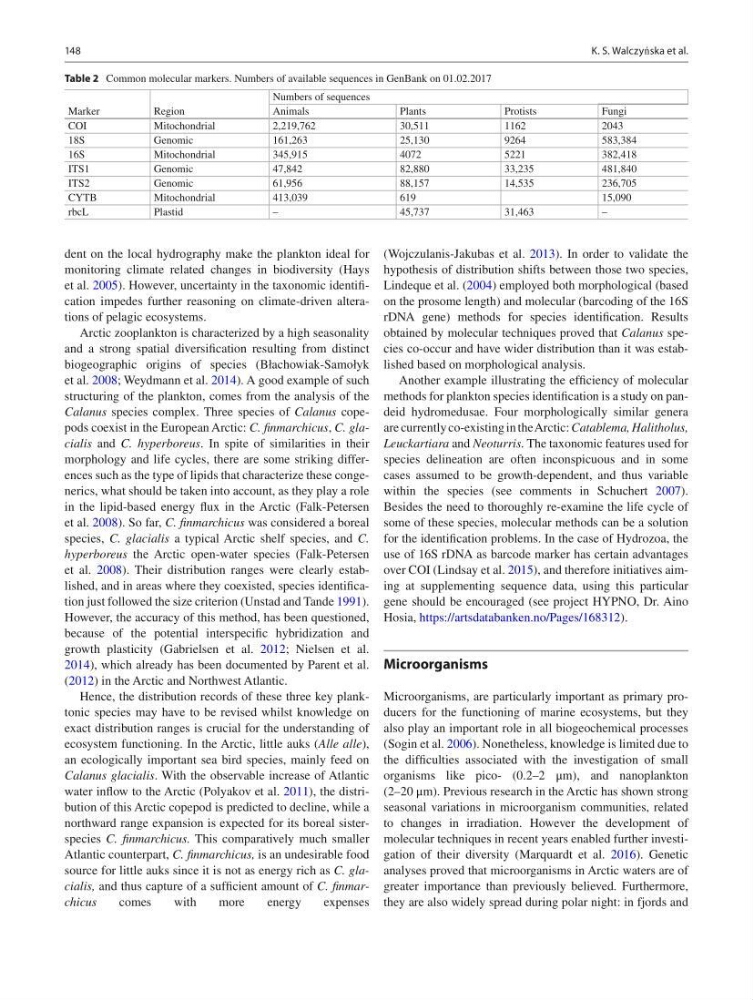
Table 2 Common molecular markers. Numbers of available sequences in GenBank on 01.02.2017
Marker
Region
Numbers of sequences
Animals
Plants
Protists
Fungi
COI
Mitochondrial
2,219,762
30,511
1162
2043
18S
Genomic
161,263
25,130
9264
583,384
16S
Mitochondrial
345,915
4072
5221
382,418
ITS1
Genomic
47,842
82,880
33,235
481,840
ITS2
Genomic
61,956
88,157
14,535
236,705
CYTB
Mitochondrial
413,039
619
15,090
rbcL
Plastid
–
45,737
31,463
–
K. S. Walczyńska et al.
dent on the local hydrography make the plankton ideal for
monitoring climate related changes in biodiversity (Hays
et al. 2005). However, uncertainty in the taxonomic identification impedes further reasoning on climate-driven alterations of pelagic ecosystems.
Arctic zooplankton is characterized by a high seasonality
and a strong spatial diversification resulting from distinct
biogeographic origins of species (Błachowiak-Samołyk
et al. 2008; Weydmann et al. 2014). A good example of such
structuring of the plankton, comes from the analysis of the
Calanus species complex. Three species of Calanus copepods coexist in the European Arctic: C. finmarchicus, C. glacialis and C. hyperboreus. In spite of similarities in their
morphology and life cycles, there are some striking differences such as the type of lipids that characterize these congenerics, what should be taken into account, as they play a role
in the lipid-based energy flux in the Arctic (Falk-Petersen
et al. 2008). So far, C. finmarchicus was considered a boreal
species, C. glacialis a typical Arctic shelf species, and C.
hyperboreus the Arctic open-water species (Falk-Petersen
et al. 2008). Their distribution ranges were clearly established, and in areas where they coexisted, species identification just followed the size criterion (Unstad and Tande 1991).
However, the accuracy of this method, has been questioned,
because of the potential interspecific hybridization and
growth plasticity (Gabrielsen et al. 2012; Nielsen et al.
2014), which already has been documented by Parent et al.
(2012) in the Arctic and Northwest Atlantic.
Hence, the distribution records of these three key planktonic species may have to be revised whilst knowledge on
exact distribution ranges is crucial for the understanding of
ecosystem functioning. In the Arctic, little auks (Alle alle),
an ecologically important sea bird species, mainly feed on
Calanus glacialis. With the observable increase of Atlantic
water inflow to the Arctic (Polyakov et al. 2011), the distribution of this Arctic copepod is predicted to decline, while a
northward range expansion is expected for its boreal sisterspecies C. finmarchicus. This comparatively much smaller
Atlantic counterpart, C. finmarchicus, is an undesirable food
source for little auks since it is not as energy rich as C. glacialis, and thus capture of a sufficient amount of C. finmarchicus
comes
with
more
energy
expenses
(Wojczulanis-Jakubas et al. 2013). In order to validate the
hypothesis of distribution shifts between those two species,
Lindeque et al. (2004) employed both morphological (based
on the prosome length) and molecular (barcoding of the 16S
rDNA gene) methods for species identification. Results
obtained by molecular techniques proved that Calanus species co-occur and have wider distribution than it was established based on morphological analysis.
Another example illustrating the efficiency of molecular
methods for plankton species identification is a study on pandeid hydromedusae. Four morphologically similar genera
are currently co-existing in the Arctic: Catablema, Halitholus,
Leuckartiara and Neoturris. The taxonomic features used for
species delineation are often inconspicuous and in some
cases assumed to be growth-dependent, and thus variable
within the species (see comments in Schuchert 2007).
Besides the need to thoroughly re-examine the life cycle of
some of these species, molecular methods can be a solution
for the identification problems. In the case of Hydrozoa, the
use of 16S rDNA as barcode marker has certain advantages
over COI (Lindsay et al. 2015), and therefore initiatives aiming at supplementing sequence data, using this particular
gene should be encouraged (see project HYPNO, Dr. Aino
Hosia, https://artsdatabanken.no/Pages/168312).
Microorganisms
Microorganisms, are particularly important as primary producers for the functioning of marine ecosystems, but they
also play an important role in all biogeochemical processes
(Sogin et al. 2006). Nonetheless, knowledge is limited due to
the difficulties associated with the investigation of small
organisms like pico- (0.2–2 μm), and nanoplankton
(2–20 μm). Previous research in the Arctic has shown strong
seasonal variations in microorganism communities, related
to changes in irradiation. However the development of
molecular techniques in recent years enabled further investigation of their diversity (Marquardt et al. 2016). Genetic
analyses proved that microorganisms in Arctic waters are of
greater importance than previously believed. Furthermore,
they are also widely spread during polar night: in fjords and
Table 2 Common molecular markers. Numbers of available sequences in GenBank on 01.02.2017
Marker
Region
Numbers of sequences
Animals
Plants
Protists
Fungi
COI
Mitochondrial
2,219,762
30,511
1162
2043
18S
Genomic
161,263
25,130
9264
583,384
16S
Mitochondrial
345,915
4072
5221
382,418
ITS1
Genomic
47,842
82,880
33,235
481,840
ITS2
Genomic
61,956
88,157
14,535
236,705
CYTB
Mitochondrial
413,039
619
15,090
rbcL
Plastid
–
45,737
31,463
–
K. S. Walczyńska et al.