

146
deep- sea species within the Arctic (Bluhm et al. 2011a), but
also their inflow of waters from the adjoining oceanic regions
(Carmack and Wassmann 2006). These dispersal barriers,
together with the glacial history of the area, have resulted in
isolated assemblages of distinctive marine biota, while maintaining the close relatedness to species found in neighboring
oceanic regions (Bucklin et al. 2010).
Once thought to be relatively poor, the biodiversity of the
Arctic Ocean is now considered to be at an intermediate level
(Hardy et al. 2011), with the number of extant species estimated to about 8000 (Bluhm et al. 2011b). However, this
number is dynamically increasing, with new taxa described
ever more frequently (see e.g. Matsuyama et al. 2017) and
estimates of several thousand yet undescribed species
(Bluhm et al. 2011b; Appeltans et al. 2012). The ecologically
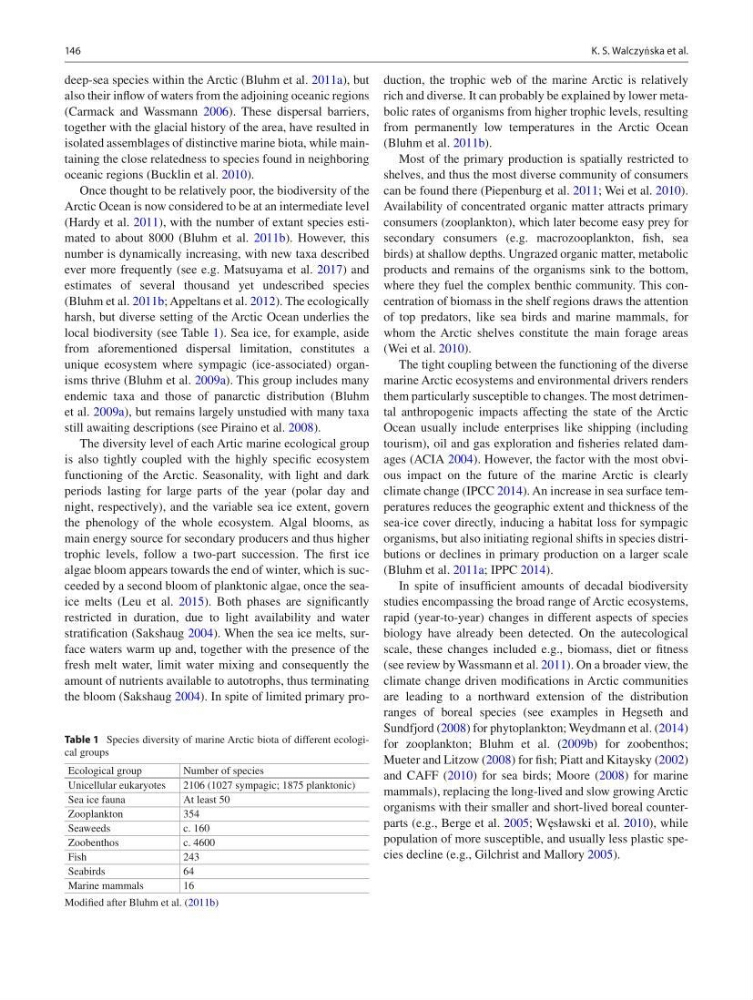
harsh, but diverse setting of the Arctic Ocean underlies the
local biodiversity (see Table 1). Sea ice, for example, aside
from aforementioned dispersal limitation, constitutes a
unique ecosystem where sympagic (ice-associated) organisms thrive (Bluhm et al. 2009a). This group includes many
endemic taxa and those of panarctic distribution (Bluhm
et al. 2009a), but remains largely unstudied with many taxa
still awaiting descriptions (see Piraino et al. 2008).
The diversity level of each Artic marine ecological group
is also tightly coupled with the highly specific ecosystem
functioning of the Arctic. Seasonality, with light and dark
periods lasting for large parts of the year (polar day and
night, respectively), and the variable sea ice extent, govern
the phenology of the whole ecosystem. Algal blooms, as
main energy source for secondary producers and thus higher
trophic levels, follow a two-part succession. The first ice
algae bloom appears towards the end of winter, which is succeeded by a second bloom of planktonic algae, once the seaice melts (Leu et al. 2015). Both phases are significantly
restricted in duration, due to light availability and water
stratification (Sakshaug 2004). When the sea ice melts, surface waters warm up and, together with the presence of the
fresh melt water, limit water mixing and consequently the
amount of nutrients available to autotrophs, thus terminating
the bloom (Sakshaug 2004). In spite of limited primary production, the trophic web of the marine Arctic is relatively
rich and diverse. It can probably be explained by lower metabolic rates of organisms from higher trophic levels, resulting
from permanently low temperatures in the Arctic Ocean
(Bluhm et al. 2011b).
Most of the primary production is spatially restricted to
shelves, and thus the most diverse community of consumers
can be found there (Piepenburg et al. 2011; Wei et al. 2010).
Availability of concentrated organic matter attracts primary
consumers (zooplankton), which later become easy prey for
secondary consumers (e.g. macrozooplankton, fish, sea
birds) at shallow depths. Ungrazed organic matter, metabolic
products and remains of the organisms sink to the bottom,
where they fuel the complex benthic community. This concentration of biomass in the shelf regions draws the attention
of top predators, like sea birds and marine mammals, for
whom the Arctic shelves constitute the main forage areas
(Wei et al. 2010).
The tight coupling between the functioning of the diverse
marine Arctic ecosystems and environmental drivers renders
them particularly susceptible to changes. The most detrimental anthropogenic impacts affecting the state of the Arctic
Ocean usually include enterprises like shipping (including
tourism), oil and gas exploration and fisheries related damages (ACIA 2004). However, the factor with the most obvious impact on the future of the marine Arctic is clearly
climate change (IPCC 2014). An increase in sea surface temperatures reduces the geographic extent and thickness of the
sea-ice cover directly, inducing a habitat loss for sympagic
organisms, but also initiating regional shifts in species distributions or declines in primary production on a larger scale
(Bluhm et al. 2011a; IPPC 2014).
In spite of insufficient amounts of decadal biodiversity
studies encompassing the broad range of Arctic ecosystems,
rapid (year-to-year) changes in different aspects of species
biology have already been detected. On the autecological
scale, these changes included e.g., biomass, diet or fitness
(see review by Wassmann et al. 2011). On a broader view, the
climate change driven modifications in Arctic communities
are leading to a northward extension of the distribution
ranges of boreal species (see examples in Hegseth and
Sundfjord (2008) for phytoplankton; Weydmann et al. (2014)
for zooplankton; Bluhm et al. (2009b) for zoobenthos;
Mueter and Litzow (2008) for fish; Piatt and Kitaysky (2002)
and CAFF (2010) for sea birds; Moore (2008) for marine
mammals), replacing the long-lived and slow growing Arctic
organisms with their smaller and short-lived boreal counterparts (e.g., Berge et al. 2005; Węsławski et al. 2010), while
population of more susceptible, and usually less plastic species decline (e.g., Gilchrist and Mallory 2005).
Table 1 Species diversity of marine Arctic biota of different ecological groups
Ecological group
Number of species
Unicellular eukaryotes
2106 (1027 sympagic; 1875 planktonic)
Sea ice fauna
At least 50
Zooplankton
354
Seaweeds
c. 160
Zoobenthos
c. 4600
Fish
243
Seabirds
64
Marine mammals
16
Modified after Bluhm et al. (2011b)
K. S. Walczyńska et al.
deep- sea species within the Arctic (Bluhm et al. 2011a), but
also their inflow of waters from the adjoining oceanic regions
(Carmack and Wassmann 2006). These dispersal barriers,
together with the glacial history of the area, have resulted in
isolated assemblages of distinctive marine biota, while maintaining the close relatedness to species found in neighboring
oceanic regions (Bucklin et al. 2010).
Once thought to be relatively poor, the biodiversity of the
Arctic Ocean is now considered to be at an intermediate level
(Hardy et al. 2011), with the number of extant species estimated to about 8000 (Bluhm et al. 2011b). However, this
number is dynamically increasing, with new taxa described
ever more frequently (see e.g. Matsuyama et al. 2017) and
estimates of several thousand yet undescribed species
(Bluhm et al. 2011b; Appeltans et al. 2012). The ecologically
harsh, but diverse setting of the Arctic Ocean underlies the
local biodiversity (see Table 1). Sea ice, for example, aside
from aforementioned dispersal limitation, constitutes a
unique ecosystem where sympagic (ice-associated) organisms thrive (Bluhm et al. 2009a). This group includes many
endemic taxa and those of panarctic distribution (Bluhm
et al. 2009a), but remains largely unstudied with many taxa
still awaiting descriptions (see Piraino et al. 2008).
The diversity level of each Artic marine ecological group
is also tightly coupled with the highly specific ecosystem
functioning of the Arctic. Seasonality, with light and dark
periods lasting for large parts of the year (polar day and
night, respectively), and the variable sea ice extent, govern
the phenology of the whole ecosystem. Algal blooms, as
main energy source for secondary producers and thus higher
trophic levels, follow a two-part succession. The first ice
algae bloom appears towards the end of winter, which is succeeded by a second bloom of planktonic algae, once the seaice melts (Leu et al. 2015). Both phases are significantly
restricted in duration, due to light availability and water
stratification (Sakshaug 2004). When the sea ice melts, surface waters warm up and, together with the presence of the
fresh melt water, limit water mixing and consequently the
amount of nutrients available to autotrophs, thus terminating
the bloom (Sakshaug 2004). In spite of limited primary production, the trophic web of the marine Arctic is relatively
rich and diverse. It can probably be explained by lower metabolic rates of organisms from higher trophic levels, resulting
from permanently low temperatures in the Arctic Ocean
(Bluhm et al. 2011b).
Most of the primary production is spatially restricted to
shelves, and thus the most diverse community of consumers
can be found there (Piepenburg et al. 2011; Wei et al. 2010).
Availability of concentrated organic matter attracts primary
consumers (zooplankton), which later become easy prey for
secondary consumers (e.g. macrozooplankton, fish, sea
birds) at shallow depths. Ungrazed organic matter, metabolic
products and remains of the organisms sink to the bottom,
where they fuel the complex benthic community. This concentration of biomass in the shelf regions draws the attention
of top predators, like sea birds and marine mammals, for
whom the Arctic shelves constitute the main forage areas
(Wei et al. 2010).
The tight coupling between the functioning of the diverse
marine Arctic ecosystems and environmental drivers renders
them particularly susceptible to changes. The most detrimental anthropogenic impacts affecting the state of the Arctic
Ocean usually include enterprises like shipping (including
tourism), oil and gas exploration and fisheries related damages (ACIA 2004). However, the factor with the most obvious impact on the future of the marine Arctic is clearly
climate change (IPCC 2014). An increase in sea surface temperatures reduces the geographic extent and thickness of the
sea-ice cover directly, inducing a habitat loss for sympagic
organisms, but also initiating regional shifts in species distributions or declines in primary production on a larger scale
(Bluhm et al. 2011a; IPPC 2014).
In spite of insufficient amounts of decadal biodiversity
studies encompassing the broad range of Arctic ecosystems,
rapid (year-to-year) changes in different aspects of species
biology have already been detected. On the autecological
scale, these changes included e.g., biomass, diet or fitness
(see review by Wassmann et al. 2011). On a broader view, the
climate change driven modifications in Arctic communities
are leading to a northward extension of the distribution
ranges of boreal species (see examples in Hegseth and
Sundfjord (2008) for phytoplankton; Weydmann et al. (2014)
for zooplankton; Bluhm et al. (2009b) for zoobenthos;
Mueter and Litzow (2008) for fish; Piatt and Kitaysky (2002)
and CAFF (2010) for sea birds; Moore (2008) for marine
mammals), replacing the long-lived and slow growing Arctic
organisms with their smaller and short-lived boreal counterparts (e.g., Berge et al. 2005; Węsławski et al. 2010), while
population of more susceptible, and usually less plastic species decline (e.g., Gilchrist and Mallory 2005).
Table 1 Species diversity of marine Arctic biota of different ecological groups
Ecological group
Number of species
Unicellular eukaryotes
2106 (1027 sympagic; 1875 planktonic)
Sea ice fauna
At least 50
Zooplankton
354
Seaweeds
c. 160
Zoobenthos
c. 4600
Fish
243
Seabirds
64
Marine mammals
16
Modified after Bluhm et al. (2011b)
K. S. Walczyńska et al.