

135
ence biochemical processes of seagrasses, will be altered due
to changes in the atmosphere. Increased precipitation and sea
level rise will result in changes in nutrient fluxes, sedimentation and salinity (Lee et al. 2007). Smothering of seagrasses
due to sedimentation (potentially due to the loss of neighboring mangrove systems) and elevated sea levels, further limits
sunlight to the meadows and consequently decreases their
productivity. Furthermore, climate change may also affect
the frequency and strength of tropical storms, which carry
their own set of consequences for seagrass meadows
(Trenberth 2005), including sediment movement burying the
seagrasses and increased turbulence caused by strong storms,
that can last for long after the storm has passed could uproot
and completely flatten the meadow (Bjork et al. 2008).
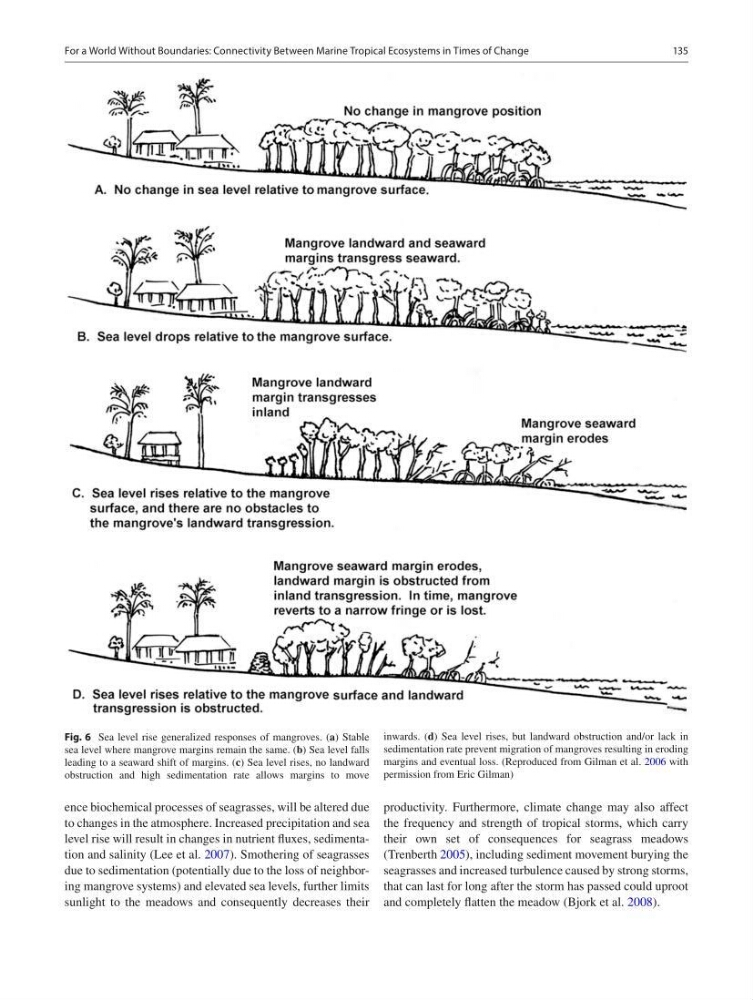
Fig. 6 Sea level rise generalized responses of mangroves. (a) Stable
sea level where mangrove margins remain the same. (b) Sea level falls
leading to a seaward shift of margins. (c) Sea level rises, no landward
obstruction and high sedimentation rate allows margins to move
inwards. (d) Sea level rises, but landward obstruction and/or lack in
sedimentation rate prevent migration of mangroves resulting in eroding
margins and eventual loss. (Reproduced from Gilman et al. 2006 with
permission from Eric Gilman)
For a World Without Boundaries: Connectivity Between Marine Tropical Ecosystems in Times of Change
ence biochemical processes of seagrasses, will be altered due
to changes in the atmosphere. Increased precipitation and sea
level rise will result in changes in nutrient fluxes, sedimentation and salinity (Lee et al. 2007). Smothering of seagrasses
due to sedimentation (potentially due to the loss of neighboring mangrove systems) and elevated sea levels, further limits
sunlight to the meadows and consequently decreases their
productivity. Furthermore, climate change may also affect
the frequency and strength of tropical storms, which carry
their own set of consequences for seagrass meadows
(Trenberth 2005), including sediment movement burying the
seagrasses and increased turbulence caused by strong storms,
that can last for long after the storm has passed could uproot
and completely flatten the meadow (Bjork et al. 2008).
Fig. 6 Sea level rise generalized responses of mangroves. (a) Stable
sea level where mangrove margins remain the same. (b) Sea level falls
leading to a seaward shift of margins. (c) Sea level rises, no landward
obstruction and high sedimentation rate allows margins to move
inwards. (d) Sea level rises, but landward obstruction and/or lack in
sedimentation rate prevent migration of mangroves resulting in eroding
margins and eventual loss. (Reproduced from Gilman et al. 2006 with
permission from Eric Gilman)
For a World Without Boundaries: Connectivity Between Marine Tropical Ecosystems in Times of Change