

8.1 The Quantum Langevin Equation
133
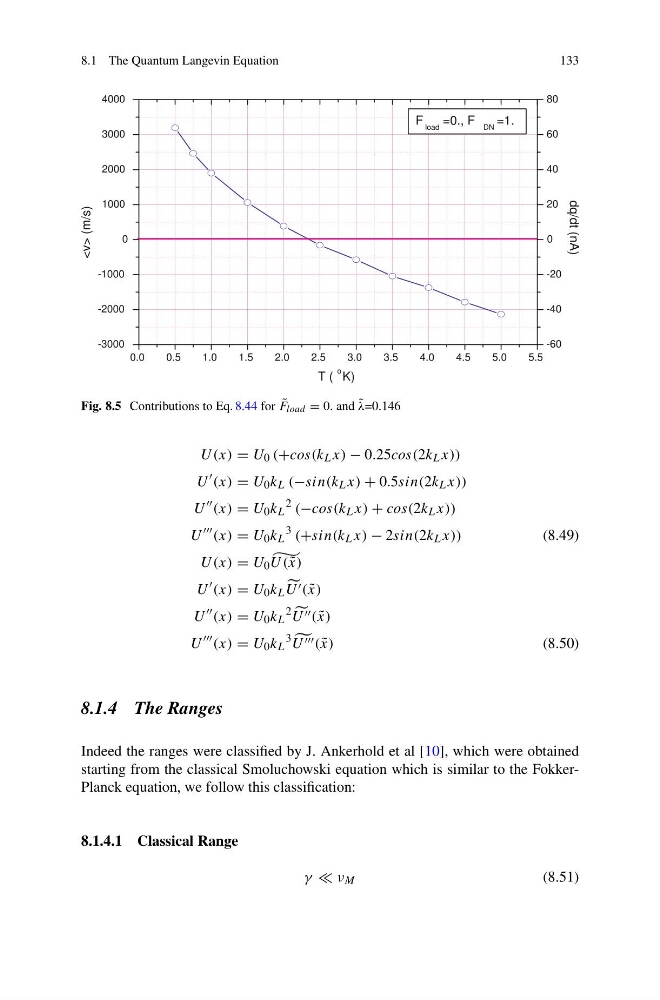
Fig. 8.5 Contributions to Eq. 8.44 for ˜
F load = 0. and ˜
λ=0.146
U(x) = U 0 (+cos(k L x) − 0.25cos(2k L x))
U
(x) = U 0 k L (−sin(k L x) + 0.5sin(2k L x))
U
(x) = U 0 k L
2 (−cos(k L x) + cos(2k L x))
U
(x) = U 0 k L
3 (+sin(k L x) − 2sin(2k L x))
(8.49)
U(x) = U 0
U( ˜
x)
U
(x) = U 0 k L U ( ˜
x)
U
(x) = U 0 k L
2
U ( ˜
x)
U
(x) = U 0 k L
3
U ( ˜
x)
(8.50)
8.1.4 The Ranges
Indeed the ranges were classified by J. Ankerhold et al [10], which were obtained
starting from the classical Smoluchowski equation which is similar to the FokkerPlanck equation, we follow this classification:
8.1.4.1 Classical Range
γ ν M
(8.51)
133
Fig. 8.5 Contributions to Eq. 8.44 for ˜
F load = 0. and ˜
λ=0.146
U(x) = U 0 (+cos(k L x) − 0.25cos(2k L x))
U
(x) = U 0 k L (−sin(k L x) + 0.5sin(2k L x))
U
(x) = U 0 k L
2 (−cos(k L x) + cos(2k L x))
U
(x) = U 0 k L
3 (+sin(k L x) − 2sin(2k L x))
(8.49)
U(x) = U 0
U( ˜
x)
U
(x) = U 0 k L U ( ˜
x)
U
(x) = U 0 k L
2
U ( ˜
x)
U
(x) = U 0 k L
3
U ( ˜
x)
(8.50)
8.1.4 The Ranges
Indeed the ranges were classified by J. Ankerhold et al [10], which were obtained
starting from the classical Smoluchowski equation which is similar to the FokkerPlanck equation, we follow this classification:
8.1.4.1 Classical Range
γ ν M
(8.51)