

12.4 Spacetime Emerging from QCD
187
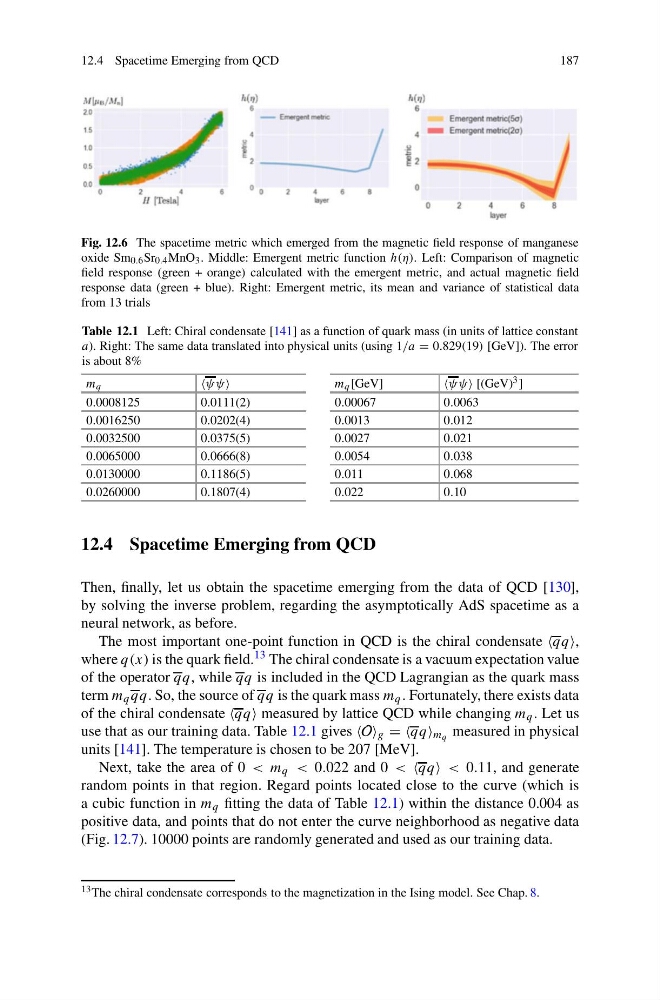
Fig. 12.6 The spacetime metric which emerged from the magnetic field response of manganese
oxide Sm 0.6 Sr 0.4 MnO 3 . Middle: Emergent metric function h(η). Left: Comparison of magnetic
field response (green + orange) calculated with the emergent metric, and actual magnetic field
response data (green + blue). Right: Emergent metric, its mean and variance of statistical data
from 13 trials
Table 12.1 Left: Chiral condensate [141] as a function of quark mass (in units of lattice constant
a). Right: The same data translated into physical units (using 1/a = 0.829(19) [GeV]). The error
is about 8%
m q
ψψ
0.0008125
0.0111(2)
0.0016250
0.0202(4)
0.0032500
0.0375(5)
0.0065000
0.0666(8)
0.0130000
0.1186(5)
0.0260000
0.1807(4)
m q [GeV]
ψψ [(GeV) 3 ]
0.00067
0.0063
0.0013
0.012
0.0027
0.021
0.0054
0.038
0.011
0.068
0.022
0.10
12.4 Spacetime Emerging from QCD
Then, finally, let us obtain the spacetime emerging from the data of QCD [130],
by solving the inverse problem, regarding the asymptotically AdS spacetime as a
neural network, as before.
The most important one-point function in QCD is the chiral condensate qq
where q(x) is the quark field. 13 The chiral condensate is a vacuum expectation value
of the operator qq, while qq is included in the QCD Lagrangian as the quark mass
term m q qq. So, the source of qq is the quark mass m q . Fortunately, there exists data
of the chiral condensate qq measured by lattice QCD while changing m q . Let us
use that as our training data. Table 12.1 gives g = =qq m q measured in physical
units [141]. The temperature is chosen to be 207 [MeV].
Next, take the area of 0 < m q < 0.022 and 0 < qq < 0.11, and generate
random points in that region. Regard points located close to the curve (which is
a cubic function in m q fitting the data of Table 12.1) within the distance 0.004 as
positive data, and points that do not enter the curve neighborhood as negative data
(Fig. 12.7). 10000 points are randomly generated and used as our training data.
13 The chiral condensate corresponds to the magnetization in the Ising model. See Chap. 8.
187
Fig. 12.6 The spacetime metric which emerged from the magnetic field response of manganese
oxide Sm 0.6 Sr 0.4 MnO 3 . Middle: Emergent metric function h(η). Left: Comparison of magnetic
field response (green + orange) calculated with the emergent metric, and actual magnetic field
response data (green + blue). Right: Emergent metric, its mean and variance of statistical data
from 13 trials
Table 12.1 Left: Chiral condensate [141] as a function of quark mass (in units of lattice constant
a). Right: The same data translated into physical units (using 1/a = 0.829(19) [GeV]). The error
is about 8%
m q
ψψ
0.0008125
0.0111(2)
0.0016250
0.0202(4)
0.0032500
0.0375(5)
0.0065000
0.0666(8)
0.0130000
0.1186(5)
0.0260000
0.1807(4)
m q [GeV]
ψψ [(GeV) 3 ]
0.00067
0.0063
0.0013
0.012
0.0027
0.021
0.0054
0.038
0.011
0.068
0.022
0.10
12.4 Spacetime Emerging from QCD
Then, finally, let us obtain the spacetime emerging from the data of QCD [130],
by solving the inverse problem, regarding the asymptotically AdS spacetime as a
neural network, as before.
The most important one-point function in QCD is the chiral condensate qq
where q(x) is the quark field. 13 The chiral condensate is a vacuum expectation value
of the operator qq, while qq is included in the QCD Lagrangian as the quark mass
term m q qq. So, the source of qq is the quark mass m q . Fortunately, there exists data
of the chiral condensate qq measured by lattice QCD while changing m q . Let us
use that as our training data. Table 12.1 gives g = =qq m q measured in physical
units [141]. The temperature is chosen to be 207 [MeV].
Next, take the area of 0 < m q < 0.022 and 0 < qq < 0.11, and generate
random points in that region. Regard points located close to the curve (which is
a cubic function in m q fitting the data of Table 12.1) within the distance 0.004 as
positive data, and points that do not enter the curve neighborhood as negative data
(Fig. 12.7). 10000 points are randomly generated and used as our training data.
13 The chiral condensate corresponds to the magnetization in the Ising model. See Chap. 8.