

97
different irrigation conditions. The average yield of sugar is approximately 105 kg
per ton of cane, and about 40 kg of molasses is produced per ton of cane from which
about 10 l of ethanol can be obtained. If the sugarcane is directly and fully used in
ethanol production, the yield of ethanol is 70 l per ton (Gonsalves 2006).
The production cost of ethanol in India in 2009 was between Rs.14 and 20 per
liter, depending upon the source, which is still comparable to the market price of
gasoline. However, this cost is before tax. After sales, excise, and other direct and
indirect taxes, the ethanol price is as high as other fuels and may need a selling price
subsidy to compete with the standard fuels to meet the 5% blending target. It has
been observed that the major reason for the high production cost of ethanol is the
increasing cost of sugarcane production in India. Unfortunately, the cost of sugarcane production in India is expected to continuously increase mainly due to a shortage of water resources and its impact on reduced productivity, continued use of
low-quality sugarcane species, unscientific sugarcane cultivation methods, and lack
of a market-based pricing mechanism for sugar. In addition, increasing the efficiency of sugarcane processing, including juice extraction and fermentation, is also
important to bring down the final cost of ethanol production. Finally, although
sugarcane- based ethanol is commercially a viable option for India to produce biofuels, the increasing costs of producing ethanol are a serious threat to its economic
viability in the long run.
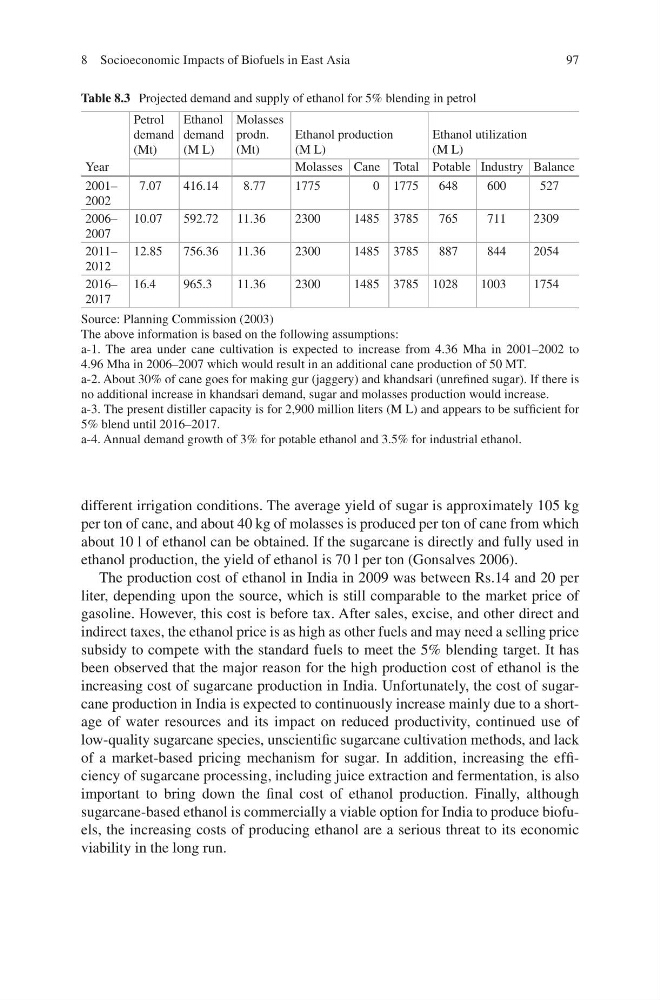
Table 8.3 Projected demand and supply of ethanol for 5% blending in petrol
Year
Petrol
demand
(Mt)
Ethanol
demand
(M L)
Molasses
prodn.
(Mt)
Ethanol production
(M L)
Ethanol utilization
(M L)
Molasses Cane Total Potable Industry Balance
2001–
2002
7.07
416.14
8.77
1775
0 1775
648
600
527
2006–
2007
10.07
592.72 11.36
2300
1485 3785
765
711
2309
2011–
2012
12.85
756.36 11.36
2300
1485 3785
887
844
2054
2016–
2017
16.4
965.3
11.36
2300
1485 3785 1028
1003
1754
Source: Planning Commission (2003)
The above information is based on the following assumptions:
a-1. The area under cane cultivation is expected to increase from 4.36 Mha in 2001–2002 to
4.96 Mha in 2006–2007 which would result in an additional cane production of 50 MT.
a-2. About 30% of cane goes for making gur (jaggery) and khandsari (unrefined sugar). If there is
no additional increase in khandsari demand, sugar and molasses production would increase.
a-3. The present distiller capacity is for 2,900 million liters (M L) and appears to be sufficient for
5% blend until 2016–2017.
a-4. Annual demand growth of 3% for potable ethanol and 3.5% for industrial ethanol.
8 Socioeconomic Impacts of Biofuels in East Asia
different irrigation conditions. The average yield of sugar is approximately 105 kg
per ton of cane, and about 40 kg of molasses is produced per ton of cane from which
about 10 l of ethanol can be obtained. If the sugarcane is directly and fully used in
ethanol production, the yield of ethanol is 70 l per ton (Gonsalves 2006).
The production cost of ethanol in India in 2009 was between Rs.14 and 20 per
liter, depending upon the source, which is still comparable to the market price of
gasoline. However, this cost is before tax. After sales, excise, and other direct and
indirect taxes, the ethanol price is as high as other fuels and may need a selling price
subsidy to compete with the standard fuels to meet the 5% blending target. It has
been observed that the major reason for the high production cost of ethanol is the
increasing cost of sugarcane production in India. Unfortunately, the cost of sugarcane production in India is expected to continuously increase mainly due to a shortage of water resources and its impact on reduced productivity, continued use of
low-quality sugarcane species, unscientific sugarcane cultivation methods, and lack
of a market-based pricing mechanism for sugar. In addition, increasing the efficiency of sugarcane processing, including juice extraction and fermentation, is also
important to bring down the final cost of ethanol production. Finally, although
sugarcane- based ethanol is commercially a viable option for India to produce biofuels, the increasing costs of producing ethanol are a serious threat to its economic
viability in the long run.
Table 8.3 Projected demand and supply of ethanol for 5% blending in petrol
Year
Petrol
demand
(Mt)
Ethanol
demand
(M L)
Molasses
prodn.
(Mt)
Ethanol production
(M L)
Ethanol utilization
(M L)
Molasses Cane Total Potable Industry Balance
2001–
2002
7.07
416.14
8.77
1775
0 1775
648
600
527
2006–
2007
10.07
592.72 11.36
2300
1485 3785
765
711
2309
2011–
2012
12.85
756.36 11.36
2300
1485 3785
887
844
2054
2016–
2017
16.4
965.3
11.36
2300
1485 3785 1028
1003
1754
Source: Planning Commission (2003)
The above information is based on the following assumptions:
a-1. The area under cane cultivation is expected to increase from 4.36 Mha in 2001–2002 to
4.96 Mha in 2006–2007 which would result in an additional cane production of 50 MT.
a-2. About 30% of cane goes for making gur (jaggery) and khandsari (unrefined sugar). If there is
no additional increase in khandsari demand, sugar and molasses production would increase.
a-3. The present distiller capacity is for 2,900 million liters (M L) and appears to be sufficient for
5% blend until 2016–2017.
a-4. Annual demand growth of 3% for potable ethanol and 3.5% for industrial ethanol.
8 Socioeconomic Impacts of Biofuels in East Asia