

375
The differences of PET values between Praha–Karlov station located in the city
centre and Praha–Ruzyně station situated on the periphery of the city (Fig. 14.4)
show the highest values in the summer half of the year starting after the sunset and
vanishing during the morning hours. Few hours after the sunrise this differences can
be even negative indicating lower PET values in the city centre. Regarding long
term changes, there is positive trend in PET values in Prague during spring and summer indicating greater human stress during the warm summer half-year. It should be
noted that PET was computed for the location with ideal horizon without obstacles – this is also the case of the following case study of a hot day.
The largest UHI negative effects (in the sense of bioclimatic discomfort) usually
occur during the summer months. For demonstration, case study of hot day, the day
of 28th July 2013 has been chosen. Maximum air temperature on that day reached
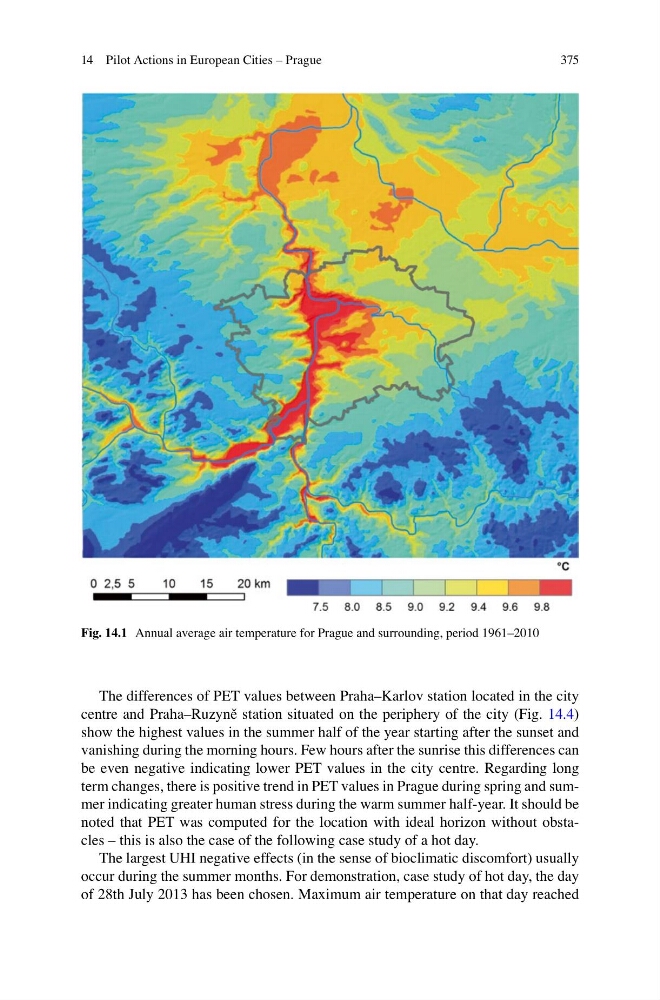
Fig. 14.1 Annual average air temperature for Prague and surrounding, period 1961–2010
14 Pilot Actions in European Cities – Prague
The differences of PET values between Praha–Karlov station located in the city
centre and Praha–Ruzyně station situated on the periphery of the city (Fig. 14.4)
show the highest values in the summer half of the year starting after the sunset and
vanishing during the morning hours. Few hours after the sunrise this differences can
be even negative indicating lower PET values in the city centre. Regarding long
term changes, there is positive trend in PET values in Prague during spring and summer indicating greater human stress during the warm summer half-year. It should be
noted that PET was computed for the location with ideal horizon without obstacles – this is also the case of the following case study of a hot day.
The largest UHI negative effects (in the sense of bioclimatic discomfort) usually
occur during the summer months. For demonstration, case study of hot day, the day
of 28th July 2013 has been chosen. Maximum air temperature on that day reached
Fig. 14.1 Annual average air temperature for Prague and surrounding, period 1961–2010
14 Pilot Actions in European Cities – Prague