

360
13.6.4 Suggestions Concerning Organisation and Logistics
For the realisation of climate-conscious development of the area, the suggested
solutions are similar to traditional solutions, undertaken in such a way that the role
of the local government is in harmony with existing tools on the one hand and with
the ownership relations of the properties to be developed or regenerated on the
other, with special attention to properties owned by the local government.
Due to the diversity in ownership, interests and abilities, it cannot be hoped that
the suggested plans could be realised in their entirety in one, well organised initiative, in a short period of time – yet most elements of the plan could indeed be carried
out in such fashion, while a smaller proportion of the plans could be realised as –
preferably coordinated – individual actions carried out by the other parties but initiated, and on occasion supported, by the local authorities.
For the preparation and organisation of tasks, especially those to be carried out
by the local authorities, the relevant local government body responsible for urban
development and planning should be appointed as coordinator – who will, then,
invite the contributions of other parties, such as planners and constructors, as
necessary.
As for the timing of individual tasks, priority should be given to properties owned
by the local authorities, to tasks that can be carried out within the jurisdiction of the
local authorities, primarily to public spaces that could serve as direct examples,
such as green roofs on buildings of institutions controlled by the local authorities.
An equally important recommendation is the simultaneous commencement of
negotiations with the property managers of national institutions, to invite them to
participate in the program and to help realise climate-conscious redevelopment for
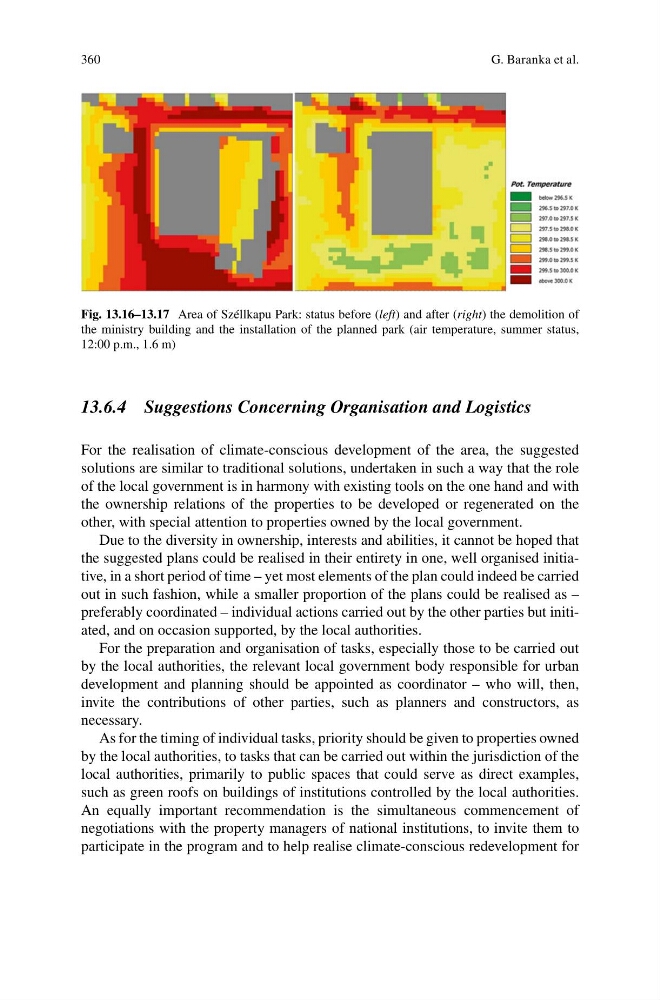
Fig. 13.16–13.17 Area of Széllkapu Park: status before ( left ) and after ( right ) the demolition of
the ministry building and the installation of the planned park (air temperature, summer status,
12:00 p.m., 1.6 m)
G. Baranka et al.
13.6.4 Suggestions Concerning Organisation and Logistics
For the realisation of climate-conscious development of the area, the suggested
solutions are similar to traditional solutions, undertaken in such a way that the role
of the local government is in harmony with existing tools on the one hand and with
the ownership relations of the properties to be developed or regenerated on the
other, with special attention to properties owned by the local government.
Due to the diversity in ownership, interests and abilities, it cannot be hoped that
the suggested plans could be realised in their entirety in one, well organised initiative, in a short period of time – yet most elements of the plan could indeed be carried
out in such fashion, while a smaller proportion of the plans could be realised as –
preferably coordinated – individual actions carried out by the other parties but initiated, and on occasion supported, by the local authorities.
For the preparation and organisation of tasks, especially those to be carried out
by the local authorities, the relevant local government body responsible for urban
development and planning should be appointed as coordinator – who will, then,
invite the contributions of other parties, such as planners and constructors, as
necessary.
As for the timing of individual tasks, priority should be given to properties owned
by the local authorities, to tasks that can be carried out within the jurisdiction of the
local authorities, primarily to public spaces that could serve as direct examples,
such as green roofs on buildings of institutions controlled by the local authorities.
An equally important recommendation is the simultaneous commencement of
negotiations with the property managers of national institutions, to invite them to
participate in the program and to help realise climate-conscious redevelopment for
Fig. 13.16–13.17 Area of Széllkapu Park: status before ( left ) and after ( right ) the demolition of
the ministry building and the installation of the planned park (air temperature, summer status,
12:00 p.m., 1.6 m)
G. Baranka et al.