

233
8.3 Feasibility Study
After processing the data pertaining to the areas inside the survey transept, it became
necessary to understand what mitigation and adaptation interventions should be
considered based on the morphological aspects of this specific neighborhood of the
city of Padua, including buildings, outdoor public spaces, and private spaces.
The integration of these sets of interventions produced the “transformation scenarios” that were later tested for effectiveness with the ENVI-met software.
Through this process, we initiated an actual project for the pilot area, by adapting
to it specific mitigation measures that until then had been generic proposals for
other areas. As a result of the preliminary project test performed inside the pilot
area, we came up with four different project scenarios as follows:
“green ground”: a scenario where the permeable surface of the area is increased (from
18 % to 23 %) by turning a paved parking lot into a grass surface and planting 10 m
tall trees along the main roads of the area;
“cool pavements”: substituting the traditional paving material (0.2 albedo) and
concrete (0.4 albedo) used on streets and sidewalks with high albedo (0.5) “cool”
materials;
“cool roofs”: substituting the traditional tile or covered flat roofs with “cool”
materials (0.3 to 0.6 albedo);
“green ground + cool pavements”: a scenario that adopts both these mitigation
interventions simultaneously.
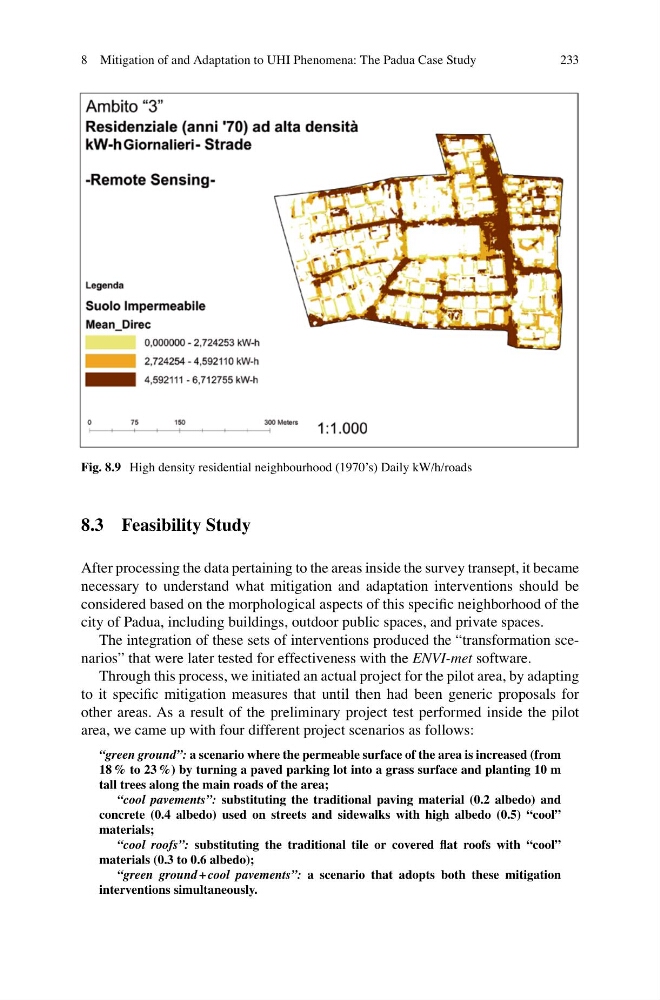
Fig. 8.9 High density residential neighbourhood (1970’s) Daily kW/h/roads
8 Mitigation of and Adaptation to UHI Phenomena: The Padua Case Study
8.3 Feasibility Study
After processing the data pertaining to the areas inside the survey transept, it became
necessary to understand what mitigation and adaptation interventions should be
considered based on the morphological aspects of this specific neighborhood of the
city of Padua, including buildings, outdoor public spaces, and private spaces.
The integration of these sets of interventions produced the “transformation scenarios” that were later tested for effectiveness with the ENVI-met software.
Through this process, we initiated an actual project for the pilot area, by adapting
to it specific mitigation measures that until then had been generic proposals for
other areas. As a result of the preliminary project test performed inside the pilot
area, we came up with four different project scenarios as follows:
“green ground”: a scenario where the permeable surface of the area is increased (from
18 % to 23 %) by turning a paved parking lot into a grass surface and planting 10 m
tall trees along the main roads of the area;
“cool pavements”: substituting the traditional paving material (0.2 albedo) and
concrete (0.4 albedo) used on streets and sidewalks with high albedo (0.5) “cool”
materials;
“cool roofs”: substituting the traditional tile or covered flat roofs with “cool”
materials (0.3 to 0.6 albedo);
“green ground + cool pavements”: a scenario that adopts both these mitigation
interventions simultaneously.
Fig. 8.9 High density residential neighbourhood (1970’s) Daily kW/h/roads
8 Mitigation of and Adaptation to UHI Phenomena: The Padua Case Study