

147
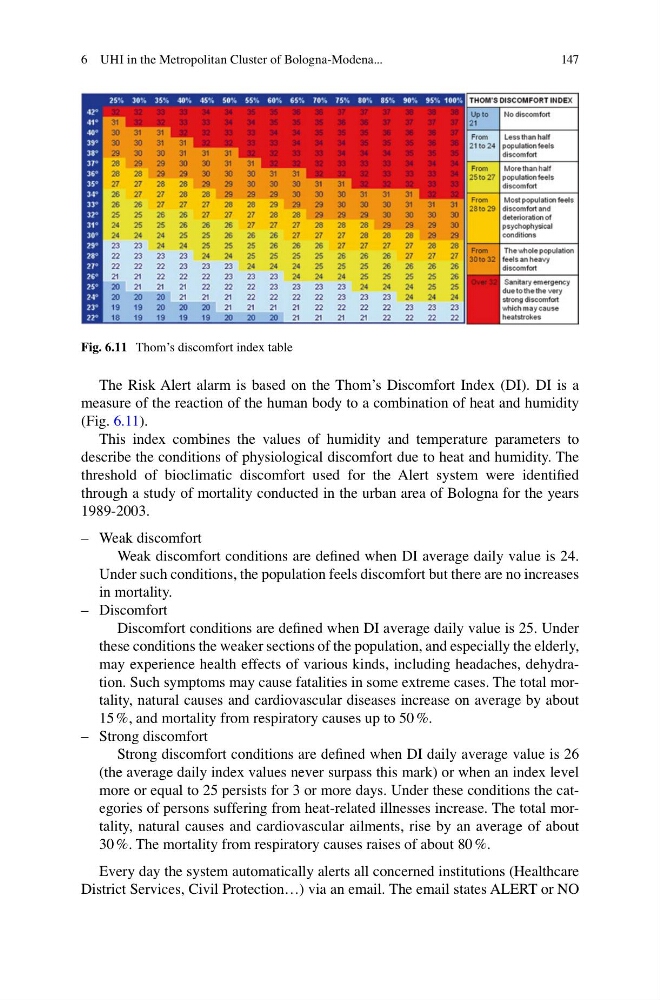
The Risk Alert alarm is based on the Thom’s Discomfort Index (DI). DI is a
measure of the reaction of the human body to a combination of heat and humidity
(Fig. 6.11).
This index combines the values of humidity and temperature parameters to
describe the conditions of physiological discomfort due to heat and humidity. The
threshold of bioclimatic discomfort used for the Alert system were identified
through a study of mortality conducted in the urban area of Bologna for the years
1989-2003.
– Weak discomfort
Weak discomfort conditions are defined when DI average daily value is 24.
Under such conditions, the population feels discomfort but there are no increases
in mortality.
– Discomfort
Discomfort conditions are defined when DI average daily value is 25. Under
these conditions the weaker sections of the population, and especially the elderly,
may experience health effects of various kinds, including headaches, dehydration. Such symptoms may cause fatalities in some extreme cases. The total mortality, natural causes and cardiovascular diseases increase on average by about
15 %, and mortality from respiratory causes up to 50 %.
– Strong discomfort
Strong discomfort conditions are defined when DI daily average value is 26
(the average daily index values never surpass this mark) or when an index level
more or equal to 25 persists for 3 or more days. Under these conditions the categories of persons suffering from heat-related illnesses increase. The total mortality, natural causes and cardiovascular ailments, rise by an average of about
30 %. The mortality from respiratory causes raises of about 80 %.
Every day the system automatically alerts all concerned institutions (Healthcare
District Services, Civil Protection…) via an email. The email states ALERT or NO
Fig. 6.11 Thom’s discomfort index table
6 UHI in the Metropolitan Cluster of Bologna-Modena...
The Risk Alert alarm is based on the Thom’s Discomfort Index (DI). DI is a
measure of the reaction of the human body to a combination of heat and humidity
(Fig. 6.11).
This index combines the values of humidity and temperature parameters to
describe the conditions of physiological discomfort due to heat and humidity. The
threshold of bioclimatic discomfort used for the Alert system were identified
through a study of mortality conducted in the urban area of Bologna for the years
1989-2003.
– Weak discomfort
Weak discomfort conditions are defined when DI average daily value is 24.
Under such conditions, the population feels discomfort but there are no increases
in mortality.
– Discomfort
Discomfort conditions are defined when DI average daily value is 25. Under
these conditions the weaker sections of the population, and especially the elderly,
may experience health effects of various kinds, including headaches, dehydration. Such symptoms may cause fatalities in some extreme cases. The total mortality, natural causes and cardiovascular diseases increase on average by about
15 %, and mortality from respiratory causes up to 50 %.
– Strong discomfort
Strong discomfort conditions are defined when DI daily average value is 26
(the average daily index values never surpass this mark) or when an index level
more or equal to 25 persists for 3 or more days. Under these conditions the categories of persons suffering from heat-related illnesses increase. The total mortality, natural causes and cardiovascular ailments, rise by an average of about
30 %. The mortality from respiratory causes raises of about 80 %.
Every day the system automatically alerts all concerned institutions (Healthcare
District Services, Civil Protection…) via an email. The email states ALERT or NO
Fig. 6.11 Thom’s discomfort index table
6 UHI in the Metropolitan Cluster of Bologna-Modena...