

78
R. N. Mohapatra
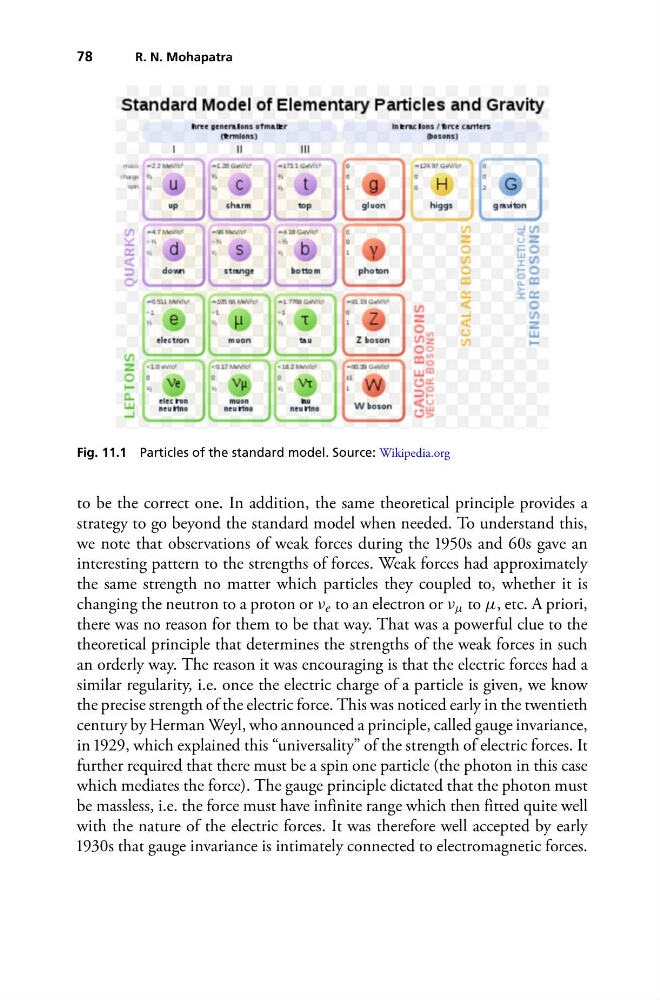
Fig. 11.1 Particles of the standard model. Source: Wikipedia.org
to be the correct one. In addition, the same theoretical principle provides a
strategy to go beyond the standard model when needed. To understand this,
we note that observations of weak forces during the 1950s and 60s gave an
interesting pattern to the strengths of forces. Weak forces had approximately
the same strength no matter which particles they coupled to, whether it is
changing the neutron to a proton or ν e to an electron or ν μ to μ, etc. A priori,
there was no reason for them to be that way. That was a powerful clue to the
theoretical principle that determines the strengths of the weak forces in such
an orderly way. The reason it was encouraging is that the electric forces had a
similar regularity, i.e. once the electric charge of a particle is given, we know
the precise strength of the electric force. This was noticed early in the twentieth
century by Herman Weyl, who announced a principle, called gauge invariance,
in 1929, which explained this “universality” of the strength of electric forces. It
further required that there must be a spin one particle (the photon in this case
which mediates the force). The gauge principle dictated that the photon must
be massless, i.e. the force must have infinite range which then fitted quite well
with the nature of the electric forces. It was therefore well accepted by early
1930s that gauge invariance is intimately connected to electromagnetic forces.
R. N. Mohapatra
Fig. 11.1 Particles of the standard model. Source: Wikipedia.org
to be the correct one. In addition, the same theoretical principle provides a
strategy to go beyond the standard model when needed. To understand this,
we note that observations of weak forces during the 1950s and 60s gave an
interesting pattern to the strengths of forces. Weak forces had approximately
the same strength no matter which particles they coupled to, whether it is
changing the neutron to a proton or ν e to an electron or ν μ to μ, etc. A priori,
there was no reason for them to be that way. That was a powerful clue to the
theoretical principle that determines the strengths of the weak forces in such
an orderly way. The reason it was encouraging is that the electric forces had a
similar regularity, i.e. once the electric charge of a particle is given, we know
the precise strength of the electric force. This was noticed early in the twentieth
century by Herman Weyl, who announced a principle, called gauge invariance,
in 1929, which explained this “universality” of the strength of electric forces. It
further required that there must be a spin one particle (the photon in this case
which mediates the force). The gauge principle dictated that the photon must
be massless, i.e. the force must have infinite range which then fitted quite well
with the nature of the electric forces. It was therefore well accepted by early
1930s that gauge invariance is intimately connected to electromagnetic forces.