

46
R. N. Mohapatra
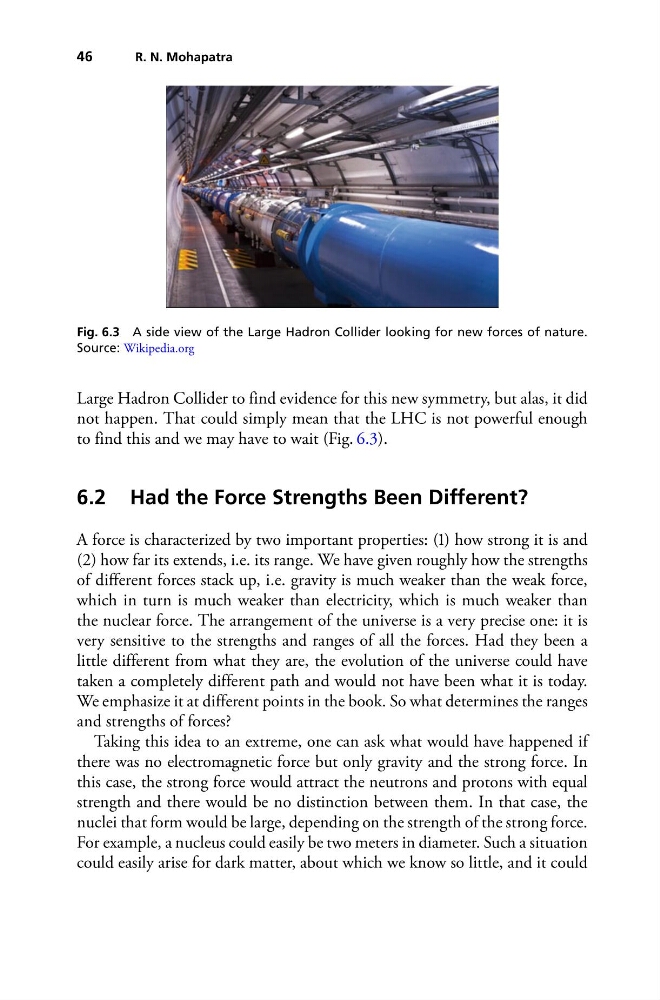
Fig. 6.3 A side view of the Large Hadron Collider looking for new forces of nature.
Source: Wikipedia.org
Large Hadron Collider to find evidence for this new symmetry, but alas, it did
not happen. That could simply mean that the LHC is not powerful enough
to find this and we may have to wait (Fig. 6.3).
6.2 Had the Force Strengths Been Different?
A force is characterized by two important properties: (1) how strong it is and
(2) how far its extends, i.e. its range. We have given roughly how the strengths
of different forces stack up, i.e. gravity is much weaker than the weak force,
which in turn is much weaker than electricity, which is much weaker than
the nuclear force. The arrangement of the universe is a very precise one: it is
very sensitive to the strengths and ranges of all the forces. Had they been a
little different from what they are, the evolution of the universe could have
taken a completely different path and would not have been what it is today.
We emphasize it at different points in the book. So what determines the ranges
and strengths of forces?
Taking this idea to an extreme, one can ask what would have happened if
there was no electromagnetic force but only gravity and the strong force. In
this case, the strong force would attract the neutrons and protons with equal
strength and there would be no distinction between them. In that case, the
nuclei that form would be large, depending on the strength of the strong force.
For example, a nucleus could easily be two meters in diameter. Such a situation
could easily arise for dark matter, about which we know so little, and it could
R. N. Mohapatra
Fig. 6.3 A side view of the Large Hadron Collider looking for new forces of nature.
Source: Wikipedia.org
Large Hadron Collider to find evidence for this new symmetry, but alas, it did
not happen. That could simply mean that the LHC is not powerful enough
to find this and we may have to wait (Fig. 6.3).
6.2 Had the Force Strengths Been Different?
A force is characterized by two important properties: (1) how strong it is and
(2) how far its extends, i.e. its range. We have given roughly how the strengths
of different forces stack up, i.e. gravity is much weaker than the weak force,
which in turn is much weaker than electricity, which is much weaker than
the nuclear force. The arrangement of the universe is a very precise one: it is
very sensitive to the strengths and ranges of all the forces. Had they been a
little different from what they are, the evolution of the universe could have
taken a completely different path and would not have been what it is today.
We emphasize it at different points in the book. So what determines the ranges
and strengths of forces?
Taking this idea to an extreme, one can ask what would have happened if
there was no electromagnetic force but only gravity and the strong force. In
this case, the strong force would attract the neutrons and protons with equal
strength and there would be no distinction between them. In that case, the
nuclei that form would be large, depending on the strength of the strong force.
For example, a nucleus could easily be two meters in diameter. Such a situation
could easily arise for dark matter, about which we know so little, and it could