

5 Forces That Keep the Universe Together
39
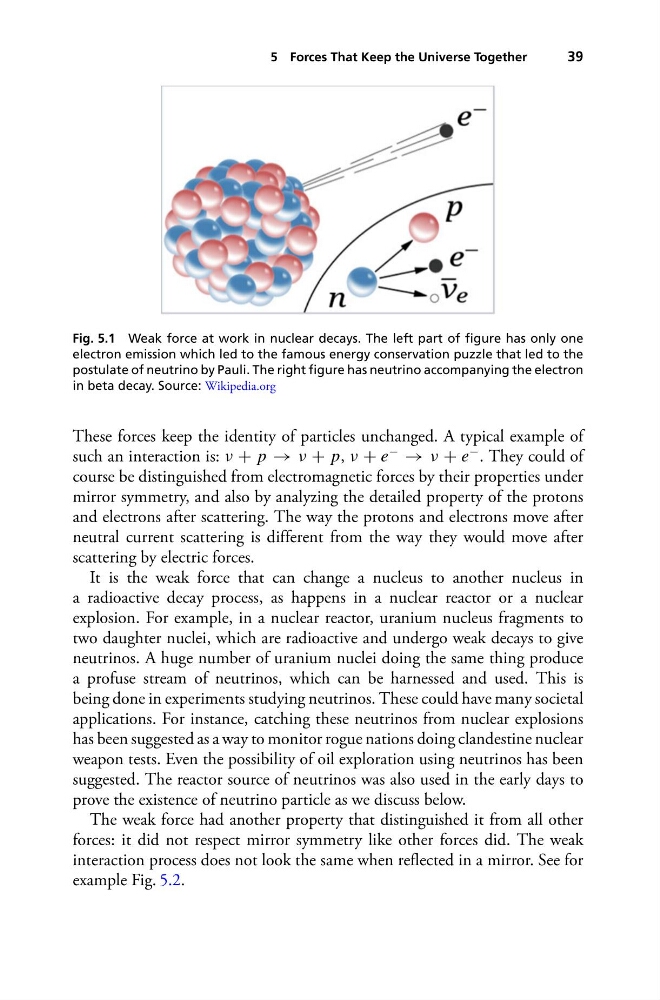
Fig. 5.1 Weak force at work in nuclear decays. The left part of figure has only one
electron emission which led to the famous energy conservation puzzle that led to the
postulate of neutrino by Pauli. The right figure has neutrino accompanying the electron
in beta decay. Source: Wikipedia.org
These forces keep the identity of particles unchanged. A typical example of
such an interaction is: ν + p → ν + p, ν + e
−
→ ν + e
− . They could of
course be distinguished from electromagnetic forces by their properties under
mirror symmetry, and also by analyzing the detailed property of the protons
and electrons after scattering. The way the protons and electrons move after
neutral current scattering is different from the way they would move after
scattering by electric forces.
It is the weak force that can change a nucleus to another nucleus in
a radioactive decay process, as happens in a nuclear reactor or a nuclear
explosion. For example, in a nuclear reactor, uranium nucleus fragments to
two daughter nuclei, which are radioactive and undergo weak decays to give
neutrinos. A huge number of uranium nuclei doing the same thing produce
a profuse stream of neutrinos, which can be harnessed and used. This is
being done in experiments studying neutrinos. These could have many societal
applications. For instance, catching these neutrinos from nuclear explosions
has been suggested as a way to monitor rogue nations doing clandestine nuclear
weapon tests. Even the possibility of oil exploration using neutrinos has been
suggested. The reactor source of neutrinos was also used in the early days to
prove the existence of neutrino particle as we discuss below.
The weak force had another property that distinguished it from all other
forces: it did not respect mirror symmetry like other forces did. The weak
interaction process does not look the same when reflected in a mirror. See for
example Fig. 5.2.
39
Fig. 5.1 Weak force at work in nuclear decays. The left part of figure has only one
electron emission which led to the famous energy conservation puzzle that led to the
postulate of neutrino by Pauli. The right figure has neutrino accompanying the electron
in beta decay. Source: Wikipedia.org
These forces keep the identity of particles unchanged. A typical example of
such an interaction is: ν + p → ν + p, ν + e
−
→ ν + e
− . They could of
course be distinguished from electromagnetic forces by their properties under
mirror symmetry, and also by analyzing the detailed property of the protons
and electrons after scattering. The way the protons and electrons move after
neutral current scattering is different from the way they would move after
scattering by electric forces.
It is the weak force that can change a nucleus to another nucleus in
a radioactive decay process, as happens in a nuclear reactor or a nuclear
explosion. For example, in a nuclear reactor, uranium nucleus fragments to
two daughter nuclei, which are radioactive and undergo weak decays to give
neutrinos. A huge number of uranium nuclei doing the same thing produce
a profuse stream of neutrinos, which can be harnessed and used. This is
being done in experiments studying neutrinos. These could have many societal
applications. For instance, catching these neutrinos from nuclear explosions
has been suggested as a way to monitor rogue nations doing clandestine nuclear
weapon tests. Even the possibility of oil exploration using neutrinos has been
suggested. The reactor source of neutrinos was also used in the early days to
prove the existence of neutrino particle as we discuss below.
The weak force had another property that distinguished it from all other
forces: it did not respect mirror symmetry like other forces did. The weak
interaction process does not look the same when reflected in a mirror. See for
example Fig. 5.2.