

3 From Protons and Neutrons to a Zoo of Particles
23
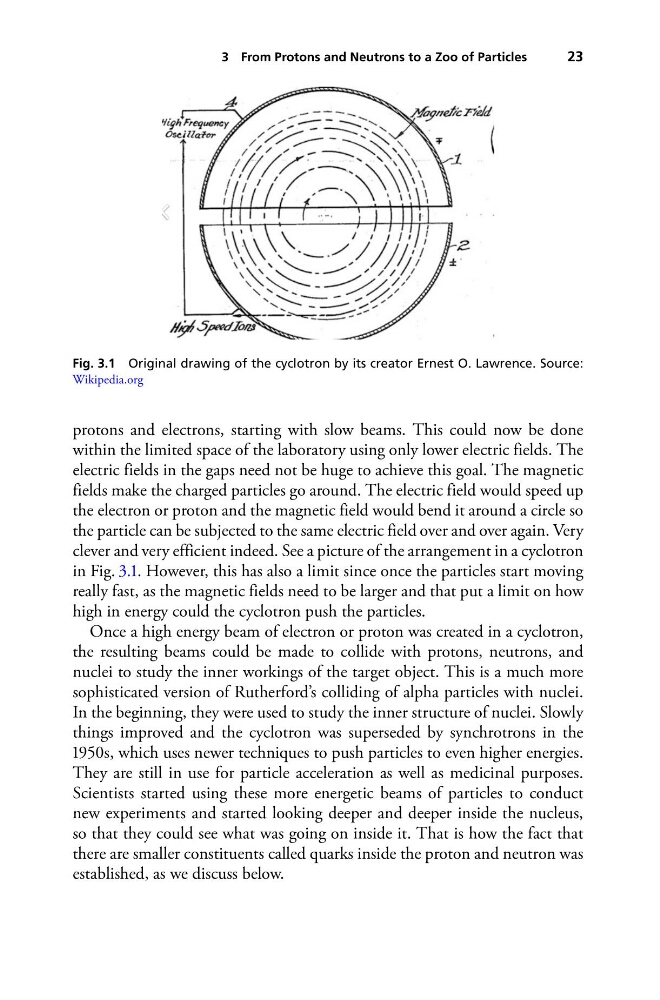
Fig. 3.1 Original drawing of the cyclotron by its creator Ernest O. Lawrence. Source:
Wikipedia.org
protons and electrons, starting with slow beams. This could now be done
within the limited space of the laboratory using only lower electric fields. The
electric fields in the gaps need not be huge to achieve this goal. The magnetic
fields make the charged particles go around. The electric field would speed up
the electron or proton and the magnetic field would bend it around a circle so
the particle can be subjected to the same electric field over and over again. Very
clever and very efficient indeed. See a picture of the arrangement in a cyclotron
in Fig. 3.1. However, this has also a limit since once the particles start moving
really fast, as the magnetic fields need to be larger and that put a limit on how
high in energy could the cyclotron push the particles.
Once a high energy beam of electron or proton was created in a cyclotron,
the resulting beams could be made to collide with protons, neutrons, and
nuclei to study the inner workings of the target object. This is a much more
sophisticated version of Rutherford’s colliding of alpha particles with nuclei.
In the beginning, they were used to study the inner structure of nuclei. Slowly
things improved and the cyclotron was superseded by synchrotrons in the
1950s, which uses newer techniques to push particles to even higher energies.
They are still in use for particle acceleration as well as medicinal purposes.
Scientists started using these more energetic beams of particles to conduct
new experiments and started looking deeper and deeper inside the nucleus,
so that they could see what was going on inside it. That is how the fact that
there are smaller constituents called quarks inside the proton and neutron was
established, as we discuss below.
23
Fig. 3.1 Original drawing of the cyclotron by its creator Ernest O. Lawrence. Source:
Wikipedia.org
protons and electrons, starting with slow beams. This could now be done
within the limited space of the laboratory using only lower electric fields. The
electric fields in the gaps need not be huge to achieve this goal. The magnetic
fields make the charged particles go around. The electric field would speed up
the electron or proton and the magnetic field would bend it around a circle so
the particle can be subjected to the same electric field over and over again. Very
clever and very efficient indeed. See a picture of the arrangement in a cyclotron
in Fig. 3.1. However, this has also a limit since once the particles start moving
really fast, as the magnetic fields need to be larger and that put a limit on how
high in energy could the cyclotron push the particles.
Once a high energy beam of electron or proton was created in a cyclotron,
the resulting beams could be made to collide with protons, neutrons, and
nuclei to study the inner workings of the target object. This is a much more
sophisticated version of Rutherford’s colliding of alpha particles with nuclei.
In the beginning, they were used to study the inner structure of nuclei. Slowly
things improved and the cyclotron was superseded by synchrotrons in the
1950s, which uses newer techniques to push particles to even higher energies.
They are still in use for particle acceleration as well as medicinal purposes.
Scientists started using these more energetic beams of particles to conduct
new experiments and started looking deeper and deeper inside the nucleus,
so that they could see what was going on inside it. That is how the fact that
there are smaller constituents called quarks inside the proton and neutron was
established, as we discuss below.