

19 Stars as the Cooking Pots for Heavy Nuclei
145
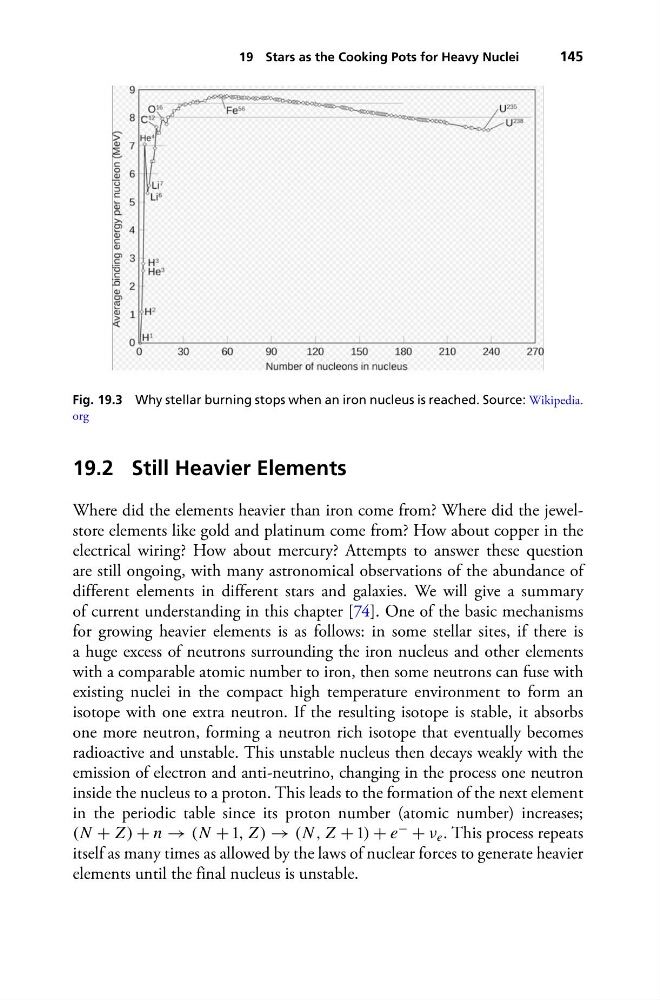
Fig. 19.3 Why stellar burning stops when an iron nucleus is reached. Source: Wikipedia.
org
19.2 Still Heavier Elements
Where did the elements heavier than iron come from? Where did the jewelstore elements like gold and platinum come from? How about copper in the
electrical wiring? How about mercury? Attempts to answer these question
are still ongoing, with many astronomical observations of the abundance of
different elements in different stars and galaxies. We will give a summary
of current understanding in this chapter [74]. One of the basic mechanisms
for growing heavier elements is as follows: in some stellar sites, if there is
a huge excess of neutrons surrounding the iron nucleus and other elements
with a comparable atomic number to iron, then some neutrons can fuse with
existing nuclei in the compact high temperature environment to form an
isotope with one extra neutron. If the resulting isotope is stable, it absorbs
one more neutron, forming a neutron rich isotope that eventually becomes
radioactive and unstable. This unstable nucleus then decays weakly with the
emission of electron and anti-neutrino, changing in the process one neutron
inside the nucleus to a proton. This leads to the formation of the next element
in the periodic table since its proton number (atomic number) increases;
(N + Z) + n → (N + 1, Z) → (N, Z + 1) + e
−
+ ν e . This process repeats
itself as many times as allowed by the laws of nuclear forces to generate heavier
elements until the final nucleus is unstable.
145
Fig. 19.3 Why stellar burning stops when an iron nucleus is reached. Source: Wikipedia.
org
19.2 Still Heavier Elements
Where did the elements heavier than iron come from? Where did the jewelstore elements like gold and platinum come from? How about copper in the
electrical wiring? How about mercury? Attempts to answer these question
are still ongoing, with many astronomical observations of the abundance of
different elements in different stars and galaxies. We will give a summary
of current understanding in this chapter [74]. One of the basic mechanisms
for growing heavier elements is as follows: in some stellar sites, if there is
a huge excess of neutrons surrounding the iron nucleus and other elements
with a comparable atomic number to iron, then some neutrons can fuse with
existing nuclei in the compact high temperature environment to form an
isotope with one extra neutron. If the resulting isotope is stable, it absorbs
one more neutron, forming a neutron rich isotope that eventually becomes
radioactive and unstable. This unstable nucleus then decays weakly with the
emission of electron and anti-neutrino, changing in the process one neutron
inside the nucleus to a proton. This leads to the formation of the next element
in the periodic table since its proton number (atomic number) increases;
(N + Z) + n → (N + 1, Z) → (N, Z + 1) + e
−
+ ν e . This process repeats
itself as many times as allowed by the laws of nuclear forces to generate heavier
elements until the final nucleus is unstable.