

120
R. N. Mohapatra
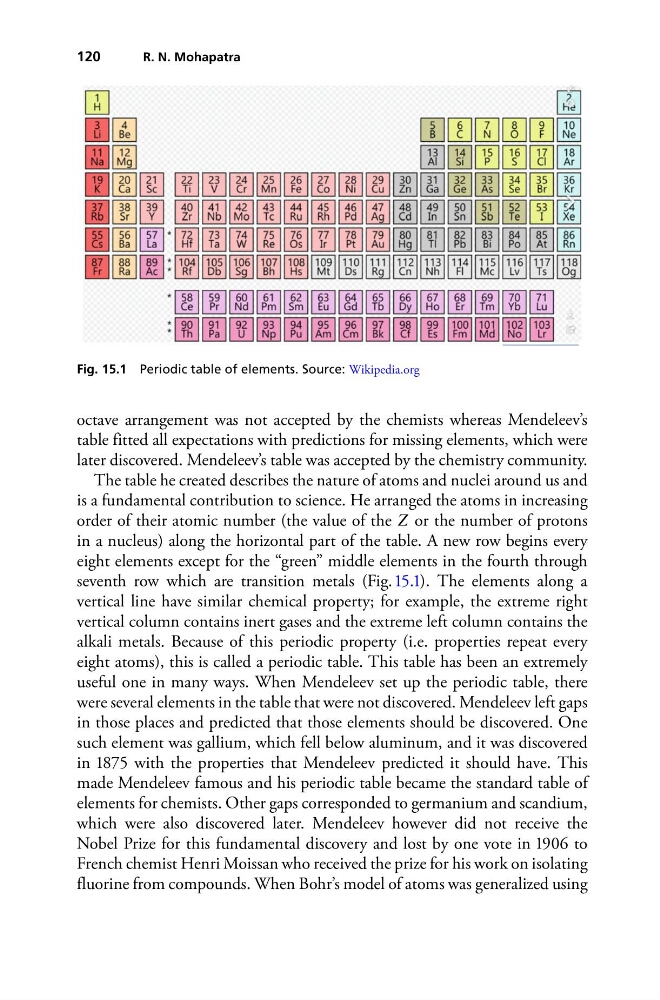
Fig. 15.1 Periodic table of elements. Source: Wikipedia.org
octave arrangement was not accepted by the chemists whereas Mendeleev’s
table fitted all expectations with predictions for missing elements, which were
later discovered. Mendeleev’s table was accepted by the chemistry community.
The table he created describes the nature of atoms and nuclei around us and
is a fundamental contribution to science. He arranged the atoms in increasing
order of their atomic number (the value of the Z or the number of protons
in a nucleus) along the horizontal part of the table. A new row begins every
eight elements except for the “green” middle elements in the fourth through
seventh row which are transition metals (Fig. 15.1). The elements along a
vertical line have similar chemical property; for example, the extreme right
vertical column contains inert gases and the extreme left column contains the
alkali metals. Because of this periodic property (i.e. properties repeat every
eight atoms), this is called a periodic table. This table has been an extremely
useful one in many ways. When Mendeleev set up the periodic table, there
were several elements in the table that were not discovered. Mendeleev left gaps
in those places and predicted that those elements should be discovered. One
such element was gallium, which fell below aluminum, and it was discovered
in 1875 with the properties that Mendeleev predicted it should have. This
made Mendeleev famous and his periodic table became the standard table of
elements for chemists. Other gaps corresponded to germanium and scandium,
which were also discovered later. Mendeleev however did not receive the
Nobel Prize for this fundamental discovery and lost by one vote in 1906 to
French chemist Henri Moissan who received the prize for his work on isolating
fluorine from compounds. When Bohr’s model of atoms was generalized using
R. N. Mohapatra
Fig. 15.1 Periodic table of elements. Source: Wikipedia.org
octave arrangement was not accepted by the chemists whereas Mendeleev’s
table fitted all expectations with predictions for missing elements, which were
later discovered. Mendeleev’s table was accepted by the chemistry community.
The table he created describes the nature of atoms and nuclei around us and
is a fundamental contribution to science. He arranged the atoms in increasing
order of their atomic number (the value of the Z or the number of protons
in a nucleus) along the horizontal part of the table. A new row begins every
eight elements except for the “green” middle elements in the fourth through
seventh row which are transition metals (Fig. 15.1). The elements along a
vertical line have similar chemical property; for example, the extreme right
vertical column contains inert gases and the extreme left column contains the
alkali metals. Because of this periodic property (i.e. properties repeat every
eight atoms), this is called a periodic table. This table has been an extremely
useful one in many ways. When Mendeleev set up the periodic table, there
were several elements in the table that were not discovered. Mendeleev left gaps
in those places and predicted that those elements should be discovered. One
such element was gallium, which fell below aluminum, and it was discovered
in 1875 with the properties that Mendeleev predicted it should have. This
made Mendeleev famous and his periodic table became the standard table of
elements for chemists. Other gaps corresponded to germanium and scandium,
which were also discovered later. Mendeleev however did not receive the
Nobel Prize for this fundamental discovery and lost by one vote in 1906 to
French chemist Henri Moissan who received the prize for his work on isolating
fluorine from compounds. When Bohr’s model of atoms was generalized using