

13 Neutrinos Oscillate and Hence They Weigh
105
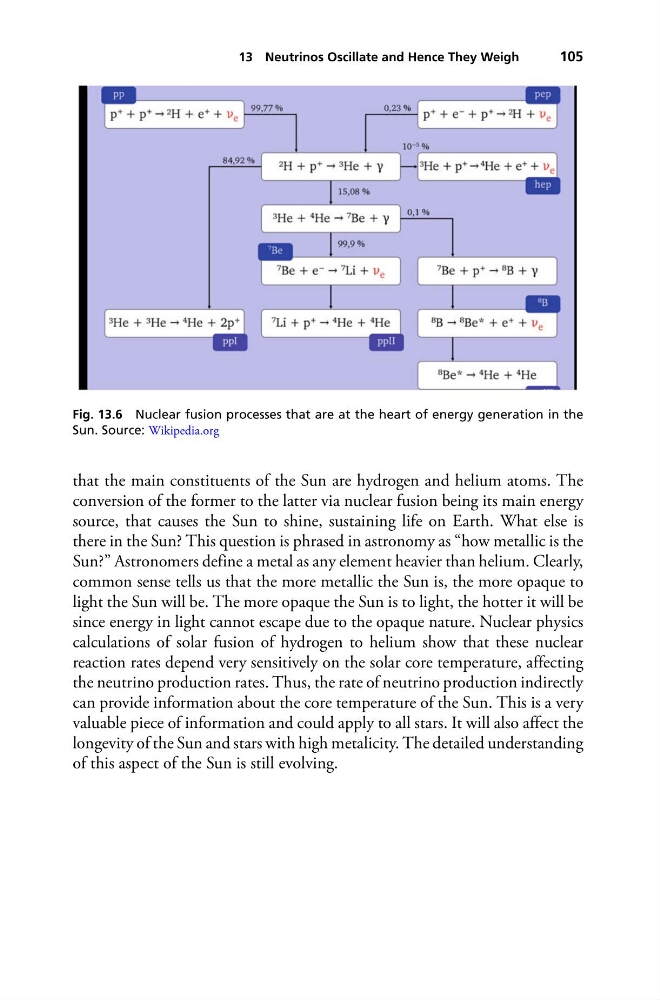
Fig. 13.6 Nuclear fusion processes that are at the heart of energy generation in the
Sun. Source: Wikipedia.org
that the main constituents of the Sun are hydrogen and helium atoms. The
conversion of the former to the latter via nuclear fusion being its main energy
source, that causes the Sun to shine, sustaining life on Earth. What else is
there in the Sun? This question is phrased in astronomy as “how metallic is the
Sun?” Astronomers define a metal as any element heavier than helium. Clearly,
common sense tells us that the more metallic the Sun is, the more opaque to
light the Sun will be. The more opaque the Sun is to light, the hotter it will be
since energy in light cannot escape due to the opaque nature. Nuclear physics
calculations of solar fusion of hydrogen to helium show that these nuclear
reaction rates depend very sensitively on the solar core temperature, affecting
the neutrino production rates. Thus, the rate of neutrino production indirectly
can provide information about the core temperature of the Sun. This is a very
valuable piece of information and could apply to all stars. It will also affect the
longevity of the Sun and stars with high metalicity. The detailed understanding
of this aspect of the Sun is still evolving.
105
Fig. 13.6 Nuclear fusion processes that are at the heart of energy generation in the
Sun. Source: Wikipedia.org
that the main constituents of the Sun are hydrogen and helium atoms. The
conversion of the former to the latter via nuclear fusion being its main energy
source, that causes the Sun to shine, sustaining life on Earth. What else is
there in the Sun? This question is phrased in astronomy as “how metallic is the
Sun?” Astronomers define a metal as any element heavier than helium. Clearly,
common sense tells us that the more metallic the Sun is, the more opaque to
light the Sun will be. The more opaque the Sun is to light, the hotter it will be
since energy in light cannot escape due to the opaque nature. Nuclear physics
calculations of solar fusion of hydrogen to helium show that these nuclear
reaction rates depend very sensitively on the solar core temperature, affecting
the neutrino production rates. Thus, the rate of neutrino production indirectly
can provide information about the core temperature of the Sun. This is a very
valuable piece of information and could apply to all stars. It will also affect the
longevity of the Sun and stars with high metalicity. The detailed understanding
of this aspect of the Sun is still evolving.